Tram 28 Route In Lisbon: The Free Sights Along The Line
Tram 28 is the Lisbon ride everyone photographs, but the route it traces is also a map of free sights: the Alfama lanes, the Graça viewpoints, the Estrela garden and the riverside squares. This guide separates what the tram costs from what the ground it covers costs, and shows how to walk the same streets for nothing.
Short answer
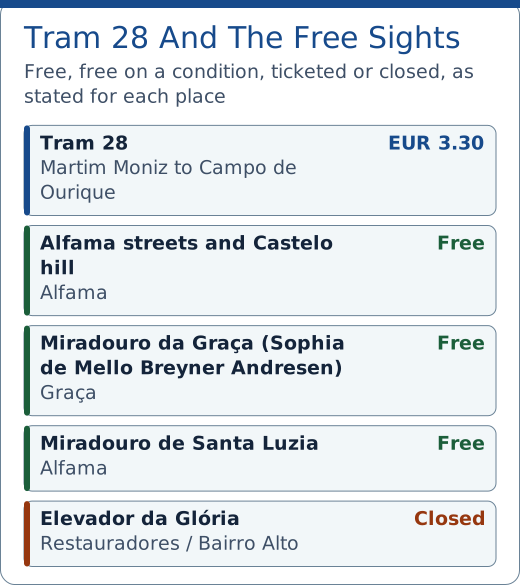
A tram 28 ride costs EUR 3.30 bought on board, or EUR 1.72 with a Zapping card, and the line runs between Martim Moniz and Campo de Ourique (Prazeres). The sights along its route are largely free: the Alfama streets, the Graça and Santa Luzia viewpoints, the Estrela garden and the city squares cost nothing, while São Jorge Castle is EUR 17 and the Sé tourist visit is EUR 7.
What Is The Tram 28 Route In Lisbon?
Tram 28 is a scheduled Carris tram service running between Martim Moniz and Campo de Ourique (Prazeres), climbing through the Alfama, Graça and Estrela districts on the way. It is a normal paid transit ride, EUR 3.30 bought on board, not a tourist tour, and the streets it travels are the same streets you can walk for free. Carris has issued provisional service alterations in 2025 and 2026, so the exact running pattern can change while works continue.
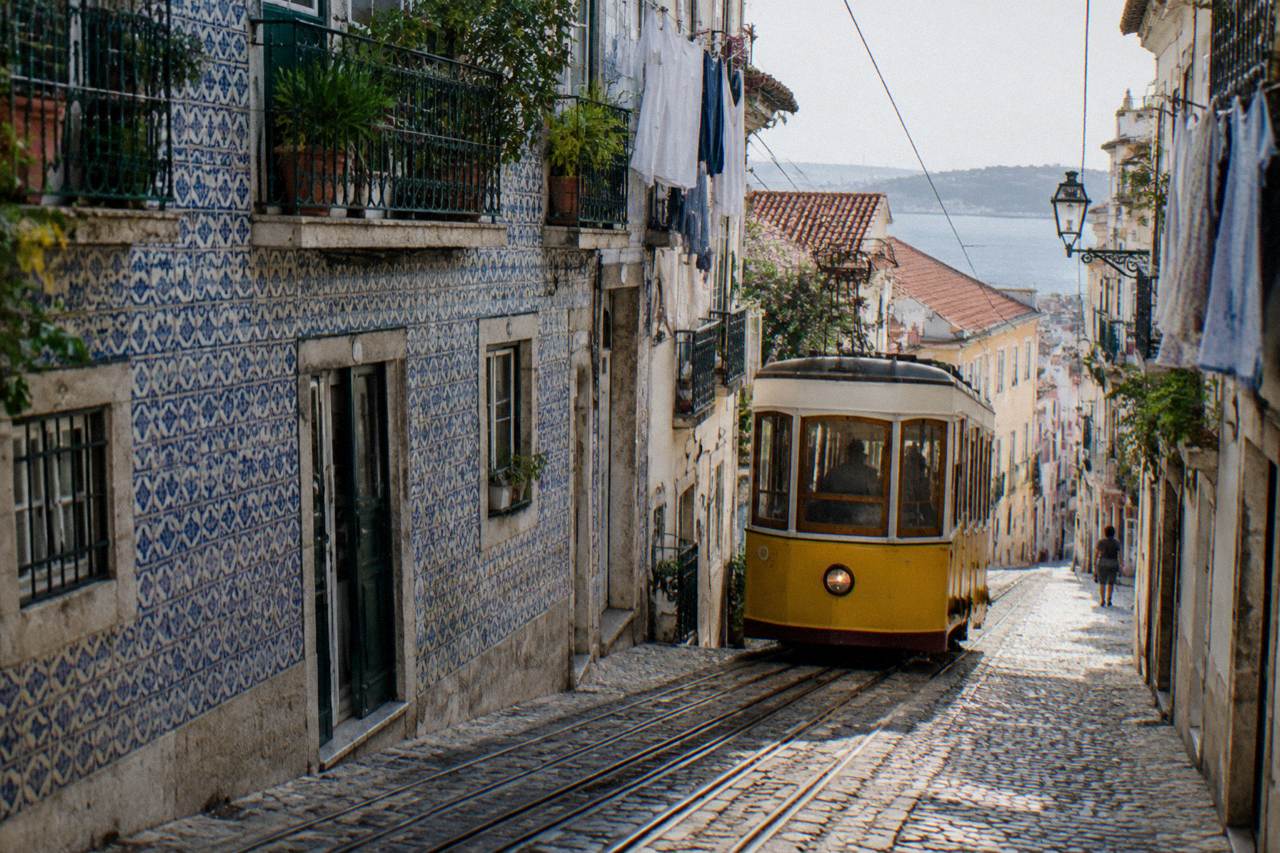
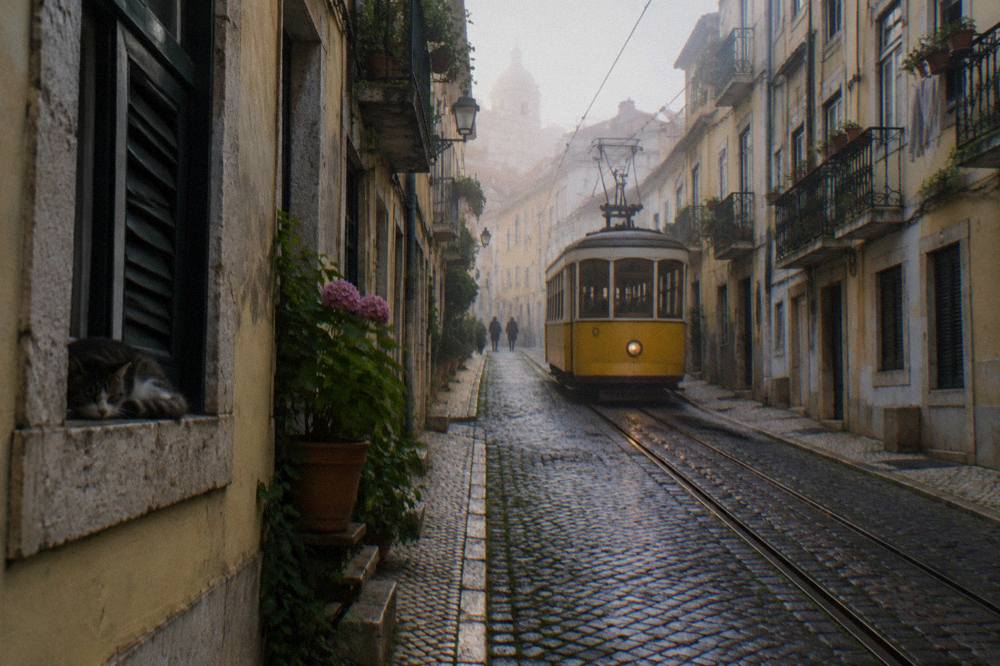
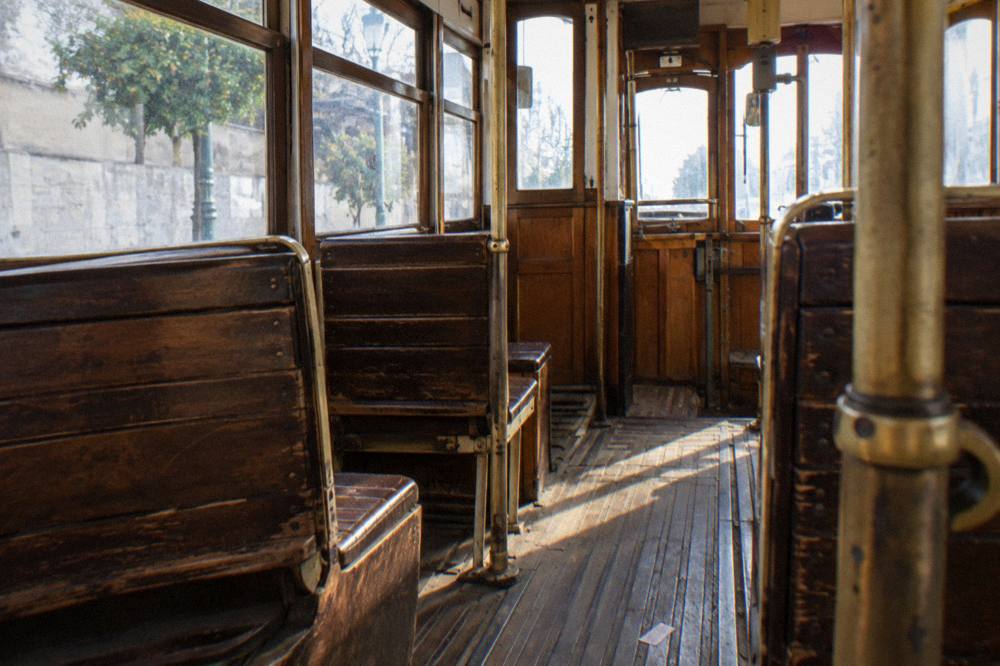
The route's fame rests on the vehicles as much as the geography. The vintage yellow cars grind up hills that modern transport struggles with, threading lanes so narrow that wing mirrors fold and pedestrians press into doorways. That fame has a cost beyond the ticket: the cars run busy, and Carris itself publishes good-practice advice warning about pickpockets on its network in general. Riding is a genuine Lisbon experience, but it is a public tram first, and it behaves like one, with crowding at peak hours and no reserved seats for sightseers.
The line's two terminals anchor it at Martim Moniz, at the edge of the Mouraria district, and Campo de Ourique at Prazeres, in the west of the city. Between them the tram crosses ground that covers most of what people come to Lisbon to see: the old Alfama hill, the Graça ridge with its viewpoints, the Baixa grid rebuilt after the 1755 earthquake, and the Estrela district with its garden and basilica. The official Carris timetable names stops including Martim Moniz, Rua da Palma, Igreja dos Anjos and, on the return direction, Miradouro de Santa Luzia and Largo das Portas do Sol, alongside the Graça streets.
What matters for a free-first visitor is the distinction between the ride and the route. The ride is a paid transit service whose fare is set by Carris and printed on its prices table. The route is a ribbon of public streets, squares, staircases and viewpoints that belong to everyone, at every hour, without a ticket. You can ride the tram once for the experience and spend the rest of your visit on foot along the same corridor, which is what this guide is built around.
Carris has been running altered versions of the 28 service while works proceed on the Calçada da Estrela and other streets, with shortened sections and resumptions noted through 2025 and into 2026. Before you plan a day around a specific departure, check the Carris service alterations page for the current operating pattern. The walking route, by contrast, is immune to all of this: the streets stay open whatever the tram is doing.
One more piece of practical context. The historic lifts and funiculars that once helped with these hills are largely unavailable: Carris marks the Santa Justa lift and the Glória, Bica and Lavra funiculars out of service, with substitute bus lines running in their place. The exception is the Graça funicular, which reopened on 30 April 2026 and runs daily from 07:00 to 21:00, charging EUR 4.30 on board for two trips. It is a paid convenience, not a free one, but it exists, and it serves the same Graça hill the tram climbs.
Which Free Sights Sit Along The Tram 28 Line?
The free sights along the tram 28 corridor are the Alfama and Graça streets and staircases, the public viewpoints at Santa Luzia, Portas do Sol, Graça and Senhora do Monte, the Estrela garden, and the open squares of the Baixa and Martim Moniz. The paid exceptions sit on the same ground: São Jorge Castle is EUR 17 and the Sé tourist visit is EUR 7. A hill never inherits a tower's price.
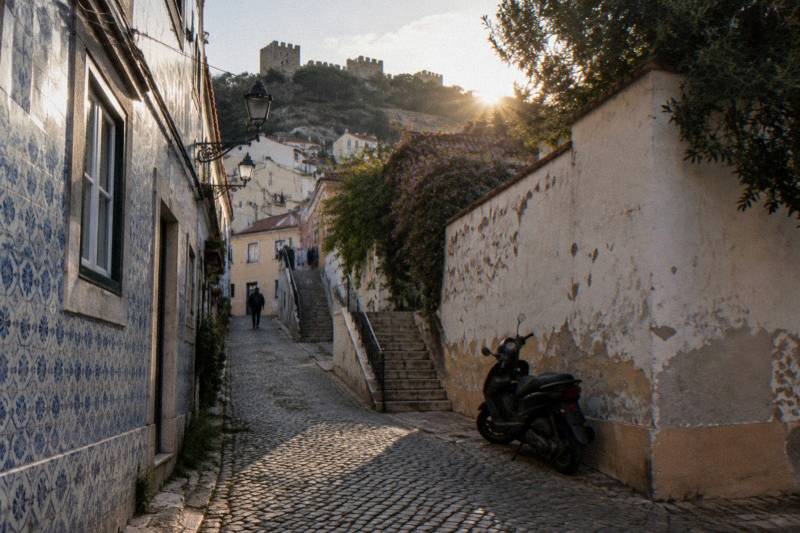
Start with the Alfama hill, because it is the stretch most people associate with the tram. The streets here are free to wander in the fullest sense: no gate, no ticket, no opening hour beyond the ordinary rhythm of a living neighbourhood. Laundry overhead, fado drifting from windows on certain nights, tiled facades and steep alleys that reward getting lost. The Alfama guide on this site covers the district street by street, including where the free walking tours meet and what the castle actually costs.
On top of that hill sits São Jorge Castle, ticketed at EUR 17, with a notice on its own site about a strike dated 17 October 2026. The two facts travel together: the Castelo hill and the Alfama streets cost nothing, while the castle inside the walls is a paid monument. You can stand on the same ridge, look at the same river, and pay nothing, a few metres from a ticket office.
The Sé de Lisboa, the cathedral, carries the same split. The tourist visit, covering the naves, the deambulatory, the High Choir and the Treasury, is EUR 7. A separate space is reserved for prayer and is free for those who come to pray, with visits limited during worship. Farther along the line's ground, the National Pantheon at Santa Engracia charges EUR 10, while the viewpoints around it in the Alfama and Graça area are open public spaces that cost nothing.
| Sight on the corridor | What is free | What is paid |
|---|---|---|
| Alfama streets and staircases | Everything, at all hours | Nothing |
| São Jorge Castle | The hill it stands on | Castle entry EUR 17 |
| Sé de Lisboa | The prayer space | Tourist visit EUR 7 |
| Miradouro de Santa Luzia | The viewpoint, garden and azulejo panels | Nothing |
| Miradouro da Graça | The viewpoint, open 24 hours | Nothing |
| Estrela garden | The whole garden | Nothing |
| National Pantheon | The surrounding streets | Entry EUR 10 |
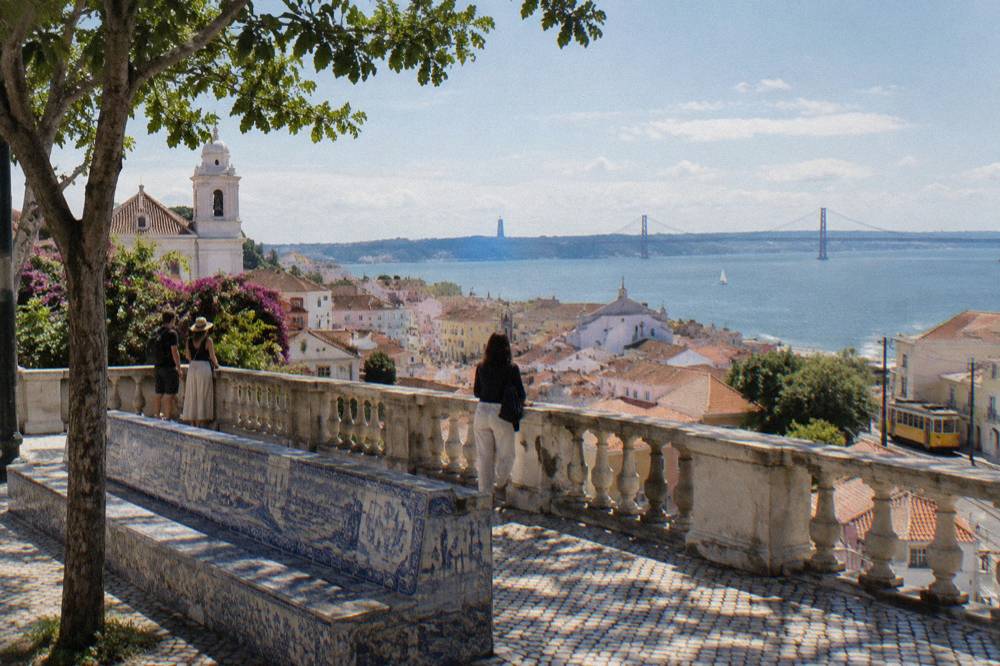
The viewpoints deserve their own mention because they are the corridor's best free asset. The Miradouro de Santa Luzia, with its garden, pond and azulejo panels, and the Miradouro das Portas do Sol beside it, both look over the Alfama rooftops to the Tagus, and both are public spaces with no admission line on their official pages. The Miradouro da Graça, officially named for the poet Sophia de Mello Breyner Andresen, is listed open 24 hours on the city's own site. Senhora do Monte, a short climb above Graça, is the classic sunset spot of the ridge. All are covered in detail in the miradouros guide, alongside the others across the city.
At the western end of the line, the Estrela district repeats the pattern. The Jardim da Estrela, four and a half hectares of romantic English-style garden with lakes, ducks, carp and an 1884 wrought-iron bandstand, is a free public garden. The Basílica da Estrela stands beside it; no official page states an admission, hours or price for the church, so this site states nothing about its interior. The garden, though, is settled: free, public, open through the day.
The tram's ground also touches the Baixa, the grid rebuilt after the 1755 earthquake, and the Prazeres end at Campo de Ourique. The Baixa's squares and the Rua Augusta passage under the arch are free to walk, while the arch's viewing platform above is paid and free only with a Lisboa Card. If the earthquake story is what draws you, the 1755 earthquake guide maps the free sites, including the Baixa grid itself and the free guided archaeological visit on Rua dos Correeiros, which needs booking.
Walking the corridor with a guide is also free. The Alfama And Mouraria walk from Live History, rated 4.71 out of 5 across 722 GuruWalk reviews, runs three hours in English and Spanish from Rossio Square, free and pay what you want, and covers exactly the eastern half of this ground. Take's Alfama Old Town walk, rated 4.85 out of 5 across 1,402 GuruWalk reviews, runs two hours 30 in English, Spanish, French and Italian from Rua dos Bacalhoeiros 12. And the Essential History walk from Tours Of My Life, rated 4.96 out of 5 across 25,140 GuruWalk reviews, runs three hours with free tastings from Praça Luís de Camões. All three are reserved on GuruWalk, and every one of them costs nothing up front.
Can You Walk The Tram 28 Route Instead Of Riding?
Yes, and the walking version is the free one. The tram 28 corridor follows public streets from Martim Moniz through the Alfama and Graça hills to Estrela and Prazeres, and every one of those streets is open without a ticket. Walking also sidesteps the tram's two real problems: crowding, and Carris's ongoing service alterations, which have shortened and diverted the line repeatedly through 2025 and 2026.
The case for walking is not puritanism about the fare, because EUR 3.30 is a modest price for a memorable ride. It is about what the tram cannot give you. From inside a crowded car you see the lanes as a moving frame, briefly and once. On foot you can stop at the Miradouro de Santa Luzia for ten minutes, double back down an alley that caught your eye, and sit in the Graça viewpoint while the light changes. The tram is transport; the route is the attraction.
Lisbon's hills are real, and this corridor has the steepest of them. The city sits mostly below 100 metres, but the Castelo, Graça and Senhora do Monte hills are the exceptions, and the calçada portuguesa pavement, white limestone and black basalt laid by hand, becomes polished and slippery on slopes, especially in rain. Walkable does not mean flat. The is Lisbon walkable blog post covers the city's gradients in full, including which public lifts and escalators help with the Castelo and Mouraria hills, and the current state of every funicular.
A practical walking plan splits the corridor into halves. East half: start at Martim Moniz, climb through Mouraria or take the escalators up from the square, cross to the Graça viewpoint, drop down past Senhora do Monte if your legs allow, then descend through the Alfama lanes to the Sé and the riverside. West half: from the Baixa, walk up through Chiado or take the Cordeiros route to the São Pedro de Alcântara viewpoint, then continue to the Estrela garden and the Prazeres end. Each half is a half-day at a comfortable pace.
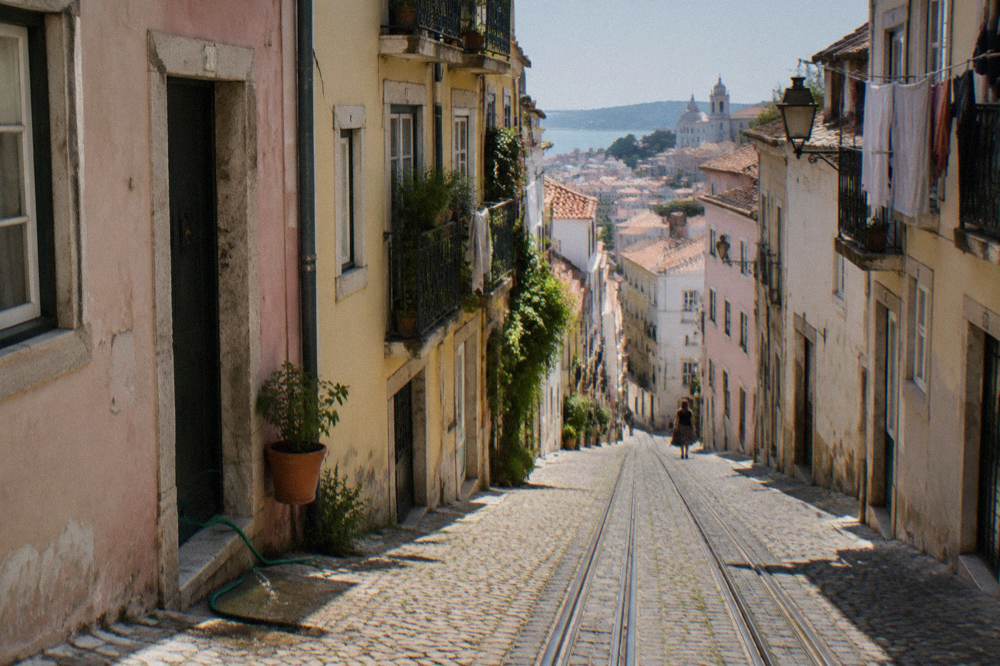
The tram's own reliability argues for the walking version too. Carris has issued repeated alteration notices for the 28E, with the service shortened between Prazeres and Camões at various points and works on the Calçada da Estrela forcing diversions, alongside resumptions noted in January and May 2026. The current section-by-section state changes with the works programme. The streets, meanwhile, have no timetable to break.
The Alfama And Mouraria walk from Live History, rated 4.71 out of 5 across 722 GuruWalk reviews, is the natural companion for the eastern half: three hours, English and Spanish, free and pay what you want, meeting at Rossio Square and reserved on GuruWalk. For the castle's exterior without the EUR 17 ticket, the Alfama Walk, Castle Exterior from Discover, rated 4.83 out of 5 across 491 GuruWalk reviews, runs two hours 30 in English from Rossio Square, also free and pay what you want on GuruWalk. Both walks cover this article's ground with a guide who can answer questions a tram cannot.
Between the two, the eastern ridge is where a guide earns the most. The lanes between Graça and the river are the oldest street plan in the city, and a three-hour walk paced to questions turns what looks like a maze into a map you can re-read on your own the next morning. That is the difference between riding past the Alfama and understanding it.
Which Tram 28 Stops Are Best For A Free Viewpoint?
The best free viewpoints on the corridor are the Miradouro de Santa Luzia and the Miradouro das Portas do Sol above the Alfama, the Miradouro da Graça on the eastern ridge, and the São Pedro de Alcântara garden above the Baixa. All are open public spaces with no admission, and the Graça viewpoint is listed open 24 hours. Senhora do Monte sits a short climb above it and costs nothing either.
Santa Luzia is the classic postcard: a garden terrace with a pond, azulejo panels and a kiosk, looking straight down over the Alfama's rooftops to the river. Portas do Sol sits beside it, a broad terrace with its own kiosk and the same sweep of view. The official timetable's return-direction stops include Miradouro de Santa Luzia and Largo das Portas do Sol, which tells you the tram passes this ground, but you do not need it to: both terraces sit at the top of the Alfama's lanes, reachable on foot from the Sé side by a stiff climb or from the Graça side by a gentle descent. More of these guides are collected on Free Things To Do In Lisbon.
The Graça viewpoint, officially the Miradouro Sophia de Mello Breyner Andresen, is the ridge's living room: a shaded terrace with a kiosk, listed open 24 hours on the city's site, with the castle and the river in one frame. Senhora do Monte is the sunset summit, a small terrace a few minutes' climb above it, with the widest panorama of the centre. Neither has a gate, a ticket or a closing time printed anywhere official.
| Viewpoint | District | What you see | Cost |
|---|---|---|---|
| Miradouro de Santa Luzia | Alfama | Alfama rooftops, Tagus, azulejo panels | Free |
| Miradouro das Portas do Sol | Alfama | River and rooftop panorama | Free |
| Miradouro da Graça | Graça | Castle, river, open 24 hours | Free |
| Miradouro da Senhora do Monte | Graça | The widest centre panorama | Free |
| Miradouro de São Pedro de Alcântara | Bairro Alto | Baixa skyline, castle, azulejo map | Free |
The official Visit Lisboa page for the Santa Luzia viewpoint describes the garden, pond and panels without printing any admission line, which is the pattern across all of these: they are open public spaces. The city's own page for the Graça viewpoint is the source of the 24-hour listing. Bring what you need, because the kiosks are the only service, and check the sunset timing for your month: December light fades before 17:30, midsummer after 20:00.
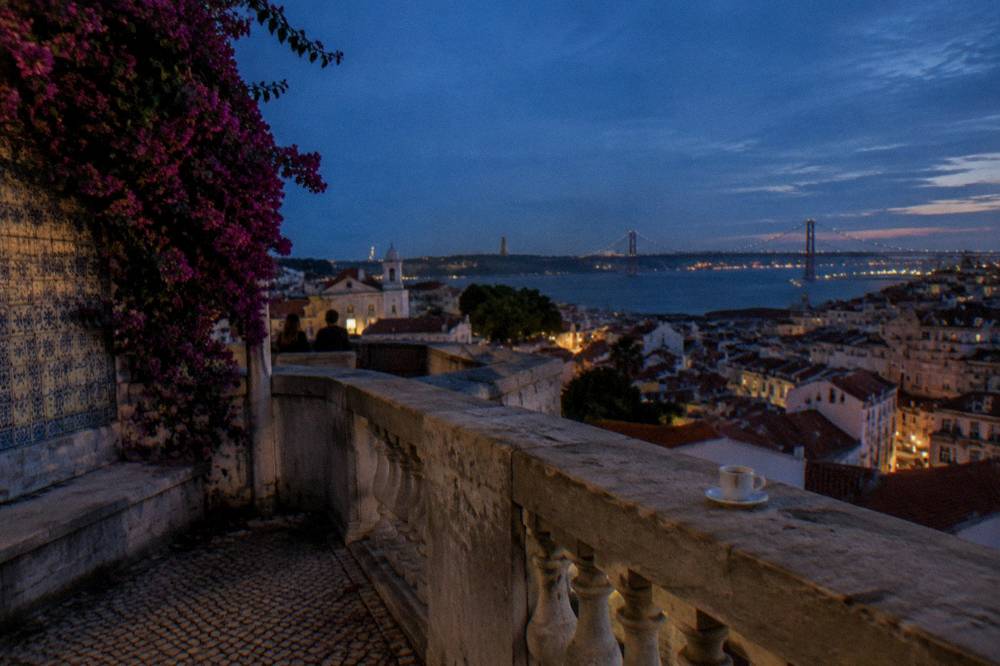
One caution belongs here. The Glória funicular, which once carried people up to the São Pedro de Alcântara viewpoint from the Baixa, is out of service, along with the Bica, Lavra and Santa Justa lifts. The viewpoint itself is unaffected: you climb on foot from Restauradores or descend from Bairro Alto. The Graça funicular is the exception, reopened 30 April 2026, running 07:00 to 21:00 at EUR 4.30 for two trips, and it serves the Graça hill directly.
What Does A Tram 28 Ride Cost Compared With Walking It?
A tram 28 ride costs EUR 3.30 bought on board, or EUR 1.72 per journey with a Zapping card. A 24-hour Carris and metro pass costs EUR 7.25, and the Lisboa Card covers trams as part of its admission bundle. Walking the same corridor costs nothing but effort. The fare figures come from the Carris 2026 prices table, and the ride is a single transit journey, not a tour ticket.
The fare structure is simple and worth knowing before you board. The on-board price is the expensive option, more than double the Zapping rate, because it is priced for convenience. Zapping is the rechargeable card system: you load credit, tap, and pay EUR 1.72 per journey on the Carris and metro network. If you are riding more than a couple of times in a day, the 24-hour Carris and metro ticket at EUR 7.25 becomes cheaper than four single Zapping fares.
| Way to travel the corridor | Cost | Notes |
|---|---|---|
| Tram 28, ticket from the driver | EUR 3.30 | Single journey, bought on board |
| Tram 28, Zapping credit | EUR 1.72 | Per journey, rechargeable card |
| 24h Carris and metro pass | EUR 7.25 | Unlimited, buses, trams, metro |
| Lisboa Card 24h adult | EUR 31 | Includes transport plus museum entry |
| Walking the route | Nothing | The hills are the only price |
The Lisboa Card deserves a plain sentence here because it bundles transport with attractions: the adult 24-hour card is EUR 31, the 48-hour EUR 51 and the 72-hour EUR 62, and it covers trams along with admission to a long list of museums. Whether it pays back depends entirely on how many paid sites you visit, since the corridor's own highlights, the streets, squares and viewpoints, are free. The full arithmetic is worked through in the is the Lisboa Card worth it blog post.
The comparison with walking is not really financial. Even at the on-board rate, the tram costs less than a coffee and a pastel de nata. The real comparison is between a moving window and a set of streets you can enter. Walk the corridor and you keep the option of riding one leg when your legs vote against another climb: ride up, walk down, which is how plenty of locals use the line in the first place. The same approach works for the whole city, not just this line.
Which Free Walking Tours Follow The Tram 28 Streets?
The free walking tours that follow Tram 28's streets are Live History's Alfama And Mouraria walk, Take's Alfama Old Town, Discover's Alfama Walk with the castle exterior, and Hi Lisbon Walking Tours' Unmissable Alfama, all listed on GuruWalk and all pay what you want. For the wider city, Take's Unmissable Essentials and Original Lisbon Tours' Original Local walk on freetour.com cover the centre the tram line crosses.
The eastern half of the corridor is the best served. The Unmissable Alfama walk from Hi Lisbon Walking Tours, rated 4.78 out of 5 across 1,706 GuruWalk reviews, runs two hours 30 in English from Praça do Comércio, free and pay what you want, reserved on GuruWalk. It is the Alfama companion for visitors who want the lanes, the staircases and the viewpoints explained rather than glimpsed through a tram window.
For the corridor's western half and the city centre, three walks stand out. The Unmissable Essentials walk by Take, rated 4.87 out of 5 across 6,312 GuruWalk reviews, runs two hours 45 in English, Spanish, French and Italian from Praça dos Restauradores, on GuruWalk. The Original Local walk from Original Lisbon Tours, rated 9.6 out of 10 across 6,630 freetour.com reviews, runs three hours in English from Praça Luís de Camões and is listed on freetour.com. The Old Neighborhoods And Stories walk from Tours Of My Life, rated 4.92 out of 5 across 353 GuruWalk reviews, runs two hours 45 in English, Spanish and French, also from Praça Luís de Camões on GuruWalk. Every one of them is free, pay what you want, with no required cost.
Every walk on this site, all 63 of them across GuruWalk and freetour.com, works the same way: reserve a place, take the walk, and pay the guide what you think it was worth at the end. The booking itself costs nothing, and cancellation is free from your account. That model fits the tram 28 corridor perfectly, because the corridor's own ground is free too: the walks simply add a guide's knowledge to streets that were never ticketed in the first place.
A note on the Alfama Walk with the castle exterior, mentioned above: it is the walk for visitors who want the castle's place in the Alfama explained without the EUR 17 entry, rated 4.83 out of 5 across 491 GuruWalk reviews, two hours 30 in English from Rossio Square on GuruWalk. Paired with a self-guided afternoon on the Graça viewpoints, it covers the whole eastern ridge for nothing but the tip.
Common Questions About Tram 28
How much does it cost to ride tram 28 in Lisbon?
A single tram 28 journey costs EUR 3.30 bought on board, or EUR 1.72 per journey with Zapping credit on a rechargeable card. A 24-hour Carris and metro pass costs EUR 7.25 if you plan several rides. The figures come from the Carris 2026 prices table.
Can you walk the tram 28 route for free?
Yes. The route follows public streets from Martim Moniz through the Alfama, Graça and Estrela districts to Campo de Ourique, and every street, square and viewpoint on it is free to enter. Only the castle, the Sé tourist visit and the Pantheon inside the corridor charge, and none of them is needed to enjoy the route.
Which sights along the tram 28 route are free?
The Alfama lanes and staircases, the Miradouro de Santa Luzia, Portas do Sol, Graça and Senhora do Monte viewpoints, the São Pedro de Alcântara garden, the Estrela garden, and the Baixa squares and the Rua Augusta arch passage are all free. São Jorge Castle at EUR 17, the Sé tourist visit at EUR 7 and the Pantheon at EUR 10 are the paid exceptions.
Is the tram 28 running normally right now?
Carris has issued repeated service alterations for the 28E through 2025 and 2026, with shortened sections, diversions for street works and resumptions noted during the year. The current state changes with the works programme, so check the Carris alterations page before planning a ride. The walking route is unaffected by any of it.
Are the funiculars near the tram 28 route working?
The Glória, Bica and Lavra funiculars and the Santa Justa lift are all out of service, with substitute bus lines running instead. The exception is the Graça funicular, which reopened on 30 April 2026 and runs daily from 07:00 to 21:00, charging EUR 4.30 on board for two trips. None of them is free.
Is a free walking tour a good alternative to riding tram 28?
For the eastern half of the route, yes. Walks like the Alfama And Mouraria tour from Live History, rated 4.71 out of 5 across 722 GuruWalk reviews, cover the Alfama and Graça ground in three hours, free and pay what you want, meeting at Rossio Square. You get the same streets with a guide's explanation, at no required cost.