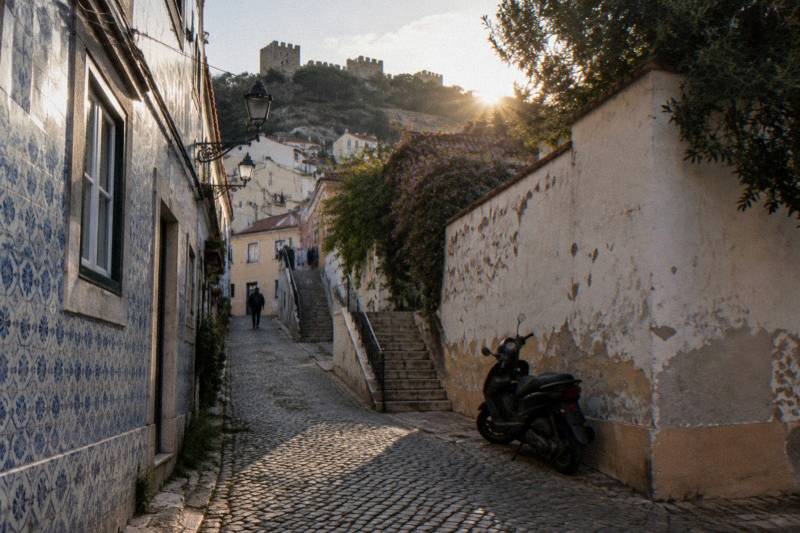
Free Fado In Lisbon: Where To Hear The City Sing Without A Ticket
Fado was born in Lisbon's hillside alleys, and the amateur tradition that started there still sings for the price of a drink. This guide sets out the sourced free nights, the museum's real entry rules, and the free walks that explain the ground the songs came from.
Short answer
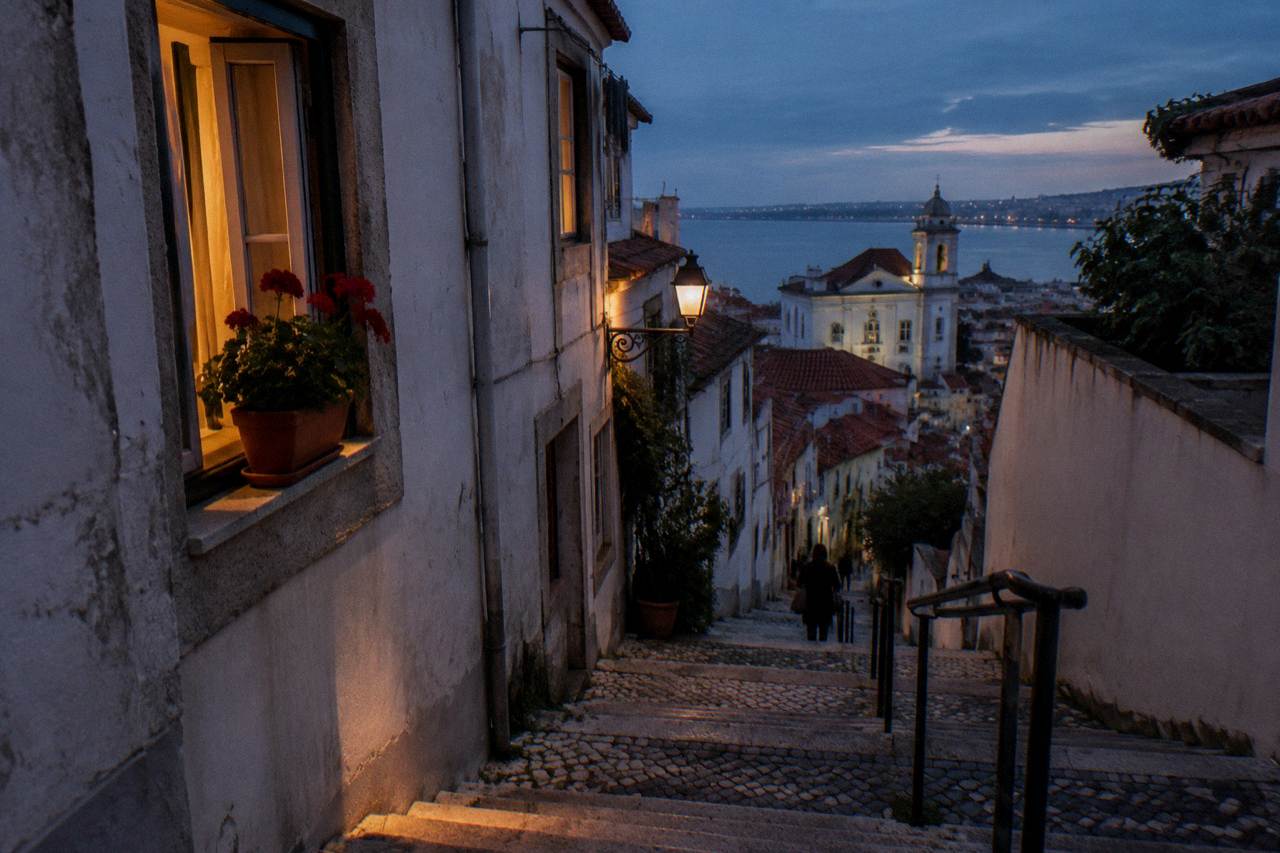
Free fado in Lisbon means fado vadio, sung in small tascas for the price of your drinks. The Museu do Fado's roteiro lists fado at Tasca do Chico in Bairro Alto on Monday and Wednesday nights. In Alfama, eateries around the São Miguel church square host spontaneous sessions, and June's Festas de Lisboa fills whole streets with free singing.
Where Can You Hear Free Fado In Lisbon?
Free fado in Lisbon means fado vadio, the amateur tradition sung in small tascas rather than ticketed clubs. The one sourced night is Tasca do Chico in Bairro Alto, which the Museu do Fado's own roteiro lists with fado on Monday and Wednesday. Around Alfama's São Miguel square, simple eateries host spontaneous sessions; drinks are the cost.
The word to hold onto is fado vadio, sometimes translated as vagabond fado. It is the amateur, spontaneous side of the tradition: anyone in the room can sing, the cast changes from night to night, and nobody sells you a ticket. The professional dinner-show circuit is a different thing entirely, with fixed menus and fixed prices, and the two should never be confused when you are planning a free evening. Fado itself was inscribed on the UNESCO Representative List of the Intangible Cultural Heritage of Humanity in 2011, recognised as the urban popular song of Portugal, and the vadio tradition is part of what that inscription protects.
The clearest sourced starting point is Tasca do Chico, at Rua do Diário de Notícias 39 in Bairro Alto. The Museu do Fado's roteiro page, the museum's own guide to fado houses, names it as a stop for amateur fado enthusiasts and prints the line "Fado a Segunda e Quarta", fado on Monday and Wednesday, with a variable cast. The tasca opened in 1996 in a former olive and sausage warehouse. What the roteiro does not state is a cover charge or a minimum consumption, so the honest position is to check the door policy on the night: the singing carries no ticket, the drinks and food are what you pay for. There is a second Tasca do Chico branch on Rua dos Remédios 83 in Alfama, and the roteiro map also marks A Baiuca and Mesa de Frades, but no schedule or consumption policy is published for those, so treat them as possibilities to confirm rather than promises.
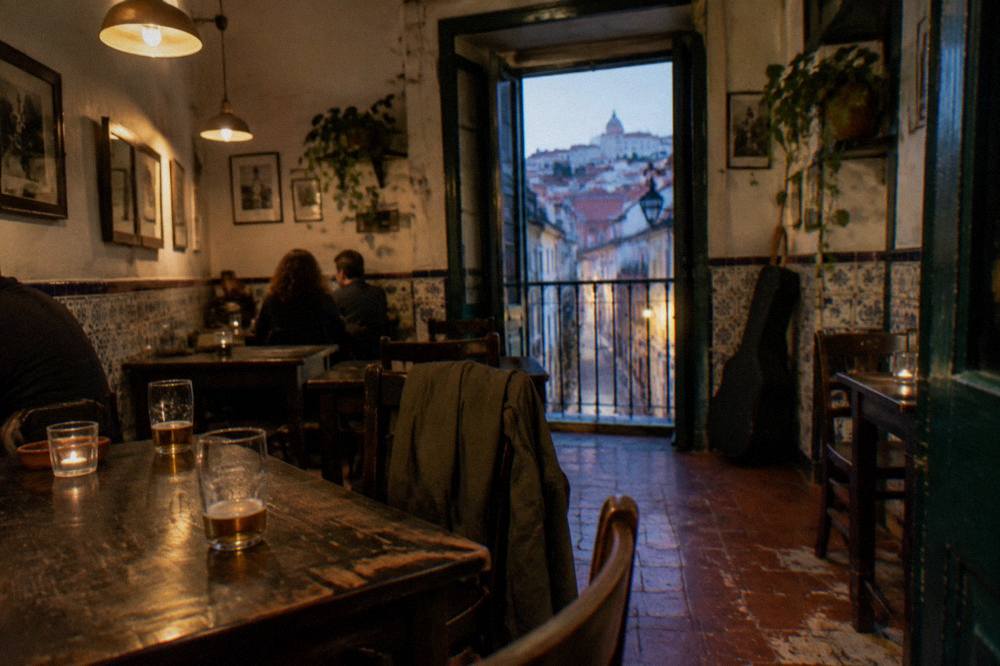
Beyond the named tascas, the tradition runs on trust and timing. Fado vadio nights are living room scale: a dozen tables, a guitar arrives, someone who came in for dinner stands up. That is why no responsible guide can print a full weekly calendar for the whole city, and why the honest advice is to anchor your plan on the nights that are published and stay flexible otherwise.
| Place | Neighbourhood | What the source states | Your cost |
|---|---|---|---|
| Tasca do Chico, Rua do Diário de Notícias 39 | Bairro Alto | Fado on Monday and Wednesday, variable cast, per the Museu do Fado roteiro | Drinks and food; door policy not stated |
| Eateries around the São Miguel church square | Alfama | Fado vadio sung in several simple eateries, per Visit Lisboa's fado route | Whatever you eat and drink |
| Tasca do Chico, Rua dos Remédios 83 | Alfama | Listed on the roteiro map, no schedule published | Confirm on the night |
| A Baiuca and Mesa de Frades | Alfama | Listed on the roteiro map, no schedule or policy published | Confirm on the night |
The Visit Lisboa fado route, which describes the São Miguel square tradition, is the official page behind the Alfama entries: the Visit Lisboa fado route. For Bairro Alto, the museum's roteiro entry is the primary source: Tasca do Chico on the Museu do Fado roteiro.
Is Fado Free In Alfama And Mouraria?
Yes, in the fado vadio sense. Visit Lisboa's fado route describes the square beside the church of São Miguel in Alfama, where several simple eateries host amateur fado, and the Museu do Fado roteiro maps tascas across the city. You pay for what you drink; the singing itself carries no ticket.
Alfama and Mouraria are the two neighbourhoods the songs actually come from, and the free tradition there is less a schedule than a habit of place. Visit Lisboa's fado route text says the eateries around the São Miguel church square "open out onto a square with several simple eateries where fado vadio is sung". That phrasing matters: the singing is a feature of the square, not a bookable show, so an evening spent eating and wandering there is the real method. Mouraria, the hill on the other side of Martim Moniz, is the other historic ground of the tradition, and the same rule applies, arrive for dinner, stay for whatever the room produces.
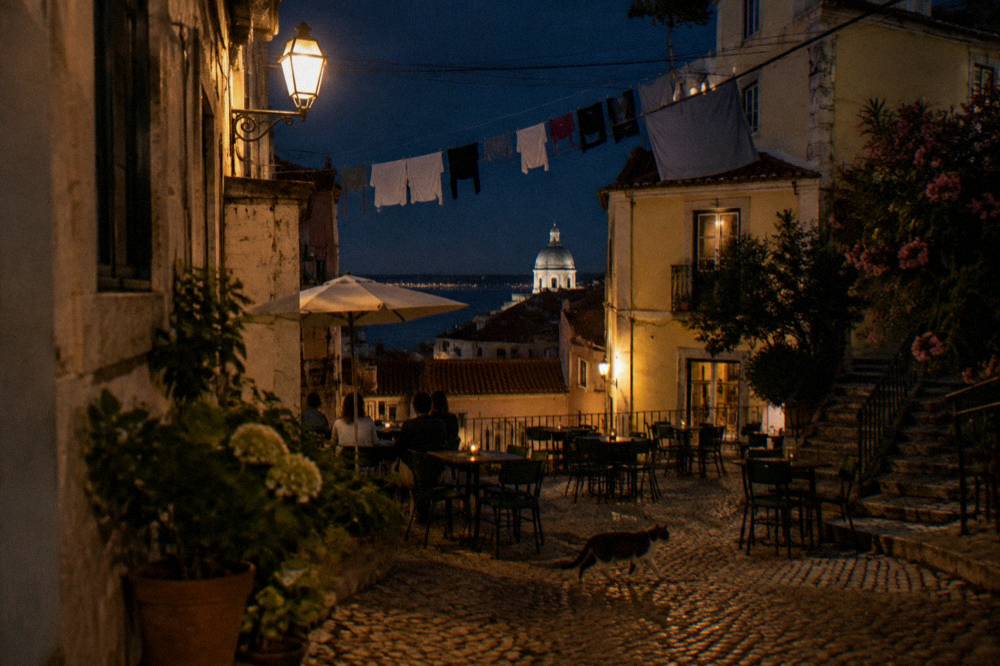
To understand the hills before nightfall, a free walk is the natural pairing. The site's featured walk for this ground is the Alfama And Mouraria, 3 Hours walk, run by Live History on GuruWalk: 3 hours, English and Spanish, meeting at Rossio Square, rated 4.71 out of 5 across 722 GuruWalk reviews. Free, pay what you want, reserved on the guide's GuruWalk page.
Two other walks cover this same ground and can be reserved the same way. Take's Alfama Old Town, on GuruWalk, runs 2 hours 30 minutes in English, Spanish, French and Italian from Rua dos Bacalhoeiros 12, rated 4.85 out of 5 across 1,402 GuruWalk reviews. Essential History, Free Tastings, by Tours Of My Life on GuruWalk, runs 3 hours in English and Spanish from Praça Luís de Camões, rated 4.96 out of 5 across 25,140 GuruWalk reviews, the largest review pool of any walk on this site's roster of 63 free walking tours across GuruWalk and freetour.com.
One caution belongs here, because the paid circuit works hard to look like the free one. Fado in Chiado, at venues such as the Cine Theatro Gymnásio on Rua da Misericórdia, is a regular paid performance, listed by Visit Lisboa as an event, not a free option. A "free fado show with dinner" flyer in a doorway is a dinner price with the word free attached to the wrong noun. The vadio tradition never asks for a ticket; it asks for a table. A free walk covers this ground: Take's Alfama Old Town.
For more on the neighbourhoods themselves, see the site's Alfama old town guide and the Mouraria and Graça walking guide.
What Is Fado Etiquette When You Listen For Free?
Stay quiet while someone is singing, keep conversations for the pauses, and never ask for a song mid-performance: the silence during fado is part of the form. Order something, since the drink or meal is the economy that keeps fado vadio alive, and confirm the door policy at each tasca before you settle in.
Fado rooms run on one rule above all the others: when a singer stands, the room stops. Conversations pause, cutlery settles, phones stay in pockets. The silence is not politeness layered on top of the music, it is part of the performance itself, and locals will shush without embarrassment if you talk through a song. Between songs the room comes back to life, orders are taken, glasses are refilled, and then the guitar signals the next fado and everything holds again. If you have never sat through it, the rhythm of hush and release is the whole experience.
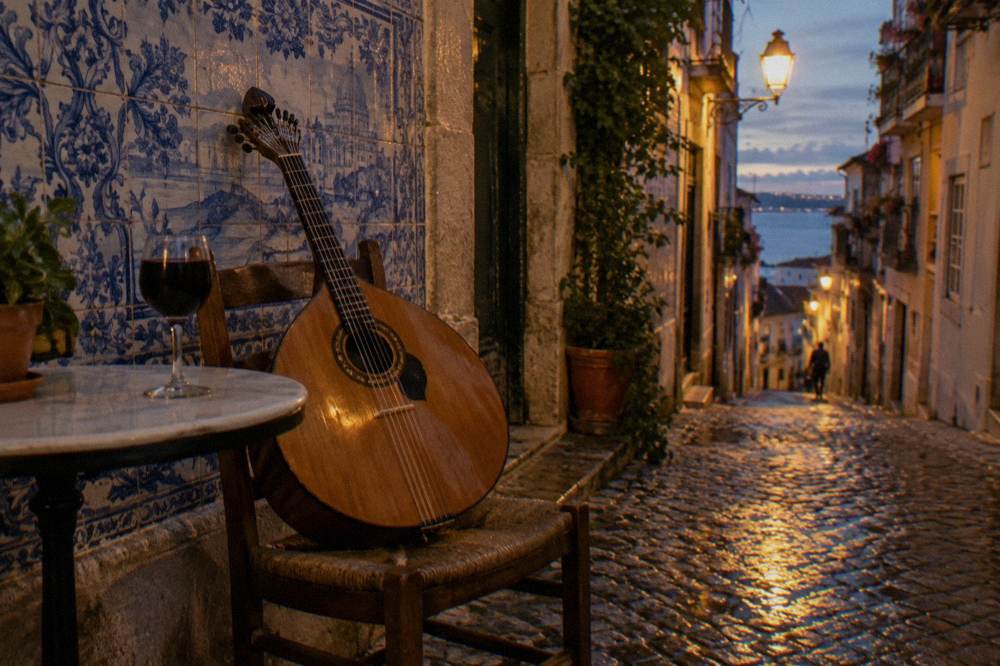
The second rule is economic rather than social. Fado vadio is free to listen to, but the tascas that host it are businesses, and the meal or the drinks are what keep the night possible. Order properly, at least a round of whatever the house serves, and do not occupy a table for a three-hour session on one mineral water. The third rule is honesty about the unknown: no official page states a cover charge or minimum for Tasca do Chico or for the Alfama eateries, so confirm the door policy when you arrive rather than assuming one way or the other.
| Situation | What to do | Why |
|---|---|---|
| A singer stands up | Stop talking, put the phone away | Silence is part of the performance |
| Between songs | Order, chat, move around normally | The room breathes between fados |
| Choosing a tasca | Confirm the door policy on arrival | No cover or minimum is published for the free venues |
| Paying | Settle the food and drink bill | The meal is the economy behind the free singing |
| Photographing | Ask, and never during a song | Small rooms, living tradition, working staff |
If you want the context of the hills before the evening, the Alfama Walk, Castle Exterior tour on GuruWalk is another option: 2 hours 30 minutes, English, meeting at Rossio Square, rated 4.83 out of 5 across 491 GuruWalk reviews. The castle itself, São Jorge, is ticketed, while the Castelo hill streets around it are free to walk, which is exactly the kind of two-facts distinction a good walk makes clear.
Is The Fado Museum Free?
No. The Museu do Fado charges EUR 5 for a standard adult ticket, open Tuesday to Sunday, 10:00 to 18:00. Free entry applies to children up to 12, Lisboa Card adults, and Lisbon-municipality residents: under 23, over 65, or any resident on Sundays and holidays until 14:00. Visitors from outside the municipality pay.
The museum sits at Largo do Chafariz de Dentro 1, near Santa Apolónia at the foot of Alfama, which makes it a natural stop before a fado vadio evening. Its own visit page sets the terms plainly: EUR 5 for the normal ticket, last admission 17:30, closed on Mondays and on 1 January, 1 May and 24, 25 and 31 December. The free categories are specific and worth knowing exactly, because they are not a general free Sunday for tourists. Children up to 12 enter free, adults holding a Lisboa Card enter free, and residents of the Lisbon municipality enter free if they are under 23, over 65, or on Sundays and public holidays until 14:00. Visitors from outside the municipality pay the EUR 5 at any time.
| Visitor | Entry |
|---|---|
| Standard adult | EUR 5 |
| Children up to 12 | Free |
| Lisboa Card adults | Free |
| Lisbon-municipality residents, under 23 or over 65 | Free |
| Lisbon-municipality residents, Sundays and holidays until 14:00 | Free |
| Everyone else, every day | EUR 5 |
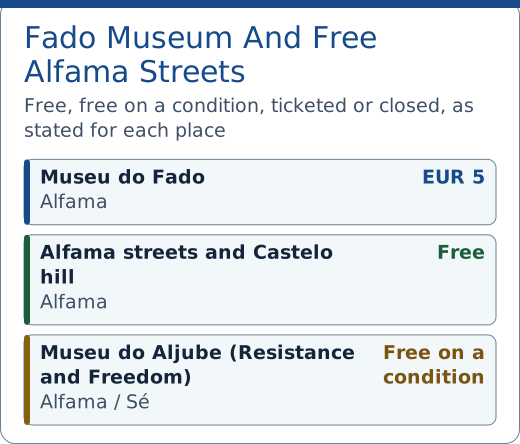
The full conditions are on the museum's own page: Museu do Fado visitor information. One more honest gap: the museum's auditorium runs regular concerts, and no official page states whether any of them are free, so check the museum's own programme rather than counting on a free performance there. If a paid museum visit does not fit the plan, the roteiro, the museum's online guide to fado houses, costs nothing to read and is itself a small piece of curation worth an evening of planning.
Which Free Walking Tours Explain Fado?
Several free, pay what you want walks cover the ground where fado was born, on GuruWalk and freetour.com. None of the listings promises a live performance, so treat them as context: the hills, the streets and the story of the songs. The walks are reserved on their own platform pages.
A walk cannot sing to you, and it is important not to expect one to. What the good walks do is give you the geography of the tradition, which streets, which squares, which hills, so that when you hear the first guitar in a small room that night, the place makes sense. The site's roster carries 63 free walking tours across GuruWalk and freetour.com, and the walks that meet in this part of the city are the ones to match with a fado evening, because the meeting points sit inside the story.
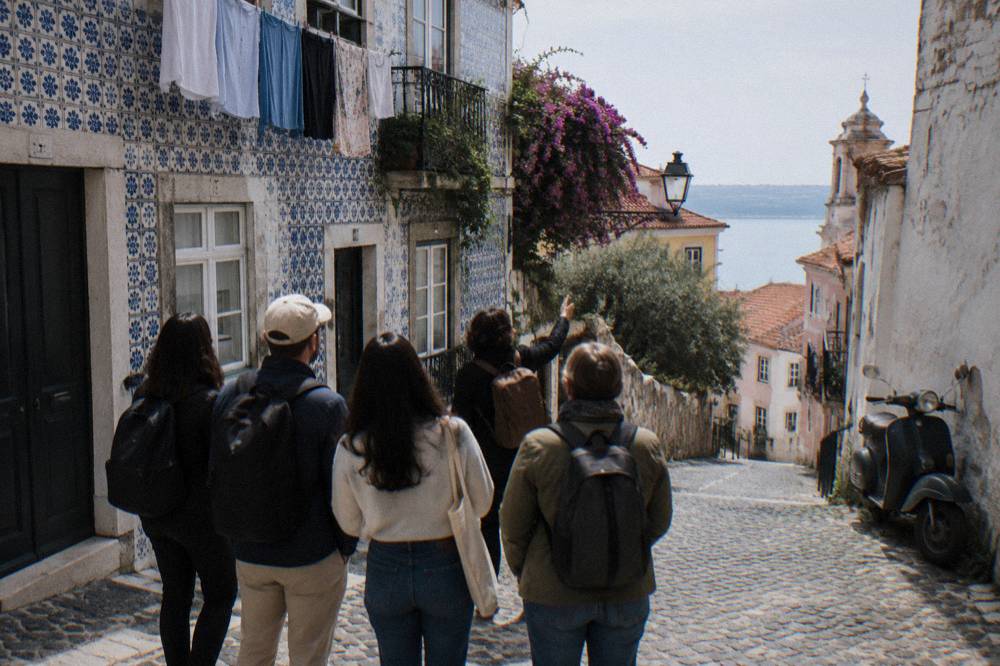
The Alfama-focused option with the deepest review pool on this ground is Alfama Secrets, run by Hi Lisbon Walking Tours on GuruWalk: 2 hours 30 minutes, English, meeting at Praça do Comércio, rated 4.78 out of 5 across 1,706 GuruWalk reviews. Meeting at the river and climbing into the hillside puts you exactly where the vadio tradition lives, an hour or two before the tascas open their doors.
| Walk | Platform | Figures | Duration | Language | Meets at |
|---|---|---|---|---|---|
| Alfama And Mouraria, 3 Hours | GuruWalk | 4.71 out of 5 across 722 GuruWalk reviews | 3 hours | English and Spanish | Rossio Square |
| Alfama Secrets, Hi Lisbon | GuruWalk | 4.78 out of 5 across 1,706 GuruWalk reviews | 2 hours 30 minutes | English | Praça do Comércio |
| Alfama Walk, Castle Exterior | GuruWalk | 4.83 out of 5 across 491 GuruWalk reviews | 2 hours 30 minutes | English | Rossio Square |
| Take's Alfama Old Town | GuruWalk | 4.85 out of 5 across 1,402 GuruWalk reviews | 2 hours 30 minutes | English, Spanish, French and Italian | Rua dos Bacalhoeiros 12 |
Every one of these walks is free, pay what you want, with no money figure attached: you reserve a place on the walk's own GuruWalk page and pay the guide what the walk was worth to you at the end. The full picture of how these walks work, including what the listings themselves say about payment, is covered in the site's free walking tours guide, and the question of whether they are really free is answered in are free walking tours really free.
What Free Fado Events Run This Season?
The big one is June's Festas de Lisboa, when free fado runs in the streets and arraiais of Alfama and Mouraria around Santo António, and the Marchas Populares parade fills Avenida da Liberdade on the night of 12 to 13 June as a free public event. Exact sets are published per edition, closer to the time.
June is the month the tradition takes over the city. The Festas de Lisboa, organised around the Santo António celebrations, put free fado into the streets and the arraiais, the neighbourhood festival squares, of Alfama and Mouraria, and the whole thing is a public, free-for-anyone affair. The Marchas Populares parade on Avenida da Liberdade, on the Santo António night of 12 to 13 June, is a free public event, with the programme published by the city's cultural body each year. What no source can honestly give you months ahead is a list of specific fado sets and times: those are published per edition, closer to the date, so plan the week, not the hour.
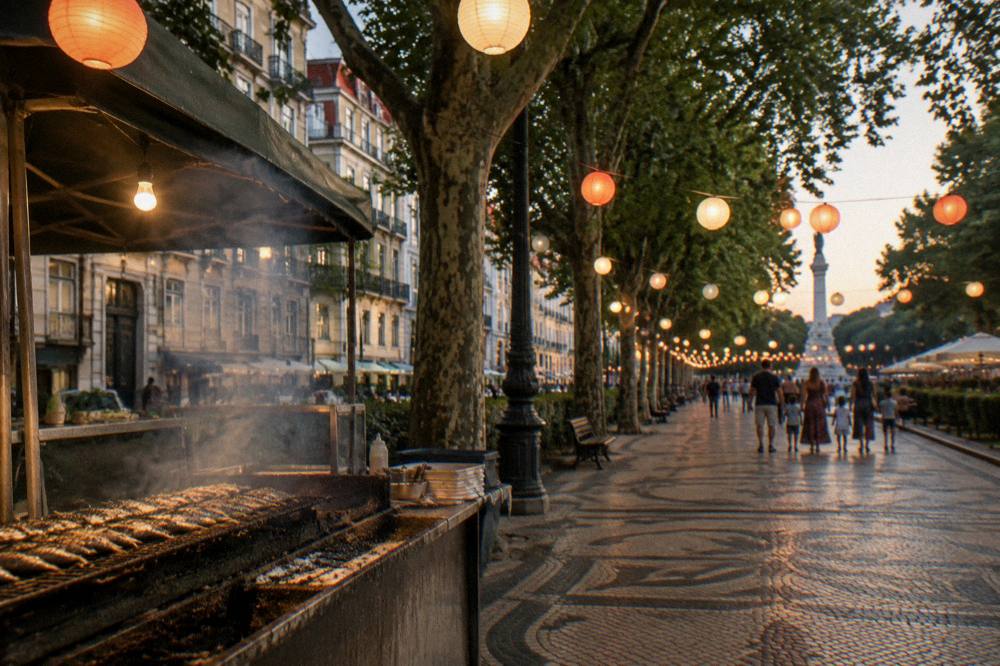
Outside June, the honest answer is that free fado in Lisbon is a nightly habit, not an events calendar. The tascas and the São Miguel square tradition run on their own rhythm, the museum's roteiro is the map, and the events layer lands on top of that foundation a few times a year. If your visit falls outside festival season, the plan does not change much: anchor on the published nights, walk the hills in the afternoon, and let the evening find its own shape. For the wider evening picture, see free things to do in Lisbon at night.
If you want to build a full free day around a fado night, the walks that cover the wider city work well as the daytime half. Unmissable Essentials By Take, on GuruWalk, runs 2 hours 45 minutes in English, Spanish, French and Italian from Praça dos Restauradores, rated 4.87 out of 5 across 6,312 GuruWalk reviews. Original Local, 3 Hours, listed on freetour.com, runs 3 hours in English from Praça Luís de Camões, rated 9.6 out of 10 across 6,630 freetour.com reviews. Local's Eyes Walk, on GuruWalk, is the short option: 1 hour 30 minutes, English, meeting at Rossio Square, rated 4.93 out of 5 across 350 GuruWalk reviews. All three are free, pay what you want, reserved on their own platform pages.
Whatever combination you choose, the principle this site holds to is simple and it is the same one the tradition runs on: the singing costs nothing, the ground it comes from costs nothing to walk, and everything else is between you and the person who guided you or fed you. That is the whole economy of Free Things To Do In Lisbon, and fado is its clearest expression.
Common Questions About Free Fado In Lisbon
Is Fado In Lisbon Free To Watch?
The fado vadio tradition is: amateur singers perform in small tascas and the singing carries no ticket. You pay for your drinks or your meal. Professional dinner shows in Chiado and elsewhere are paid performances and are a different thing.
What Is Fado Vadio?
Fado vadio, sometimes called vagabond fado, is the amateur, spontaneous form of fado: anyone in the room can sing, the cast changes from night to night, and there is no stage or ticket. Visit Lisboa's fado route describes it being sung in the simple eateries around the São Miguel church square in Alfama.
Where Can I Hear Fado For Free In Lisbon?
The clearest sourced night is Tasca do Chico in Bairro Alto, which the Museu do Fado's roteiro lists with fado on Monday and Wednesday. In Alfama, the eateries around the São Miguel church square host fado vadio. The roteiro also maps a Tasca do Chico branch in Alfama plus A Baiuca and Mesa de Frades, with no published schedule, so confirm on the night.
Is The Museu Do Fado Free?
No, not for most visitors. The standard adult ticket is EUR 5. Free entry applies to children up to 12, Lisboa Card adults, and Lisbon-municipality residents who are under 23, over 65, or visiting on Sundays and holidays until 14:00. Visitors from outside the municipality pay every day.
Do I Need To Book For Free Fado?
Not for the street events: the Festas de Lisboa fado in June and the Marchas Populares parade are free public events. For the tascas, no booking system is published, but the rooms are small, so arriving early for a table is the practical advice. Confirm the door policy when you arrive.
Can A Free Walking Tour Include Live Fado?
No walk listing on this site's roster promises a live performance. What the free walks offer is the context: the hills, streets and squares the tradition comes from. Reserve the walk on its own GuruWalk or freetour.com page, walk in the afternoon, and find the singing yourself in the evening.