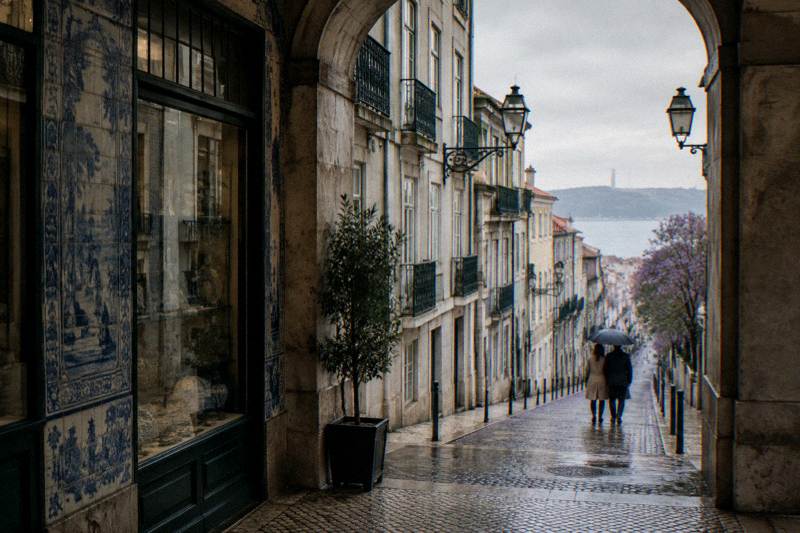
What Free Things Can You Do In Lisbon At Night?
The free side of Lisbon after dark: viewpoints that stay open, riverside walks, Bairro Alto streets and fado vadio nights, with honest notes on what is free and what is not.
What Free Things Can You Do In Lisbon At Night?
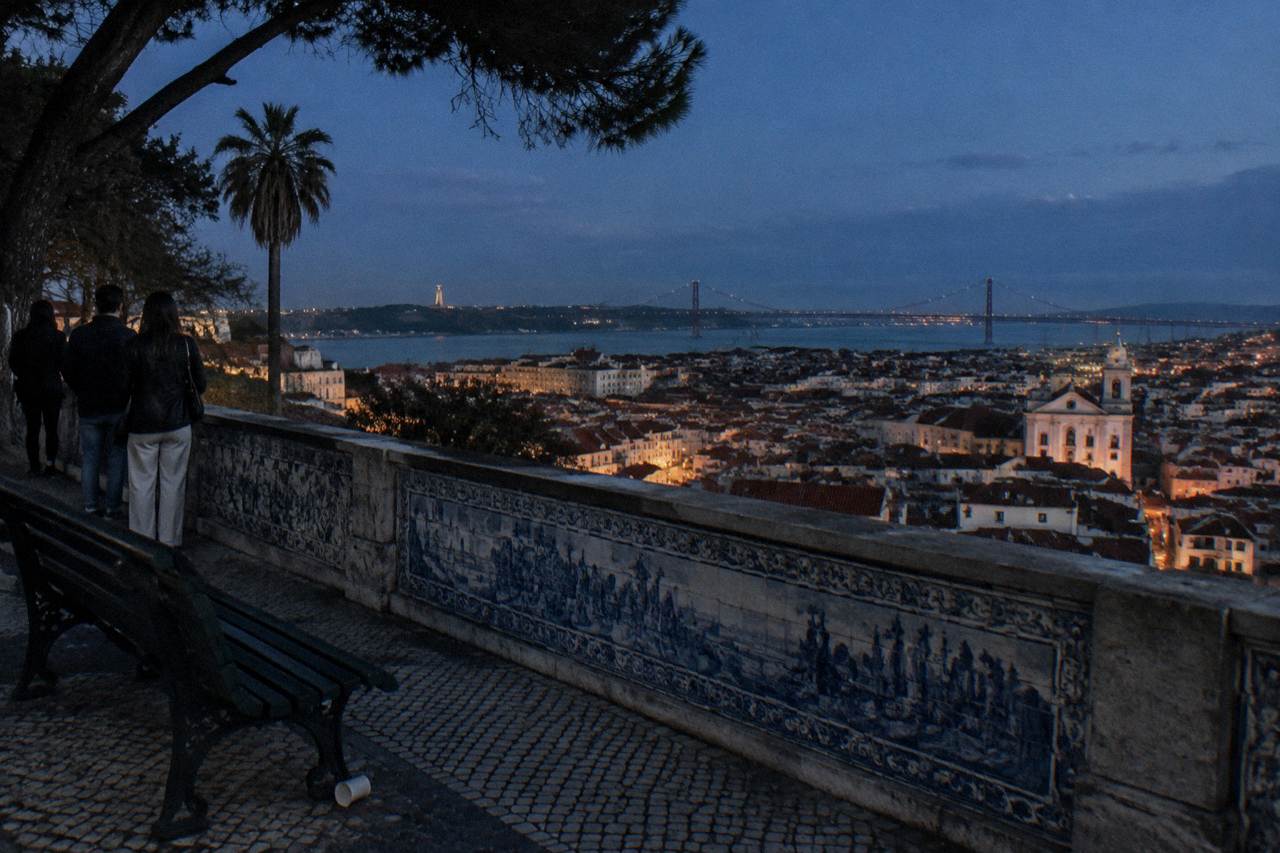
The free things to do in Lisbon at night are the public ones: the miradouros, which are open viewpoints with no ticket, the Ribeira das Naus riverside promenade, the Praça do Comércio, the Pink Street in Cais do Sodré, and the streets of Bairro Alto, where fado vadio is sung on set nights. None of these charges an entry fee, and each is a real evening out on foot.
Lisbon's evening economy is built around outdoor space. The hills that make the city tiring at midday become its best free asset once the light drops, because the viewpoints on top of them are public terraces, not ticketed attractions. Down at the water, the riverside promenade linking the Praça do Comércio to Cais do Sodré is a public walk with a kiosk and broad steps, and Visit Lisboa calls it the place for the best sunset in the city. Between the hills and the river sits most of what a visitor wants from a Lisbon evening, and almost none of it has a turnstile.
The paid exceptions matter, because they sit right next to the free ground. The Santa Justa lift and the Gloria, Bica and Lavra funiculars are all marked out of service by Carris, so none of them can carry you uphill at night while the closures last. Tram 28 is a paid ride, EUR 3.30 on board. A tower, a museum interior or a lift never inherits the free status of the street it stands on, and this article keeps those two facts separate throughout.
There is also a free guided option. The themed walks below run on the pay what you want model, reserved on their platforms, and this site's evening pick is Small Group, Secret Spots, Tastings, a GuruWalk walk rated 4.99 out of 5 across 399 GuruWalk reviews, which meets at Praça Luís de Camões and spends 2 hours 45 minutes on the quieter side of the city in English. It is one of three evening-suitable walks compared here.
Which Free Miradouros Are Worth Visiting After Dark?
Three miradouros stand out after dark, and all of them are free public viewpoints with no admission: the Miradouro de Santa Catarina, with its Adamastor statue and terrace, the Miradouro de São Pedro de Alcântara, with its garden and azulejo skyline map, and the Miradouro de Santa Luzia in Alfama, with its tiled panels and pond. Visit Lisboa describes Santa Catarina as a place for a beer in the evening and into the night.
The miradouro is the one Lisbon institution that is genuinely, unconditionally free, because it is a terrace rather than an attraction. The Miradouro de Santa Catarina, also called Adamastor, sits above the river with a view Visit Lisboa says takes in the Tagus estuary, the bridge and the rooftops, and the same page describes the evening scene there as sunset with music and company. A kiosk sells drinks, and the terrace itself asks for nothing. The Adamastor statue at its centre is a figure Camões created as the Cape of Torment, a piece of literary history you read standing up, for free.
The Miradouro de São Pedro de Alcântara is the Bairro Alto side of the same ridge. It is a garden viewpoint with an azulejo map of the skyline laid out along the balustrade, so you can identify the buildings across the valley while the city lights come on. No closure or works notice for it appears on the municipal pages, though the Gloria funicular that runs below it is out of service, so the climb is on foot. In Alfama, the Miradouro de Santa Luzia has a garden, a pond, azulejo panels and its own kiosk, and looks out over the church towers of the old quarter. For a fuller run of the city's viewpoints, the Lisbon sunset spots guide covers the whole ridge and the timing that comes with it.
| Miradouro | Area | What To Know | Evening note |
|---|---|---|---|
| Santa Catarina, Adamastor | Alto de Santa Catarina | Terrace, Adamastor statue, small garden, view of the Tagus estuary and the bridge | Visit Lisboa describes it as busy in the evening and into the night |
| São Pedro de Alcântara | Bairro Alto | Garden viewpoint with azulejo skyline map and kiosk | The Gloria funicular below it is out of service |
| Santa Luzia | Alfama | Garden, pond, azulejo panels, kiosk | Free public viewpoint, no admission |
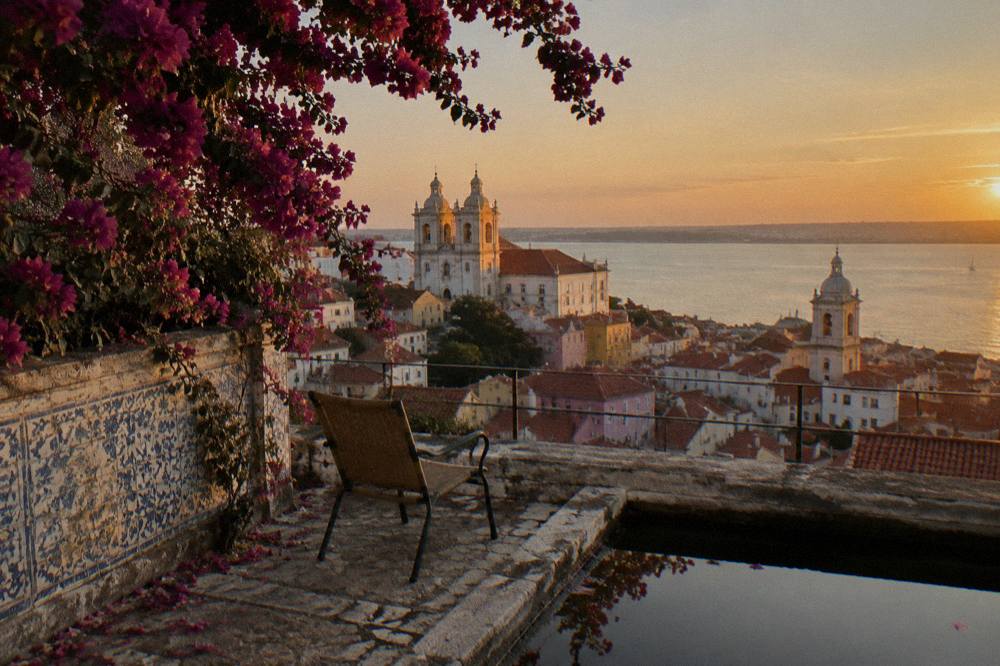
One habit worth keeping: check the kiosk prices, not the terrace. The viewpoint is free, the drink is not, and the difference is the only money you need to think about up here.
Is Pink Street And Cais Do Sodre Free To Walk At Night?
Yes, the Pink Street and the Cais do Sodré riverfront are free to walk at any hour, because both are public streets and promenades rather than venues. Rua Nova do Carvalho, painted pink in December 2011 as part of an urban regeneration project, is a public nightlife street, and the Ribeira das Naus promenade beside it is a free public walk with steps, seating and a kiosk. You pay only for what you consume.
The Pink Street earned its name honestly. Rua Nova do Carvalho was painted pink in December 2011 in a regeneration project led by architect José Adrião, which turned a former sailors' and red-light street into one of the city's most photographed nightlife strips. Nothing about the street itself is ticketed. The bars along it set their own prices and their own door policies, and the street between them belongs to the city. For the full picture of the neighbourhood, the Pink Street and Cais do Sodré guide walks the whole district.
The riverside is the quieter half of the evening. Ribeira das Naus is a river promenade with broad steps and outdoor seating running from the Cais das Colunas at the Praça do Comércio to Cais do Sodré, and Visit Lisboa's page for it calls it the place for the best sunset in the city. Bathing in the river is forbidden, but sitting on the steps with the ferries crossing back and forth costs nothing. The Praça do Comércio itself, at the eastern end of the walk, is a free public square rebuilt from 1756 on the site of the royal palace destroyed in the 1755 earthquake, and the passage through the Rua Augusta Arch is free too, while the viewing platform on top of the arch is a separate paid attraction.
Two cautions keep this honest. The City Council has rules limiting the street sale of drinks for consumption in public space and a separate regulation on night venue hours, and the exact cut-off figures are not published in a form a visitor can rely on, so check the current rules rather than assuming. And the Santa Justa lift, which sits inland of this route, is out of service with its viewpoint closed, so it is not a way up or down tonight.
What Is Free To Do In Bairro Alto After Dark?
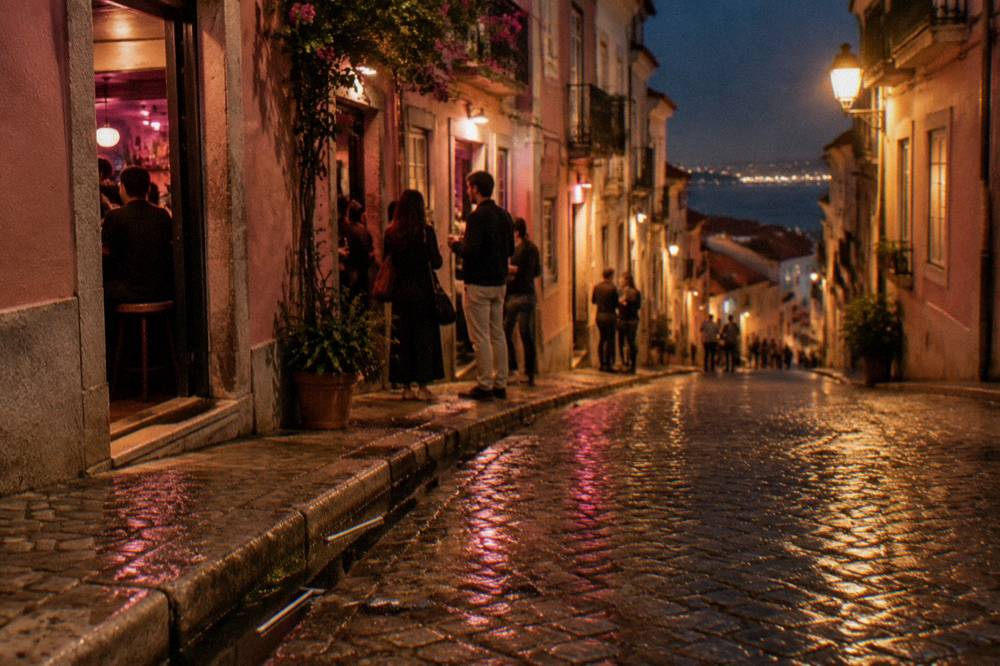
Bairro Alto after dark is free at street level: the lanes themselves, the viewpoints at their edges, and the amateur fado sung in small tascas on set nights, where drinks are the cost. Tasca do Chico on Rua do Diário de Notícias 39 runs fado vadio on Monday and Wednesday nights per the Museu do Fado's own listing, and the door policy on consumption should be checked on the day.
The neighbourhood works as a free evening because everything happens in the street. Bairro Alto's lanes fill after dark with people who have bought one drink and taken it outside, and the public space does the rest. At the district's edges sit the free viewpoints covered above, São Pedro de Alcântara and Santa Catarina, so a loop of the neighbourhood naturally ends with a view. The fado tradition here is the part most visitors miss. Fado vadio, amateur and spontaneous fado, is sung in small eateries, and the Museu do Fado's roteiro names Tasca do Chico as a stop for amateur fado enthusiasts with fado on Monday and Wednesday, variable cast. Fado itself was inscribed on UNESCO's Representative List of the Intangible Cultural Heritage of Humanity in 2011, and hearing it in a room where nobody is on a stage is the closest thing to the tradition's roots that a visitor can still walk into.
The honest wording matters. No official page states Tasca do Chico's cover charge or minimum consumption, so the only safe line is that fado vadio runs on those nights and drinks are the cost, with the door policy to confirm on the day. Regular fado shows in Chiado, by contrast, are ticketed performances and not a free option. The free fado in Lisbon guide separates the two worlds in full.
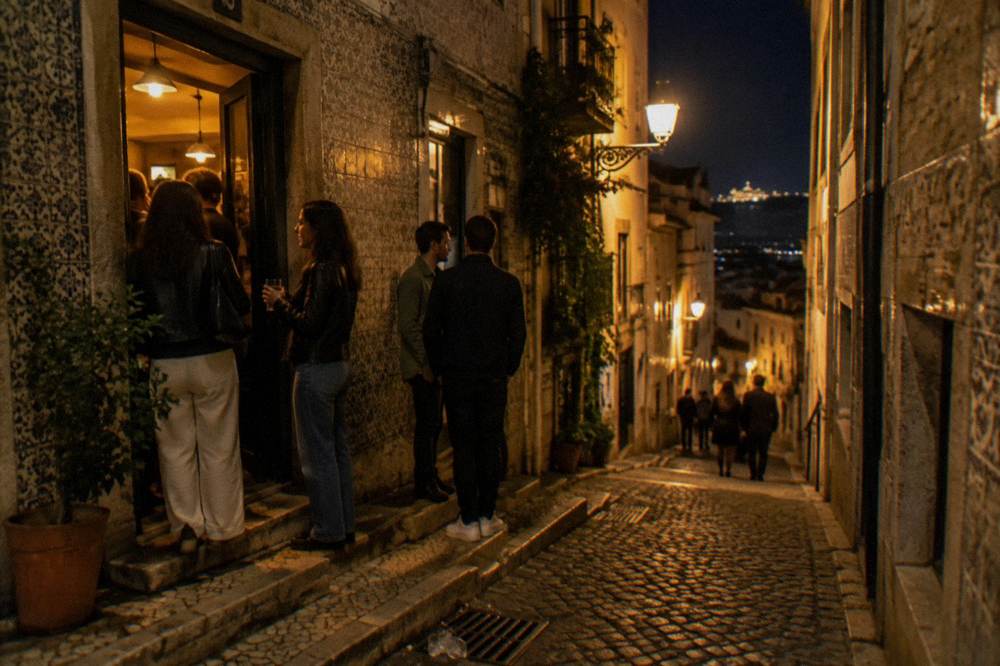
For a guided version of the evening, Small Group, Secret Spots, Tastings, the GuruWalk walk by Antonio, meets at Praça Luís de Camões on the Bairro Alto boundary, runs 2 hours 45 minutes in English, and is rated 4.99 out of 5 across 399 GuruWalk reviews. It is free, pay what you want, reserved on GuruWalk.
Are There Free Walking Tours In Lisbon In The Evening?
Yes, free pay what you want walking tours exist in Lisbon, and several of the city's themed walks suit the after-dark hours, but no listing states an evening departure time, so check each walk's own page on GuruWalk or freetour.com for its schedule. The walks are free to reserve, and each person pays the guide what they consider fair at the end.
The roster of 63 free walking tours listed across GuruWalk and freetour.com includes themed walks whose ground is the city at night's edge. Dark Arts And Secret Societies, a GuruWalk walk by Slava rated 4.94 out of 5 across 134 GuruWalk reviews, meets at Avenida da Liberdade 75 and runs 2 hours 15 minutes in English. Alternative Side Walking Tour, by Take, rated 4.69 out of 5 across 144 GuruWalk reviews, meets at Martim Moniz Square and runs 2 hours 30 minutes. Both are free, pay what you want, and neither listing states a departure time, so the schedule lives on the walk's own page.
One caution from the listing texts themselves: a few Lisbon listings on GuruWalk are not simply free, and one nightlife walk asks for upfront payment before the tour starts, so read the listing's own terms before reserving. The question of what these walks really cost, and how the pay what you want model works in practice, is covered plainly in are free walking tours really free.
The Black History Walk by Vibrant City Tours belongs in this company. It is a GuruWalk walk rated 4.97 out of 5 across 287 GuruWalk reviews, meeting at the Praça do Comércio, running 2 hours 30 minutes in English, and its ground is the city's waterfront square, which is also the free evening space described above.
Is It Safe To Walk Lisbon At Night?
Lisbon is a city where walking at night is a normal, everyday activity for residents, and the free evening spaces described here, the miradouros, the riverside and the nightlife streets, are public and policed like any city street. Carris publishes general good practice advice warning about pickpockets, without a route-specific warning, and the standard city habits apply: keep valuables close, stay on lit streets, and use the metro or night buses to get home.
The official record gives no cause for alarm and no promise either. Carris's good practice page warns about pickpockets in general terms, with no page dedicated to any single route, and that is the extent of what an official source says on the subject. The practical points a visitor can act on are plain. The metro runs until about 01:00, and Carris's Rede da Madrugada night buses run roughly 23:30 to 05:35, so the walk home has a public transport fallback. The calcada portuguesa, the hand-laid limestone and basalt pavement, becomes polished and slippery with use, especially on slopes, which is a real consideration in heels or after rain on the descents from Bairro Alto to the Baixa.
The out-of-service list matters for night planning more than for safety. With the Santa Justa lift and the Gloria, Bica and Lavra funiculars all closed, every climb in the evening city is on foot, and the hills are steep. Plan the route so the viewpoint comes at the top of the evening and the descent ends near a metro station rather than another hill.
Common Questions On This Topic
What Free Things Can You Do In Lisbon At Night?
The free things to do in Lisbon at night are the public miradouros such as Santa Catarina, São Pedro de Alcântara and Santa Luzia, the Ribeira das Naus riverside promenade, the Praça do Comércio, the Pink Street in Cais do Sodré and the streets of Bairro Alto, where fado vadio is sung on Monday and Wednesday nights at Tasca do Chico. All of these are free public spaces, and you pay only for what you consume.
Are Lisbon's Viewpoints Open At Night?
The miradouros are public terraces rather than ticketed attractions, and Visit Lisboa describes Santa Catarina as a place people gather in the evening and into the night. No viewpoint listed here prints closing hours on its official page, so treat them as public spaces that follow the ordinary rhythm of the street.
Is Fado Free In Lisbon?
Amateur fado vadio is sung in small tascas on set nights, and the Museu do Fado's roteiro names Tasca do Chico in Bairro Alto with fado on Monday and Wednesday. No official page states a cover charge or minimum, so drinks are the known cost and the door policy should be confirmed on the day. Regular fado performances in Chiado are ticketed shows.
Can You Walk Along The River At Night In Lisbon?
Yes. The Ribeira das Naus promenade runs from the Cais das Colunas at the Praça do Comércio to Cais do Sodré as a free public walk with broad steps, seating and a kiosk, and Visit Lisboa calls it the place for the best sunset in the city. Bathing in the river is forbidden.
Do The Lifts And Funiculars Run At Night?
No. Carris marks the Santa Justa lift and the Gloria, Bica and Lavra funiculars out of service, with no reopening date, so none of them can be used at any hour while the closures last. Every climb in the evening city is on foot.
How Do You Get Home Late In Lisbon?
The metro runs until about 01:00, and Carris's Rede da Madrugada night buses run roughly 23:30 to 05:35. A single ticket on the Carris and Metro network costs EUR 1.90 for one hour, and a 24 hour Carris and Metro ticket costs EUR 7.25.
For the paid side of the evening, from ticketed fado shows to the arch viewpoint, this site's Free Things To Do In Lisbon coverage keeps the free and the paid separate in every district. If a guided evening sounds better than a self-planned one, these are the three walks to start with.