Is The Lisbon Card Worth It If You Plan Free Things?
A payback check of the Lisboa Card for a free-first Lisbon trip: what the card costs, what is already free without it, and when the maths finally tips.

The Lisboa Card is sold as a money-saving machine: one contactless card, museums and transport included. But this site exists because the opposite Lisbon exists too, the one where the viewpoints cost nothing, the squares cost nothing, the riverside costs nothing, and a guided walk by a local guide costs nothing up front. So the question is not whether the card is good, it is whether the card is good for the kind of trip you are planning. The honest answer depends almost entirely on how many ticket desks you intend to stand in front of, and that number is smaller than most visitors assume.
Is The Lisbon Card Worth It For A Free-First Visit?
For a free-first visit the card is usually not worth it, because the sights that make a free-first itinerary work, the miradouros, the Praça do Comércio, the Alfama streets, the riverside promenades and the pay-what-you-want walking tours, charge nothing with or without a card. The card only pays back when you add paid monuments, and a free-first plan adds few or none.
Start with what the card actually costs. The official seller, visitlisboa.com through its own shop, prices the adult card at EUR 31 for 24 hours, EUR 51 for 48 hours and EUR 62 for 72 hours, with child cards at EUR 21, EUR 28 and EUR 35. Those are real numbers from the official product page, and they are the floor of the maths. Everything the card then "gives" you has to be measured against that floor.
Now measure the free side. A day built the way Free Things To Do In Lisbon builds days, a morning walk through Alfama, an afternoon on the viewpoints, sunset at the riverside, costs nothing in admissions at all. Add the transport you genuinely need and the picture stays modest: a single Carris or Metro ticket is EUR 1.90, and a 24-hour Carris/Metro pass covering buses, trams and the metro is EUR 7.25. That pass, not the Lisboa Card, is the natural companion to a free-first day, because it delivers the transport half of the card for less than a quarter of the price of the 24-hour card.
The card's value therefore lives entirely in its museum and monument inclusions. If your list of paid sights is short, the card loses. If it is long and dense with the big ticketed monuments, the card can win, and the section on payback below shows exactly where the line sits. Before that, one warning that matters more than any price: several "free museum day" claims you will read online are wrong for visitors, and acting on them is the fastest way to waste a card day.
If you do want a structured day with a local guide, the free walking tours below are the natural backbone, and they cost nothing to reserve.
What Does The Card Include?
The adult card buys three things: admission to over 50 museums and cultural venues, unlimited public transport on buses, trams, metro and trains for the card's duration, and over 45 discounts at other attractions. It activates on first use, is sold as a physical contactless card, and the official prices are EUR 31, EUR 51 and EUR 62 for 24, 48 and 72 hours.
The transport component is the part every visitor uses, and it is the easiest to price independently. The official shop page describes unlimited travel on buses, trams, metro and trains for the validity period, and that includes tram 28, the paid historic tram, which costs EUR 3.30 bought on board. The official product page at the visitlisboa.com shop lists the inclusions in full, and it is the only seller worth reading, because several lookalike reseller sites call themselves "the official Lisboa Card" and are nothing of the sort.
The museum component is where the marketing does the heavy lifting. "Over 50 museums and cultural venues" is true, but the mix matters: the headline monuments, the Jerónimos Monastery cloister at EUR 18, Belém Tower at EUR 15, São Jorge Castle at EUR 17, are ticketed for visitors every day, and the card's relationship to each varies. Some sights are fully included, some give a discount where you pay the difference at the ticket office, as the shop page notes for the Sintra palaces. A card buyer who assumes "included" for everything on the list will overestimate the payback.
There are also inclusions that sit oddly on a free-first trip. The card makes the Estufa Fria greenhouse free, makes the Museu do Fado free for adult card holders, and makes the Rua Augusta Arch viewpoint free, per the official Visit Lisboa page for the arch. Each of those is a genuinely paid sight, EUR 3.70, EUR 5 and an unpublished adult price respectively, so the card has real value here. But a traveller who would rather spend the afternoon in the Gulbenkian garden, which is free daily, or at the Museu do Dinheiro, which is free admission, gets nothing from those inclusions at all.
If your plan is a card day with a guided spine, the Essential History, Free Tastings walk by Tours Of My Life is the strongest candidate: 3 hours, English and Spanish, meeting at Praça Luís de Camões, rated 4.96 out of 5 across 25,140 GuruWalk reviews, free and pay what you want on its GuruWalk listing.
Which Sights Are Free Without The Card?
The viewpoints are free public spaces, the Praça do Comércio and the passage through the Rua Augusta Arch are free, the Belém riverside is free, the Gulbenkian garden is free daily, and the Museu do Dinheiro is free admission. The paid sights the card targets, the Jerónimos cloister, Belém Tower, the Castle, the Carmo ruins, are a separate list, and no hill, square or street inherits a tower's ticket.
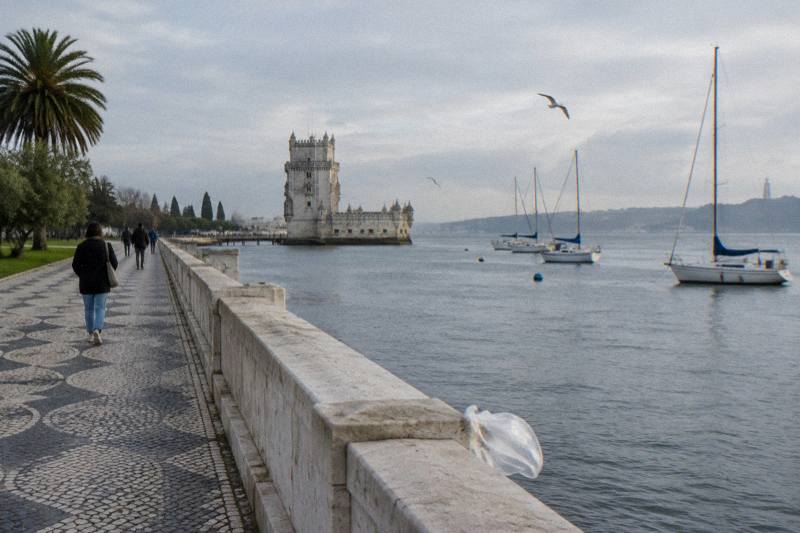
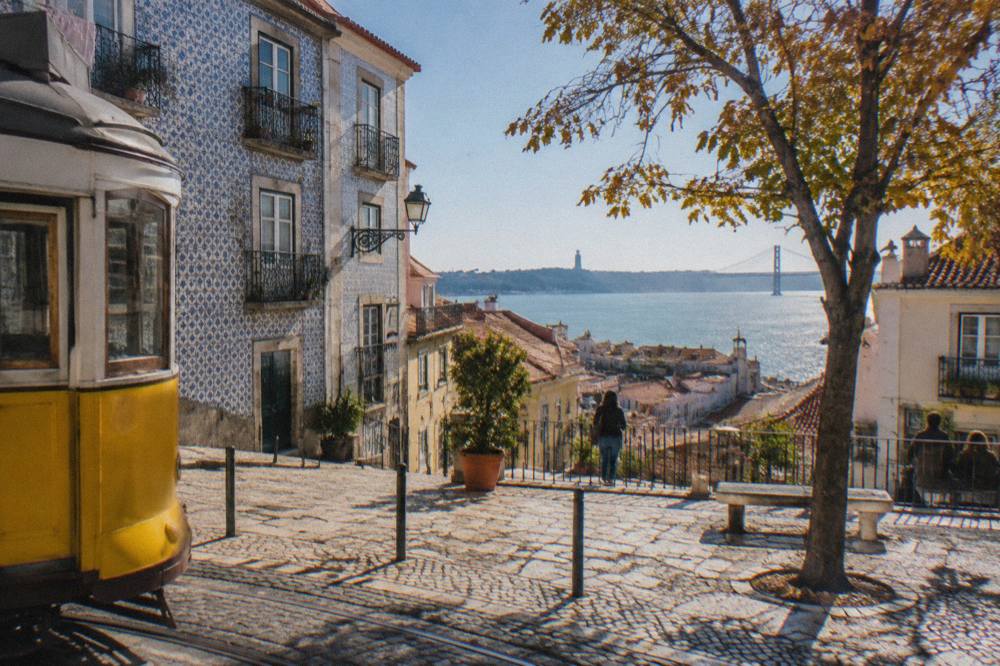
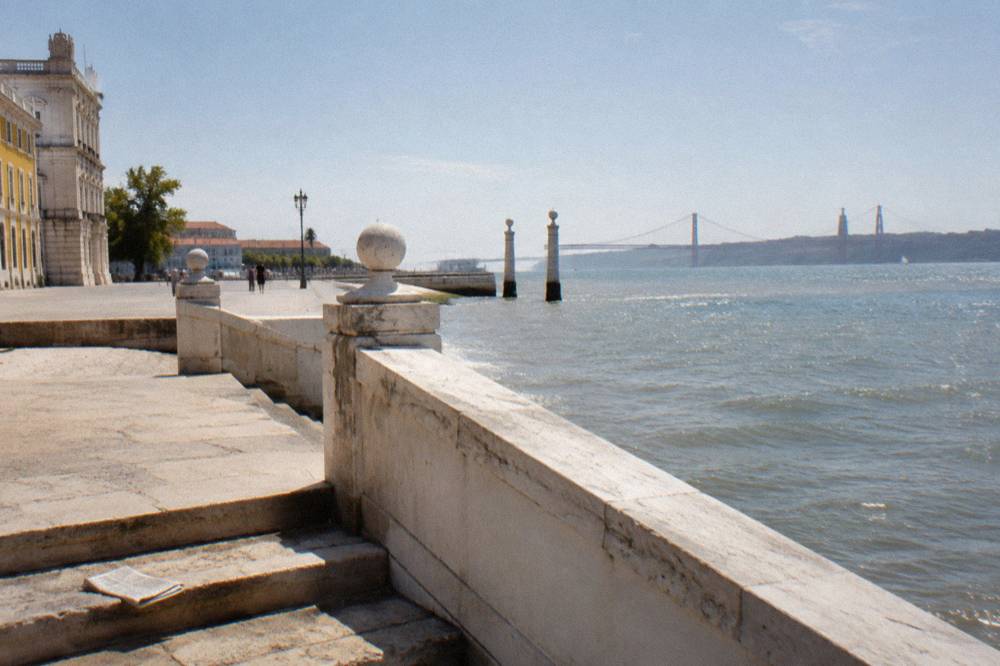
The free list is long enough to fill days. The miradouros, Santa Luzia, Portas do Sol, Graça, Senhora do Monte, Santa Catarina, São Pedro de Alcântara, are open public viewpoints with no admission line at all. The Praça do Comércio and the walk through the Rua Augusta Arch cost nothing, while the arch's viewing platform on top is paid, free only with the card. In Belém the riverside promenade and the gardens are free, while Belém Tower, which reopened in May 2026 after restoration with timed entry, is EUR 15 and the Jerónimos cloister is EUR 18 for visitors.
Museums need the most care, because Lisbon runs several separate free-entry regimes and none of them is a simple "free Sunday for everyone". The Gulbenkian museum is free Sundays from 14:00 and the garden is free daily, sunrise to sunset. The Museu do Dinheiro is free admission, Wednesday to Sunday. The MAAT's first-Sunday window is for residents in Portugal only, and the national monuments' 52 free days a year under Acesso 52 are for residents in Portugal with a Citizen Card, never for visitors. There is no visitor free Sunday at the Jerónimos cloister, Belém Tower or the Pantheon, and no card or blog post changes that.
The practical summary for a free-first traveller:
| Sight | Without a card | With a card |
|---|---|---|
| Miradouros and public squares | Free | Free |
| Gulbenkian garden | Free daily | Free |
| Museu do Dinheiro | Free admission | Free |
| Rua Augusta Arch passage | Free | Free |
| Rua Augusta Arch viewpoint | Paid | Free with card |
| Jerónimos Monastery cloister | EUR 18 | Included or discounted, check at the desk |
| Belém Tower | EUR 15 | Included or discounted, check at the desk |
| São Jorge Castle | EUR 17 | Included or discounted, check at the desk |
| Estufa Fria | EUR 3.70 | Free with card |
| Museu do Fado | EUR 5 | Free with card |
| Carmo Convent ruins | EUR 7 | EUR 5 with card |
A deeper rundown of the free museums and their entry windows is in the free museums in Lisbon guide, which keeps each operator's rules separate.
When Does A Card Pay Back?
A 24-hour card at EUR 31 pays back only when your paid admissions plus transport exceed EUR 31 in the same day. Since a standalone 24-hour transport pass is EUR 7.25, the admissions alone must be worth more than about EUR 24, which in practice means at least two of the big ticketed monuments, such as the Jerónimos cloister at EUR 18 plus Belém Tower at EUR 15.
The arithmetic is simple enough to run before you buy. Take the 24-hour card. Its transport value, measured against the EUR 7.25 pass, is EUR 7.25. Its admissions value is the sum of what you would otherwise pay at the desks you actually plan to visit. Two monuments in Belém, the cloister at EUR 18 and the tower at EUR 15, already come to more than the card's own price before any transport is counted, so a Belém-heavy day is the card's best case. Add the Carmo ruins at EUR 5 with the card instead of EUR 7, or the Estufa Fria made free, and the margin widens.
The failure case is equally clear. A day of viewpoints, squares, the Alfama streets and the riverside has an admissions value of zero and a transport value of EUR 7.25, so the card would cost EUR 31 to save EUR 7.25. Even a day with one paid museum rarely tips it: the Museu do Fado at EUR 5 plus transport leaves the card more than EUR 18 underwater. The card is a dense-itinerary tool, not a souvenir.
For a longer stay the 72-hour card at EUR 62 needs roughly EUR 55 of combined value, which means paying monuments on most days. A trip that mixes two or three paid days into a week of free walking is usually better served by pay-as-you-go tickets and the EUR 7.25 day pass on the days you actually ride. The broader cost picture, including the EUR 4 per night tourist tax, is covered in the is Lisbon expensive breakdown.
Which Free Walks Fit A Card Day?
Free walking tours cost nothing with or without a card, so they fit any card day as the free spine around your paid hours. The strongest all-round option is Essential History, Free Tastings by Tours Of My Life, 3 hours from Praça Luís de Camões, rated 4.96 out of 5 across 25,140 GuruWalk reviews, free and pay what you want on GuruWalk.
A card day has a natural shape: paid monuments in the middle, free structure around them. A morning walk gives you the city's story before you queue for its ticket desks, and an afternoon walk fills the hours when the monuments are closing. Because every walk on this site's roster of 63 free walking tours across GuruWalk and freetour.com is free, pay what you want, the card and the walks never compete for the same money.
The Essential History, Free Tastings walk is the one to build around. It is run by Tours Of My Life on the GuruWalk platform, meets at Praça Luís de Camões, runs 3 hours in English and Spanish, and carries the largest review pool of any walk on the roster. Reserve it on the guide's GuruWalk page, pay nothing up front, and let it set the frame for whatever you pay to enter afterwards. See this free tour to check the current meeting details on the GuruWalk page.
For a different register, SANDEMANs Original Walk, listed on freetour.com, is a 2-hour English or Spanish walk meeting at Praça do Comércio, rated 9.4 out of 10 across 14,048 freetour.com reviews. Note the scale: freetour.com walks rate out of 10, GuruWalk walks out of 5, and the two are never comparable as bare numbers. A short orientation walk like this pairs well with a card day whose paid hours are concentrated in the afternoon.
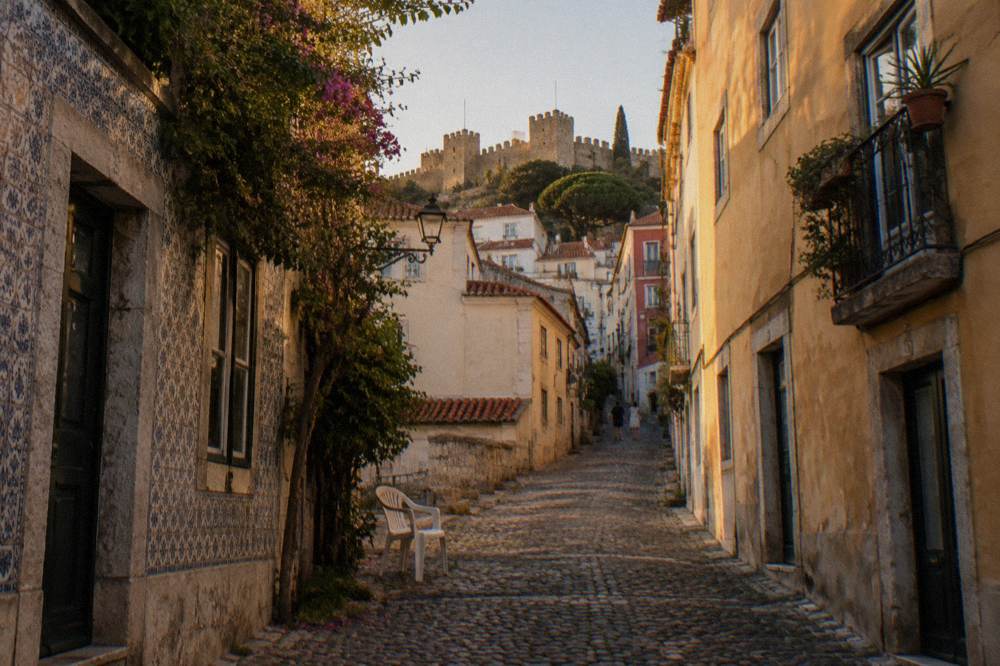
One planning note that saves card money: the walks are free, but the hills are real, and the card's transport inclusion is most valuable on the days you ride the most. If a walk day is also your heavy-riding day, that is the day the card's transport component earns its keep. The is Lisbon walkable question covers which hills reward walking and where the public lifts and the reopened Graça funicular change the maths.
What Else Can Replace The Card?
For most free-first travellers the card's job splits into two cheaper pieces: a EUR 7.25 24-hour Carris/Metro pass for transport, and nothing at all for admissions, because the free itinerary, viewpoints, squares, gardens, the money museum and the pay-what-you-want walks, needs no pass. Only a monument-dense plan justifies the card itself.
The transport piece is the easy substitution. The Carris 2026 price table gives the EUR 7.25 day pass and the EUR 1.90 single, and the metro's fares match. If your riding is light, singles are cheaper still. The one thing no pass can currently rescue is the lifts: the Santa Justa Lift and the Glória, Bica and Lavra funiculars are out of service, and the Graça funicular charges EUR 4.30 for two trips, so plan hills around walking routes rather than closed machinery.
The admissions piece depends on taste. If your must-see list is the Jerónimos cloister, Belém Tower and the Castle, buy those tickets directly and skip the card only after running the sums above, because three big monuments can favour the card. If your list is the Gulbenkian garden, the miradouros, the Museu do Dinheiro and the streets of Alfama and Mouraria, there is nothing to replace, because nothing was going to be charged. The full free-first playbook, including how to structure days around the free walks, is in the Lisbon on a budget guide.
There is also a middle case worth naming: the traveller who wants one big paid day in Belém and free days elsewhere. That traveller should price the card for the Belém day alone, where the cloister and tower together clear the payback line, and use pay-as-you-go everywhere else. Cards are per-day tools, and the mistake to avoid is buying 72 hours to cover a trip that only has one paid day in it.
If the free spine is what appeals, these walks cover the ground a card never will:
Common Questions On This Topic
Is The Lisbon Card Worth It If You Plan Free Things?
Usually not. A free-first itinerary, viewpoints, squares, riverside, gardens and pay-what-you-want walking tours, has an admissions cost of zero, so the card's only value is its transport, which a EUR 7.25 day pass delivers for a quarter of the 24-hour card's EUR 31 price. The card pays back only on days dense with paid monuments.
How much does the Lisboa Card cost?
The official seller, visitlisboa.com through its shop, prices the adult card at EUR 31 for 24 hours, EUR 51 for 48 hours and EUR 62 for 72 hours. Child cards cost EUR 21, EUR 28 and EUR 35. Those prices are printed on the official product page with validity until 31 March 2027.
Does the Lisboa Card cover tram 28?
Yes. The card includes unlimited public transport on buses, trams, metro and trains, and tram 28 is a Carris tram. Bought on board without any card, the ride costs EUR 3.30.
Are museums free on Sundays in Lisbon for visitors?
Not as a general rule, and never assume it. The national monuments' 52 free days a year are for residents in Portugal with a Citizen Card. The MAAT's first-Sunday window is for residents in Portugal only. The Gulbenkian museum's free Sunday window from 14:00 and the Museu do Dinheiro's free admission are among the exceptions that print no residency condition.
Can you see Lisbon without the card at all?
Yes, fully. The viewpoints, squares, riverside promenades, public gardens and the free walking tours across GuruWalk and freetour.com cost nothing, and a EUR 7.25 day pass covers transport. The card only matters if you plan to enter several paid monuments.
Is the Lisboa Card worth it for Belém?
It can be. The Jerónimos cloister at EUR 18 and Belém Tower at EUR 15 together cost more than the EUR 31 price of a 24-hour card before counting any transport. A Belém-heavy day is the card's clearest payback case.