Lisbon On A Budget: Where The City Costs Nothing
Lisbon rewards a slow, street-level visit. The viewpoints cost nothing, the walking tours are pay what you want, and the expensive mistakes are easy to sidestep once you know where the ticket lines start.
Short answer
Lisbon on a budget works because the city's best layer is free: the miradouros, the squares, the riverside and the Alfama streets all cost nothing. Free walking tours on GuruWalk and freetour.com are pay what you want, a 24-hour transit pass runs EUR 7.25, and the paid monuments, EUR 15 to EUR 18 each, are the only place a careful plan leaks money.
Lisbon is a city where the price of the view is zero. The miradouros that hold the famous panoramas are public spaces, the riverside promenade that the city's own tourism pages call the home of "the best sunset in the city" is open to anyone, and the walking tours that introduce visitors to the old districts charge nothing up front: every one of the 63 free walking tours listed across GuruWalk and freetour.com in this city's roster is free, pay what you want. The money in Lisbon goes to the monuments, the interiors and the rides, and knowing exactly which is which is the whole craft of doing Free Things To Do In Lisbon on a budget.
This guide walks the split in order. First the things that cost nothing, then the pay-what-you-want walks and what tipping on them actually means, then the cheap-eats layer, the transit maths, and finally the costs that quietly catch visitors out, from the EUR 4 per night tourist tax to the funiculars that are currently out of service.
How Can You Do Lisbon On A Budget?
Doing Lisbon on a budget means building the days around the free public layer and treating the ticketed monuments as deliberate, counted choices. The viewpoints, squares, riverside, gardens and the Museu do Dinheiro cost nothing, the walking tours are pay what you want, a 24-hour Carris and Metro pass is EUR 7.25, and the big monuments run EUR 10 to EUR 18 each, so a plan that spends on two of them instead of five saves real money.
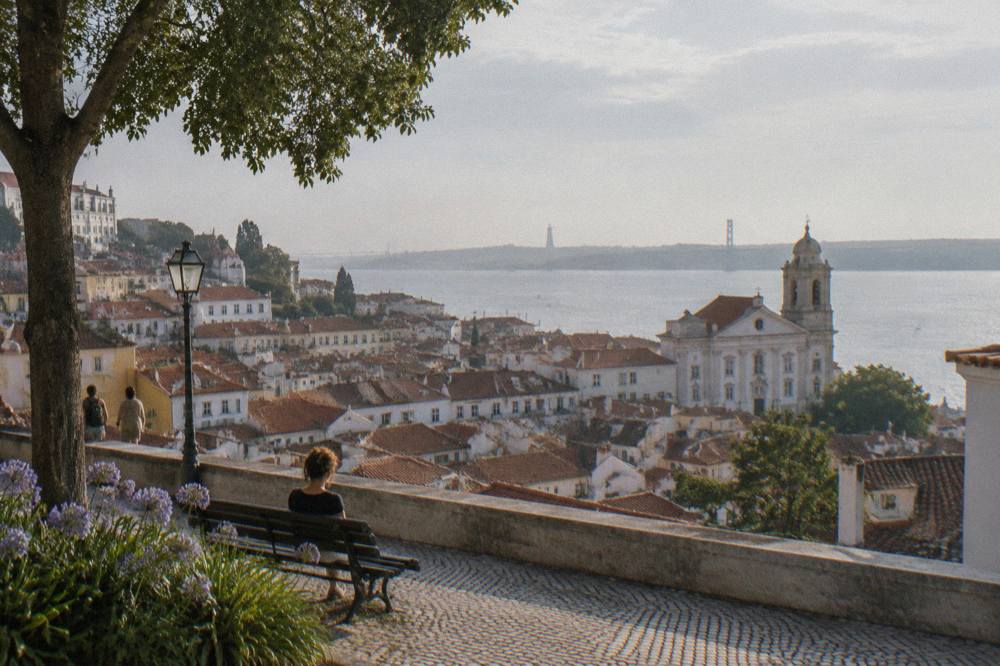
The core move is simple: the free layer is not a consolation prize in Lisbon, it is the main event. The Miradouro de Santa Catarina, with the Adamastor statue and its view over the Tagus estuary and the bridge, is a public terrace. The Miradouro da Graça is listed open 24 hours on the city's own site. The Miradouro de São Pedro de Alcântara has a garden, an azulejo map of the skyline and a kiosk, and no gate, no ticket and no queue. These are the spaces locals use every evening, and they cost exactly nothing.
The same holds for the flat spaces. The Praça do Comércio and the walk through the Rua Augusta Arch are free, while the arch's viewing platform on top is a paid extra. The Ribeira das Naus riverfront, with its broad steps and kiosk running from the Cais das Colunas to Cais do Sodré, is a public promenade. The Castelo hill and the Alfama streets below it are free to wander, while São Jorge Castle itself is ticketed. Every one of these pairs is a real two-facts split, and the budget version of Lisbon is simply choosing the free half of each pair.
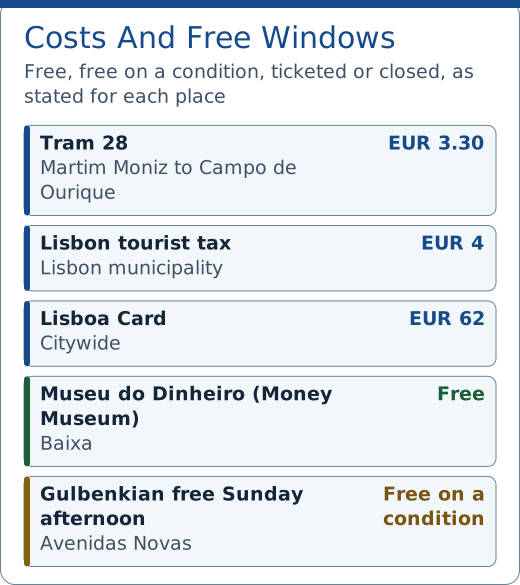
One museum belongs in every budget plan: the Museu do Dinheiro, in the former church of São Julião off the Baixa, admits everyone free of charge, Wednesday to Sunday, with no residency condition attached. The Núcleo Arqueológico da Rua dos Correeiros is another: its guided visits, which descend through Roman and Pombaline layers under the Baixa, are free, though every visit is guided and booked in advance. Between them, a rainy morning costs nothing at all.
For the full museum-by-museum picture, including which Sunday windows carry no residency condition, the free museums in Lisbon guide breaks down every operator separately, because the rules genuinely differ from one to the next and merged advice is where budgets die.
What Are The Best Free Sights In Lisbon On A Budget?
The best free things in Lisbon are the public viewpoints, the riverside, the old streets of Alfama and Mouraria, the Gulbenkian garden, the street art in public space, and the Museu do Dinheiro. Each is free by its own record: the miradouros are open public spaces, the garden is free daily from sunrise to sunset, and the museum admits all visitors free. None of them needs a ticket, a booking or a pass.
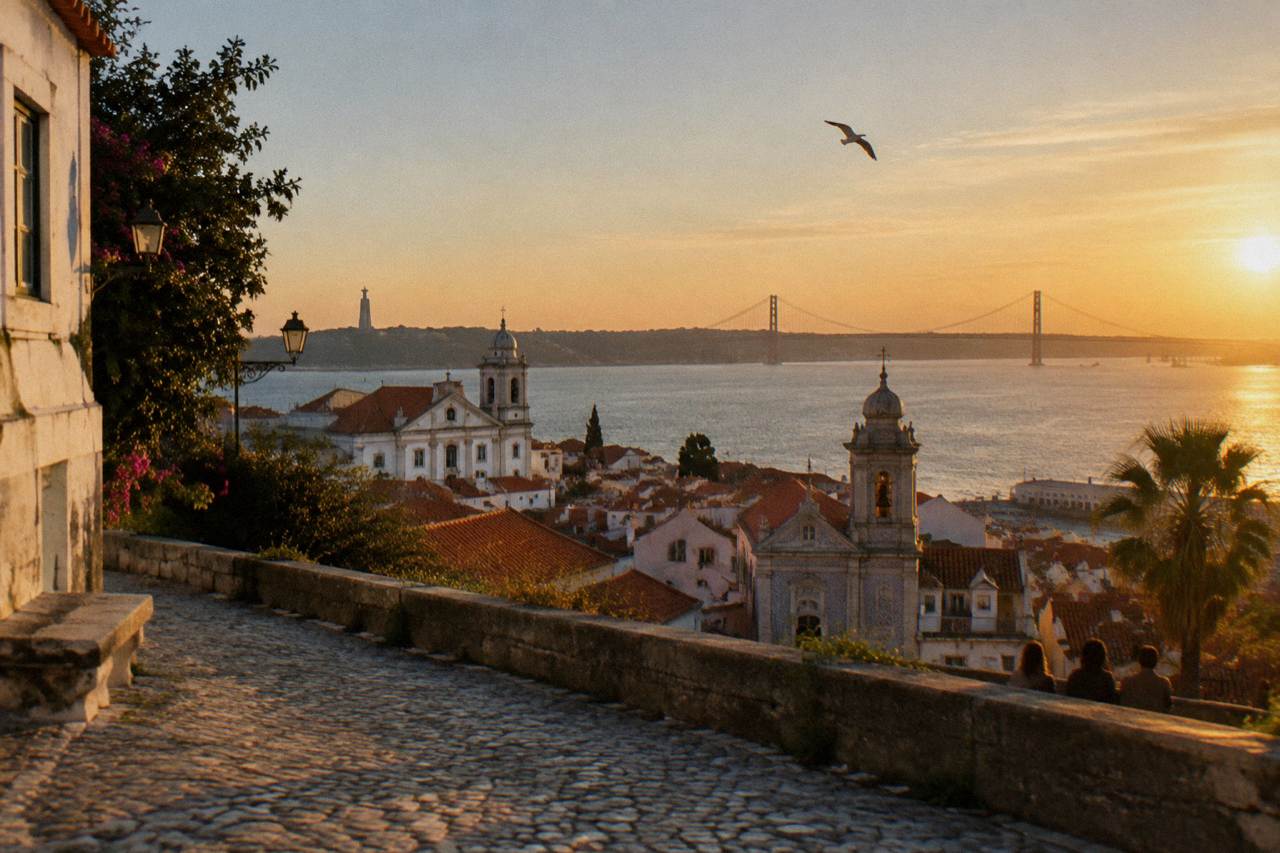
Start high. The Miradouro de Santa Luzia has a garden, a pond, azulejo panels and a kiosk; the Miradouro das Portas do Sol sits a street away; the Miradouro da Senhora do Monte looks out over the whole basin from the Graça hillside. All are public viewpoints, and the city's tourism pages describe them without ever printing an admission line, because there isn't one. The Lisbon sunset spots guide maps the ones worth building an evening around, including the Ribeira das Naus steps, which Visit Lisboa calls the place for the best sunset in the city.
Then go low and walk. The Alfama lanes, the Mouraria lanes, the Baixa grid rebuilt after the 1755 earthquake: the streets themselves are the sight, and they cost nothing to enter. Street art sits in the same category, because authorised public works are in public space and viewing them is free; the Galeria de Arte Urbana, the city council's own street-art unit, exists precisely to keep graffiti in legal, viewable contexts.
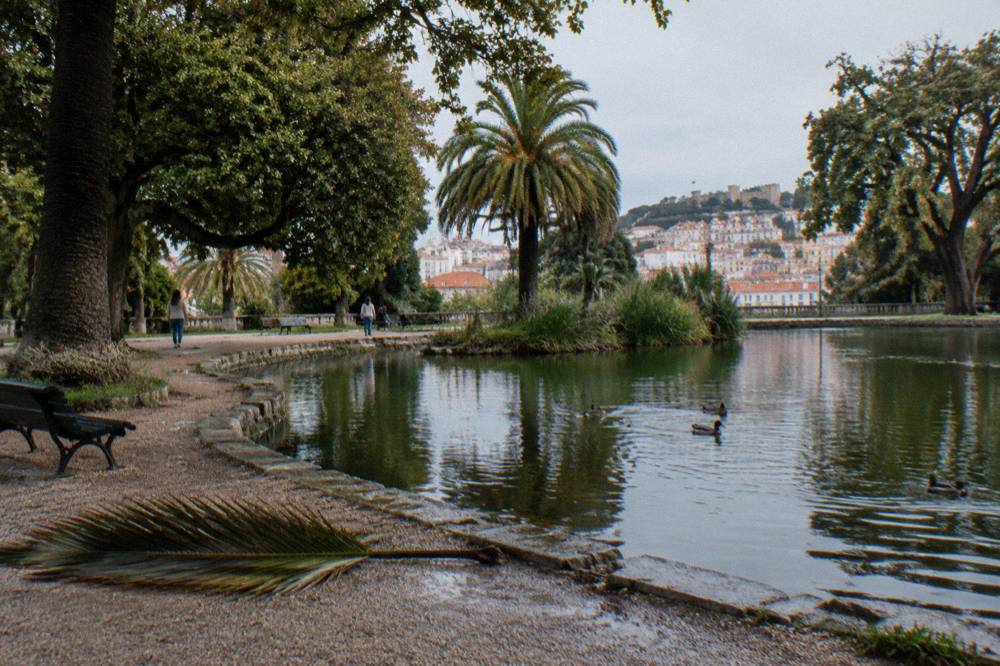
Green space closes the loop. The Gulbenkian garden is free every day, open from sunrise to sunset per the foundation's own opening-hours page, while the museum beside it is ticketed outside its Sunday-from-14:00 window. Jardim da Estrela, with its lakes and its 1884 bandstand, is a free public garden. Parque Eduardo VII is free, though the Estufa Fria greenhouse inside it is ticketed at EUR 3.70, free only on Sundays and public holidays until 14:00.
The free layer also walks. The city's pay-what-you-want walking tours are the cheapest structured sightseeing that exists anywhere, and the strongest of them hold up against any paid tour of the same ground.
How Much Do Free Walking Tours Cost When You Tip?
A free walking tour costs nothing to book and nothing up front: every walk on this site's roster is free, pay what you want, reserved on GuruWalk or freetour.com. The tip is voluntary, set by each walker at the end, and no amount is required, printed or owed. Booking is free and cancellation is free from your account, so the only real cost is whatever each person decides the walk was worth.
The mechanism is genuinely that simple. GuruWalk's own help centre states that booking is free, that guests pay the guide what they think the walk was worth at the end, and that cancelling is free from the account or the confirmation email. There is no fixed price per walker and no obligation. The tip question has its own full treatment in the how much to tip on a free walking tour blog post, which works through the etiquette without a fixed number: the payment is defined as whatever the walker considers fair.
What the budget traveller is really buying is three hours of a local's time for a sum they set themselves. Essential History, Free Tastings, run by Tours Of My Life, is the walk with the deepest review pool on the roster: rated 4.96 out of 5 across 25,140 GuruWalk reviews, three hours long, in English and Spanish, meeting at Praça Luís de Camões. The listing describes it as officially licensed by Turismo de Portugal, and at the end each person decides what the tour was worth to them. It is also this site's featured walk, and its own page carries the details: Essential History, Free Tastings on GuruWalk.
One habit keeps the tipping question honest: decide the figure before the walk ends, not during the goodbye, and treat it as a payment for the walk you actually received. The are free walking tours really free blog post unpacks the model further, including the fact that on this roster apart from the Cacilhas ferry fare, no walk's listing declares a separate required cost or deposit.
Which Cheap Eats Fit A Free Day In Lisbon?
Cheap eating in Lisbon means the market halls, the tascas and the fado vadio nights, where the food or the drinks are the whole bill and the entertainment is free. Time Out Market and the LX Factory are walk-in spaces where you pay only at the stalls, Tasca do Chico runs amateur fado on Monday and Wednesday nights with drinks as the cost, and LX Market fills the LX Factory on Sundays from 11:00 to 18:00.
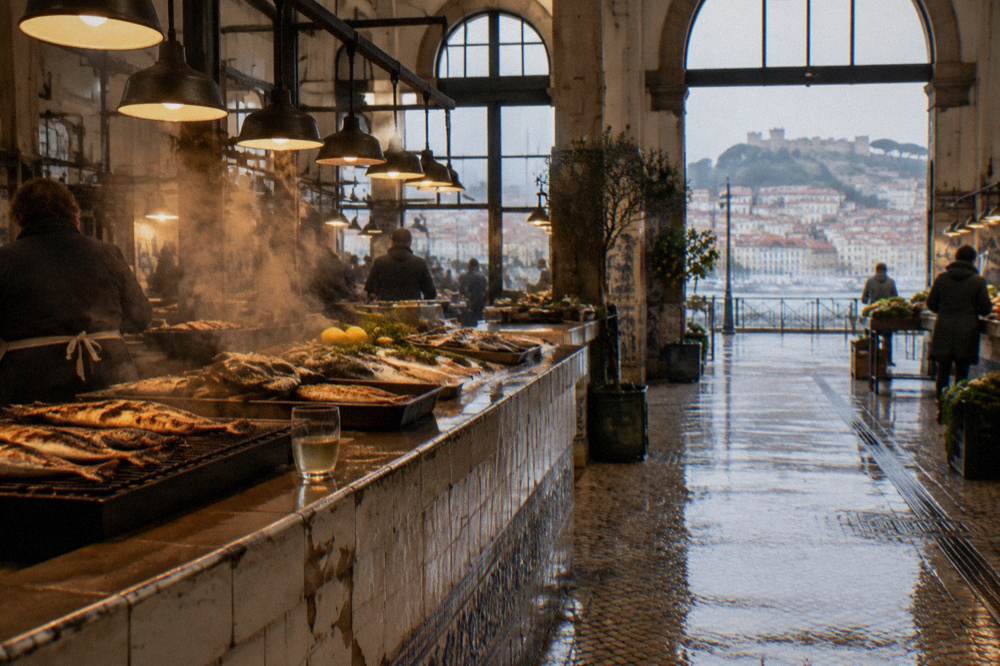
The market halls are the backbone. Time Out Market Lisboa, in the old Mercado da Ribeira building at Cais do Sodré, works as a public food hall: you walk in and you pay at the stalls you choose. The LX Factory complex in Alcântara is the same shape, an industrial complex you can walk into every day, paying only in the shops and restaurants, reached by tram 15E or buses 714 and 727. On Sundays the LX Market fills part of it with handmade and vintage stalls, 11:00 to 18:00 per Visit Lisboa's listing.
The budget-eats map in one view:
| Cheap eat or night out | Where | What you pay for | What is free |
|---|---|---|---|
| Time Out Market Lisboa | Mercado da Ribeira, Cais do Sodré | Food and drink at the stalls | Walking in and browsing |
| LX Factory | Rua Rodrigues de Faria 103, Alcântara | Shops and restaurants | The complex itself, walk-in |
| LX Market | Inside LX Factory, Sundays 11:00-18:00 | Anything you buy | The market stalls |
| Tasca do Chico | Rua do Diário de Notícias 39, Bairro Alto | Drinks | Fado vadio on Monday and Wednesday nights |
| Fado vadio eateries | Square beside the church of São Miguel, Alfama | Drinks and food | The singing |
The fado layer is the cheapest night out in the city. Fado vadio, the amateur, spontaneous form, is sung in the small eateries around the square beside the church of São Miguel in Alfama, and the Museu do Fado's own roteiro names Tasca do Chico in Bairro Alto as a stop, with fado on Monday and Wednesday nights. The drinks are the cost, and the door policy should be confirmed on the night, since no page states a cover rule. The free fado in Lisbon guide covers the full picture, including the June Festas de Lisboa, when free fado fills the streets of Alfama and Mouraria.
Two more habits stretch any food budget. Tap water in Lisbon is safe to drink, per the water utility EPAL's own water-quality pages, so asking for tap water at the table is normal and free. And the famous pastry shops are paid stops, not free ones: Pastéis de Belém, open daily from 08:00, sells its own product at its own price, and no budget guide should pretend otherwise. The trick is not to avoid them, it is to count them.
If the day's route runs through the riverside, the SANDEMANs Original Walk, listed on freetour.com, is the natural fit: rated 9.4 out of 10 across 14,048 freetour.com reviews, two hours long, in English and Spanish, meeting at the Praça do Comércio, the square the free Ribeira das Naus promenade starts from.
A walk like that pairs naturally with a market-hall lunch on either side of it, which keeps the whole day's fixed spending down to a single food bill. For anyone who wants the same pay-what-you-want model with tastings folded in, the featured walk below does both jobs at once.
How Much Does Public Transport Cost Compared With Walking?
Public transport in Lisbon is cheap but not free: a single ticket is EUR 1.90 for an hour on the Carris and Metro network, a 24-hour Carris and Metro pass is EUR 7.25, a Zapping journey is EUR 1.72, and tram 28 costs EUR 3.30 bought on board. Walking, by contrast, costs nothing, and Lisbon's compact centre makes it a real option, hills included, if you plan the gradients.
The fare table is where the walking decision gets made. These are the published Carris and Metro fares for occasional users:
| Ticket | Price | Notes |
|---|---|---|
| Single, Carris and Metro | EUR 1.90 | Valid one hour on the network |
| Zapping journey | EUR 1.72 | Charged per journey from stored credit |
| 24-hour Carris and Metro pass | EUR 7.25 | Unlimited for 24 hours |
| Tram 28, bought on board | EUR 3.30 | The same ride costs EUR 1.72 with Zapping |
| Rechargeable occasional Navegante card | EUR 0.50 | One-off cost for the card itself |
| Graça funicular | EUR 4.30 | Two trips, reopened 30 April 2026 |
The tram 28 line is the classic example of the gap. It is a paid ride, EUR 3.30 on board, and the budget alternative is to walk the same corridor on foot: the sights the line is famous for, the Sé, the Portas do Sol, Santa Luzia, the Graça viewpoints, are all free public spaces reachable on foot. The tram 28 route guide lays out the free walking version of the line street by street.
The lifts need a harder warning. The Santa Justa Lift, the Glória, the Bica and the Lavra funiculars are all currently out of service, with no reopening date, and Carris runs substitute buses on the funicular corridors. The one exception is the Graça funicular, which reopened on 30 April 2026 and charges EUR 4.30 for two trips. None of these is a free attraction, and a budget plan that counts on riding them will either pay or be disappointed. The is Lisbon walkable blog post covers the hill routes, including the free public lifts on the Baixa-Castelo route, whose current hours should be checked on the day.

The honest comparison is per day. A walker who does everything on foot spends EUR 0.00 on transport. A walker who buys the 24-hour pass spends EUR 7.25 and saves their knees on the steepest climbs. Anything beyond that, single tickets stacked one by one, is usually the worse of both worlds.
Which Costs Catch Visitors Out?
The costs that catch visitors out are the tourist tax, the monument tickets, the out-of-service lifts and the mistaken belief in a free Sunday. The tourist tax is EUR 4 per night per guest aged 13 and over, the big monuments run EUR 15 to EUR 18, and there is no free Sunday for visitors at the national monuments: the 52 free-entry windows each year are for residents in Portugal only.
The tourist tax is the quietest of these. Lisbon charges EUR 4 per night per guest aged 13 and over, up to a maximum of seven nights per person per stay, and it is collected through the accommodation, so it sits outside the daily spending mental account. It is a real line in a budget, and a week's stay for two adults carries EUR 56 of it.
The monument layer is the big one, and the prices are worth knowing cold:
| Site | Adult price | The free alternative on the same ground |
|---|---|---|
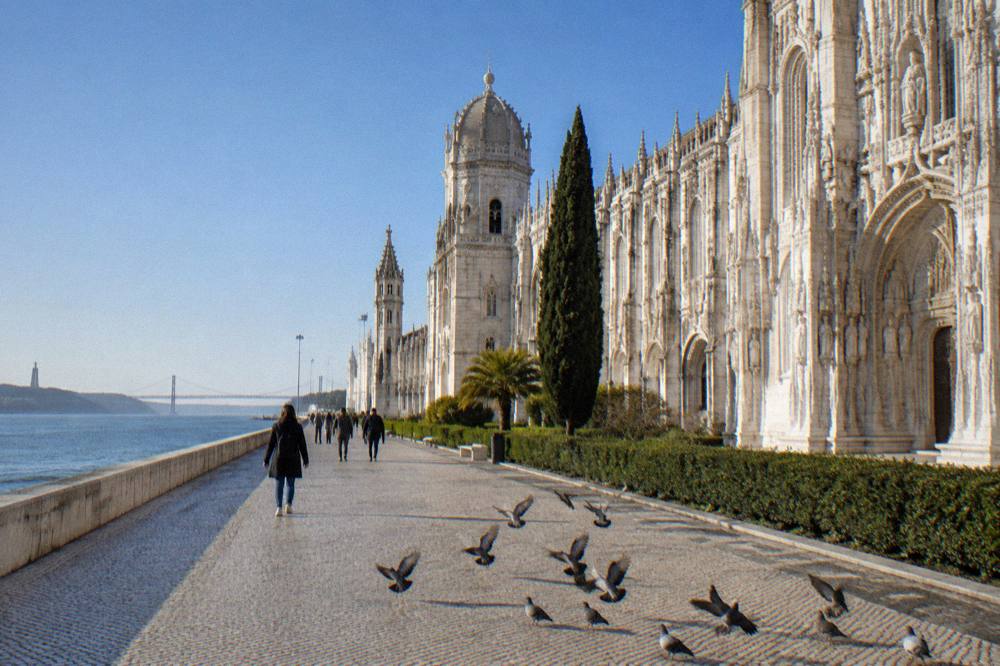
| Jerónimos Monastery cloister | EUR 18 | The exterior, the square and the gardens |
| Belém Tower | EUR 15 | The Belém riverside promenade |
| São Jorge Castle | EUR 17 | The Castelo hill streets and the Graça viewpoints |
| National Pantheon | EUR 10 | The viewpoints around the Pantheon area |
| Carmo Convent ruins | EUR 7 | The Baixa grid and the Praça do Comércio |
| Lisbon Cathedral, tourist visit | EUR 7 | The prayer space, free for those who come to pray |
| Padrão dos Descobrimentos viewpoint | EUR 10 | The access terrace and the Compass Rose |
| MAAT, non-resident | EUR 16 | The riverside promenade and gardens outside |
The Sunday belief deserves its own warning, because it is the single most expensive mistake in the city. The old free Sunday at the national monuments was replaced by Acesso 52, which gives residents in Portugal 52 free days a year with a Citizen Card; it does not apply to tourists, and children under 13 are the only group with blanket free entry. At the municipal museums the Sunday-until-14:00 window belongs to Lisbon-municipality residents. The windows that genuinely print no residency condition are the exceptions: the Gulbenkian museum on Sundays from 14:00, the Museu do Oriente on Fridays from 18:00 to 20:00, the Estufa Fria on Sunday and holiday mornings until 14:00, and the University of Lisbon museums and gardens on Sunday mornings. The what days are museums free blog post lists every window with its exact condition, operator by operator.
Two smaller traps close the list. The Lisboa Card, at EUR 31 for 24 hours for an adult, only pays back if the plan stacks several paid sites in a short window; a free-first plan gets almost nothing from it, and the is the Lisboa Card worth it blog post runs the arithmetic both ways. And the Tile Museum and the National Museum of Ancient Art are closed for works with no reopening date, so any itinerary that still carries them is carrying a locked door.
Which Free Walking Tours Anchor A Budget Day?
A budget day anchors well on the pay-what-you-want walks: Unmissable Essentials By Take covers the essential city in 2 hours 45 minutes from Praça dos Restauradores, rated 4.87 out of 5 across 6,312 GuruWalk reviews, in English, Spanish, French and Italian. Pair it with a morning in the free miradouros and an evening of fado vadio, and the only fixed cost of the whole day is food.
The anchoring logic is that a walk gives a day its spine without giving it a price. Unmissable Essentials By Take meets at the Praça dos Restauradores, on the Avenida da Liberdade end of the Baixa, and runs 2 hours 45 minutes, which leaves the afternoon free for the free layer: the Santa Catarina terrace, the Ribeira das Naus steps, or a ferry-free wander along the riverside. It is free, pay what you want, reserved on GuruWalk.
Other walks suit other districts, and the roster runs deep enough to match a day to a neighbourhood. The free walking tours in Lisbon guide lays out the full field by district, language and meeting point, including the Spanish, Italian, German and French listings, each of which runs in its own language. For a budget plan the point is the same in every district: the walk sets the route, the tip sets the price, and everything the walk passes in the street is already free.
The three walks below are the natural anchors for three different budget days, one through the old neighbourhoods, one through Alfama and Mouraria, and one up to the castle hill's streets with the castle exterior in view rather than the ticketed interior.
Common Questions About Lisbon On A Budget
Is Lisbon Expensive For Visitors?
Lisbon is not expensive if the plan is free-first: the viewpoints, squares, riverside and streets cost nothing, the walking tours are pay what you want, and a 24-hour transit pass is EUR 7.25. The costs that add up are the monument tickets, EUR 10 to EUR 18 each, and the EUR 4 per night tourist tax. The full comparison sits in the is Lisbon expensive blog post.
Can You Do Lisbon On EUR 50 A Day?
A free-first day makes the sightseeing layer free, so the spend comes down to food, an optional transit pass at EUR 7.25 and any deliberate monument choices. Whether EUR 50 covers it depends on eating habits and how many ticketed interiors the plan includes, and no guide can promise a food figure. The structure in this guide is what keeps the number low.
Are The Free Walking Tours Actually Free?
Yes. Every walk on this site's roster is free, pay what you want, reserved on GuruWalk or freetour.com, and apart from the Cacilhas ferry fare, no walk's listing declares a separate required cost or deposit. Booking is free and cancellation is free from your account. The tip at the end is voluntary and set by each walker.
What Is The Cheapest Way To Get Around Lisbon?
Walking, which costs nothing and covers the compact centre. Next cheapest is Zapping at EUR 1.72 per journey, or the 24-hour Carris and Metro pass at EUR 7.25 for a heavy day. Tram 28 costs EUR 3.30 on board, and the Santa Justa Lift and three of the four funiculars are out of service.
Are Museums Free On Sundays In Lisbon?
Not for visitors as a general rule. The national monuments' 52 free days a year are for residents in Portugal only, and the municipal museums' Sunday window is for Lisbon-municipality residents. A few windows print no residency condition, including the Gulbenkian museum from 14:00 on Sundays and the Museu do Oriente on Friday evenings, and the free museums guide lists every one.
What Does The Tourist Tax Cost In Lisbon?
EUR 4 per night per guest aged 13 and over, up to a maximum of seven nights per person per stay, collected through the accommodation. It applies regardless of budget style, so it belongs in any nightly cost estimate.