Free Museums In Lisbon: What Actually Costs Nothing At The Door
Lisbon's museum doors split into three very different groups: a handful that never charge, a larger set that opens free only in fixed windows, and the national monuments, which now charge visitors every day of the week. This guide separates them, operator by operator, so no free-entry window gets mistaken for a general rule.
Short answer
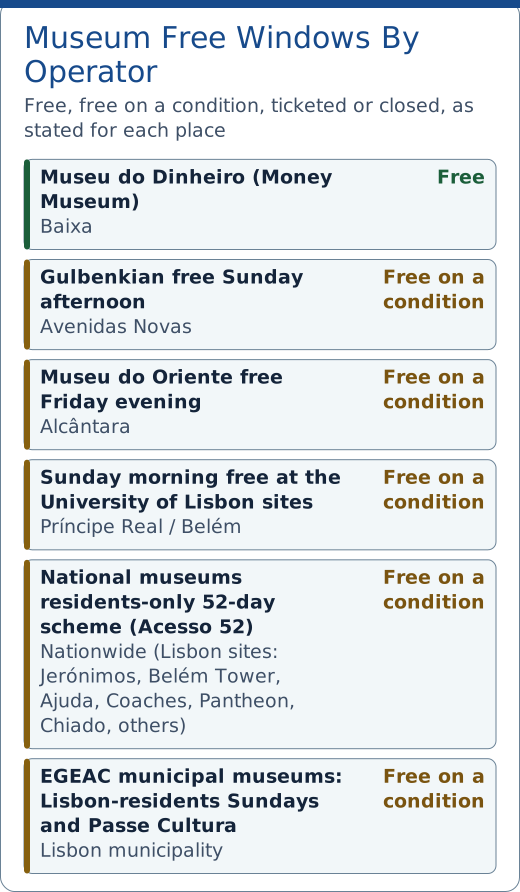
Only a few Lisbon museums are free without conditions: the Museu do Dinheiro charges nothing, and the Gulbenkian garden is free daily. Several more open free in set windows, including the Gulbenkian museum on Sundays from 14:00 and the Museu do Oriente on Fridays from 18:00 to 20:00. The national monuments, including the Jerónimos cloister at EUR 18 and Belém Tower at EUR 15, are paid for visitors every day.
Lisbon's museum landscape changed shape in 2024, and most travel content still describes the old one. The national monuments scrapped their visitor free Sundays and replaced them with a scheme that serves residents of Portugal only, while a separate set of municipal, foundation and university venues kept windows that genuinely do apply to visitors. Getting these two systems mixed up is the single most expensive mistake a museum-minded visitor can make in this city, so this guide keeps them apart, venue by venue and window by window.
The genuinely free side is real but specific. The Museu do Dinheiro, inside the former church of São Julião, charges nothing for admission. The Calouste Gulbenkian Foundation opens its museum free on Sunday afternoons and never charges for its garden. The Museu do Oriente has a free Friday evening window, the Museu de Marinha a free first Sunday, and the University of Lisbon venues free Sunday mornings. Every one of those windows carries its own condition, and the tables below state each one.
Which Museums Are Free In Lisbon?
Only one Lisbon museum charges nothing for standard admission: the Museu do Dinheiro, run by the Banco de Portugal. A few others open free in set windows: the University of Lisbon's MUHNAC on Sunday mornings, the Museu do Oriente on Friday evenings and the Gulbenkian museum on Sunday afternoons from 14:00. Every other major museum, including the Jerónimos cloister, Belém Tower and São Jorge Castle, sells tickets to visitors every day it is open.
The Museu do Dinheiro is the clearest case in the city. It sits at Largo de São Julião, in a former church, and admission is free; it opens Wednesday to Sunday, 10:00 to 18:00, with last admission at 17:30, and closes on Mondays and Tuesdays, with holiday closures to be checked on the museum page. That is the whole condition. There is no residency requirement, no window, no ticket desk.
The others are free on windows rather than all week, and the windows differ by operator, which is why this guide never merges them. The University of Lisbon venues, MUHNAC and the two botanical gardens, open free on Sunday mornings from 10:00 to 13:00, and their pages print no residency condition. The Museu do Oriente, over in Alcântara near the port, opens free on Fridays from 18:00 to 20:00, again with no residency text printed. The Gulbenkian museum opens free on Sundays from 14:00, and under-18s are free; the page prints no residency condition, though it does not say whether temporary exhibitions are included. For the wider picture of Free Things To Do In Lisbon beyond the museum doors, the viewpoints, squares and riverside cost nothing with no conditions attached.
| Venue | Run by | Free status | The condition |
|---|---|---|---|
| Museu do Dinheiro | Banco de Portugal | Free admission | Open Wed-Sun, 10:00-18:00, last entry 17:30 |
| Gulbenkian museum | Calouste Gulbenkian Foundation | Free Sundays from 14:00; under-18s free | No residency text printed; exhibitions unconfirmed |
| Gulbenkian garden | Calouste Gulbenkian Foundation | Free daily | Open sunrise to sunset |
| Museu do Oriente | Fundação Oriente | Free Fridays 18:00-20:00 | No residency text printed |
| MUHNAC | University of Lisbon | Free Sundays 10:00-13:00 | No residency text printed; ticketed otherwise |
| Museu de Marinha | Direção Cultural da Marinha | Free first Sunday until 14:00, plus named dates | No residency text printed |
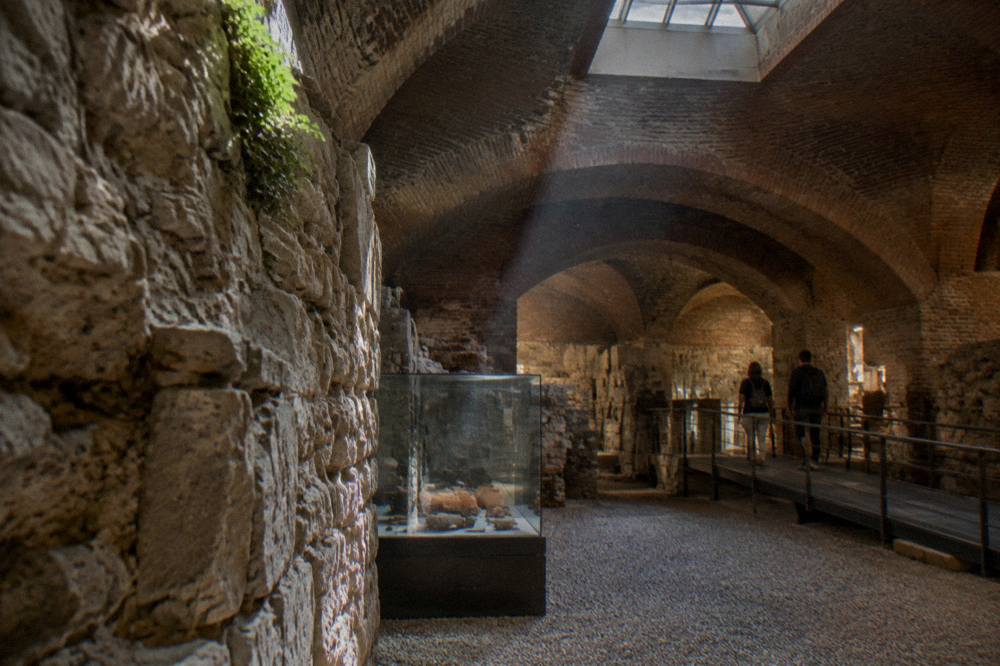
One more free visit belongs on this list even though it is an archaeological site rather than a museum building: the Núcleo Arqueológico da Rua dos Correeiros, at Rua dos Correeiros 9, is a Roman and post-earthquake dig under the Baixa with free guided visits in Portuguese or English. Booking is required through the foundation that runs it, and visits run every day except Sundays and national holidays. For the earthquake story around it, the guide to Lisbon's 1755 earthquake sites walks through the same streets above ground.
What Days Are Museums Free In Lisbon?
Sunday is the busiest free-entry day in Lisbon, but each venue sets its own window and its own rules. The Gulbenkian museum opens free from 14:00 on Sundays, the University of Lisbon venues from 10:00 to 13:00, and the Estufa Fria greenhouse until 14:00 on Sundays and public holidays. Fridays bring the Museu do Oriente window from 18:00 to 20:00, and first Sundays bring the Museu de Marinha and the MAAT.
No single rule covers the city, and pretending one does is how visitors end up at a ticket desk they expected to walk past. The Gulbenkian Foundation's own opening hours page is the source for its Sunday-from-14:00 window and its free daily garden. The University of Lisbon's museums page is the source for the Sunday 10:00 to 13:00 window at MUHNAC and both botanical gardens. The Museu de Marinha opens free on the first Sunday of the month until 14:00, plus named dates including 18 May, 20 May and 22 July.
Two of these windows deserve extra care. The MAAT in Belém opens free on the first Sunday of the month from 10:00 to 13:00, but its plan-a-visit page states that this window is for residents in Portugal; visitors from outside the country pay EUR 16, or EUR 12 for residents, and under-13s are free. The Museu do Fado's Sunday and holiday window until 14:00 is for residents of the Lisbon municipality only, so neither is a visitor fact, and this guide lists them here only to warn you off lists that present them as universal.
The Estufa Fria greenhouse in Parque Eduardo VII is worth naming in the same breath even though it is a living museum rather than a collection. Standard entry is EUR 3.70, reduced to EUR 1.85 for students and pensioners, and free for under-6s, Lisboa Card holders, and everyone on Sundays and public holidays until 14:00, with no residency condition printed on its page. It closes on Mondays.
| Day | Venue | Free window | Printed condition |
|---|---|---|---|
| Sunday | Gulbenkian museum | From 14:00 | None printed; under-18s free |
| Sunday | MUHNAC and both botanical gardens | 10:00-13:00 | None printed |
| Sunday and holidays | Estufa Fria | Until 14:00 | None printed; EUR 3.70 otherwise |
| Sunday and holidays | Museu do Fado | Until 14:00 | Lisbon-municipality residents only |
| First Sunday | Museu de Marinha | Until 14:00 | None printed |
| First Sunday | MAAT | 10:00-13:00 | Residents in Portugal only |
| First Sunday of the month | EPAL Aqueduct visit | All day, plus named dates | Children and youths up to 17 free |
| Friday | Museu do Oriente | 18:00-20:00 | None printed |
If you are planning a whole itinerary around these windows rather than one museum, the blog post on which days museums open free in Lisbon builds a day-by-day plan on the same operator-by-operator basis. And if you would rather have the city itself as the exhibit, a free walking tour costs nothing to join: this site lists 63 free walking tours across GuruWalk and freetour.com, every one of them free, pay what you want, and reserved through the guide's own page on whichever of the two platforms lists it.
Are The National Museums Free For Visitors Or Only For Residents?
The national museums and monuments run by Museus e Monumentos de Portugal are paid for visitors every day. Their Acesso 52 scheme gives free entry on 52 days a year, but only to residents in Portugal with a Citizen Card, and it replaced the old visitor free Sundays in 2024. Children under 13 are the one exception that applies to everyone: they enter free at every national monument.
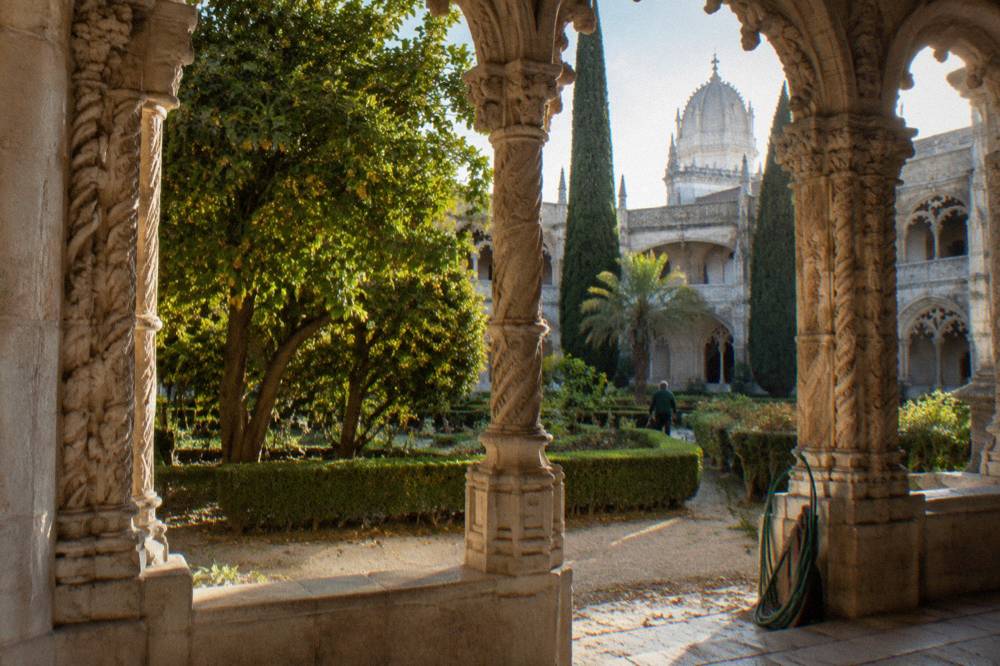
This is the change that invalidated most older guides. The Jerónimos Monastery cloister costs EUR 18, Belém Tower EUR 15, the National Pantheon EUR 10, the National Coach Museum EUR 15, Ajuda Palace EUR 15 and the Chiado museum EUR 10, and none of them opens free to visitors on any day. The 65+ and 13 to 24 reduction at the Jerónimos cloister is 50 percent. The operator's own visiting page is where the Acesso 52 conditions are printed, and it makes no visitor free Sunday.
São Jorge Castle sits outside this operator but answers the same question the same way: entry is EUR 17, and Lisbon residents lost their free entry on 3 July 2025 after a court decision, with the municipal operator appealing. The Castelo hill itself and the Alfama streets around it cost nothing to walk, which is the pair worth remembering: the hill is free, the castle inside the walls is not.
The practical takeaway for a visitor is simple. Budget for the monuments you want to enter, and take your free entries where the windows genuinely apply to you: the Museu do Dinheiro any day it is open, the Gulbenkian on a Sunday afternoon, the Museu do Oriente on a Friday evening. Belém rewards this planning more than any other district, because its riverside, gardens and monument exteriors are all free to see while its two headline interiors charge, and the guide to Belém maps exactly that split.
| National monument | Visitor ticket | Who enters free |
|---|---|---|
| Jerónimos Monastery cloister | EUR 18 | Under-13s; residents in Portugal on Acesso 52 days |
| Belém Tower | EUR 15 | Under-13s; residents in Portugal on Acesso 52 days |
| National Coach Museum | EUR 15 | Under-13s; residents in Portugal on Acesso 52 days |
| Ajuda Palace | EUR 15 | Under-13s; residents in Portugal on Acesso 52 days |
| National Pantheon | EUR 10 | Under-13s; residents in Portugal on Acesso 52 days |
| Chiado museum | EUR 10 | Under-13s; residents in Portugal on Acesso 52 days |
If the price list makes a paid monument feel steep, the free side of the same district still delivers a full day, and a walk can stitch it together. The Essential History, Free Tastings walk, run by Tours Of My Life on GuruWalk, is rated 4.96 out of 5 across 25,140 GuruWalk reviews, runs three hours in English and Spanish, and meets at Praça Luís de Camões.
Which Lisbon Museums Are Closed For Works Right Now?
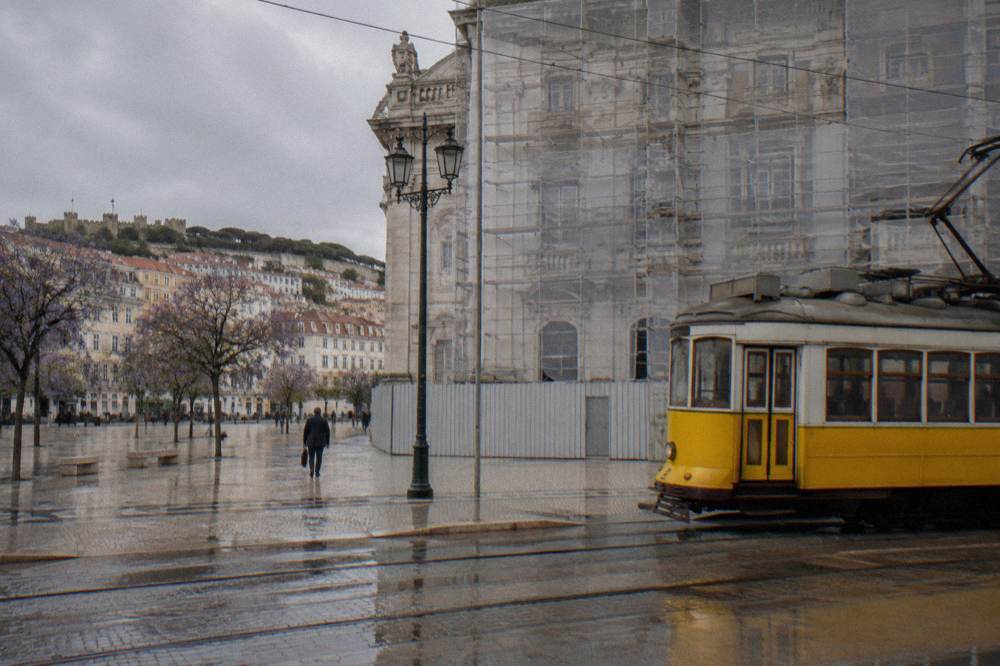
Two major Lisbon museums are closed for renovation works with no official reopening date: the National Museum of the Azulejo, the tile museum, and the National Museum of Ancient Art. Both are run by Museus e Monumentos de Portugal, and neither operator page publishes a reopening date, so any itinerary that lists them as a visit option is out of date.
The tile museum is the bigger loss for visitors, because its collection is the one most travel content names as a Lisbon highlight. Until it reopens, the tile heritage to see for free is in the streets and stations: the azulejo panels at public viewpoints such as Santa Luzia, and the decorative façades around the city, all in open public space. The museum's own reopening date is not published, so this guide does not guess one.
The National Museum of Ancient Art is in the same position, closed for publicly funded works with no date announced. Its absence narrows the paid options in the Santos and Alcântara stretch of the city, which makes the free Museu do Oriente window on Friday evenings, a short stretch north along the same riverfront district, more useful than it first looks.
There is a second category of closure worth knowing about that is not a museum: the Santa Justa lift and the Gloria, Bica and Lavra funiculars are all marked out of service by Carris, with no reopening date, and should not be planned as attractions or as shortcuts between museums on the hills. The Graça funicular, by contrast, reopened on 30 April 2026 and runs daily.
Which Free Galleries And Exhibition Spaces Never Charge?
The spaces that never charge in Lisbon are the Museu do Dinheiro, the Gulbenkian garden, the Centro Cultural de Belém's public gardens, esplanade and foyers, and the MAAT's riverside promenade and gardens. Each is a public or foundation-run space where the free status is the default, not a window, and none of them requires a ticket, a booking or proof of residency.
The Museu do Dinheiro deserves its reputation as the city's most underrated free interior. The Banco de Portugal converted the former church of São Julião, just off the Baixa, into a money museum whose collection spans the history of Portuguese currency, and the door policy is simply free. It is the one Lisbon museum you can decide to enter on the spur of the moment with nothing in your pocket but curiosity.
The Gulbenkian garden is the other never-charge space, and it doubles as an open-air gallery. The foundation opens its grounds daily from sunrise to sunset at no cost, and the museum inside carries the Sunday-from-14:00 window described above. On a weekday you can walk the whole garden, with its lakes and sculpture, and pay nothing; on a Sunday afternoon you can add the collection, from ancient Egyptian pieces to European painting, and still pay nothing.
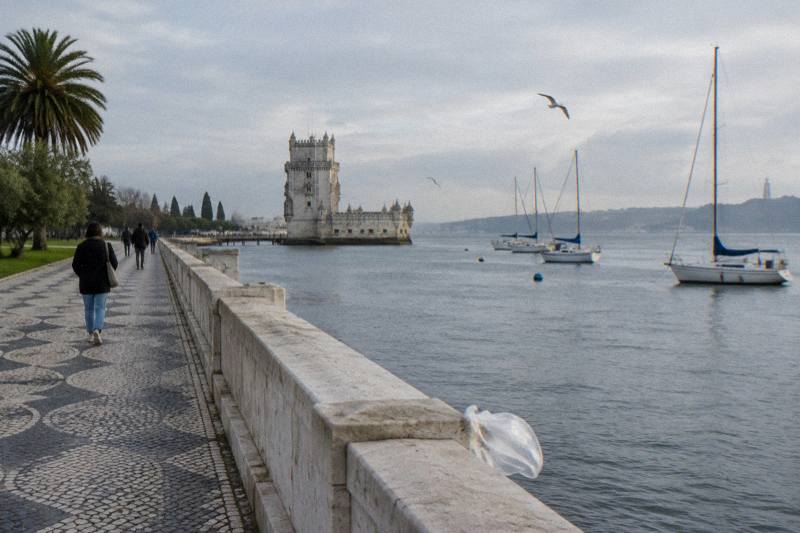
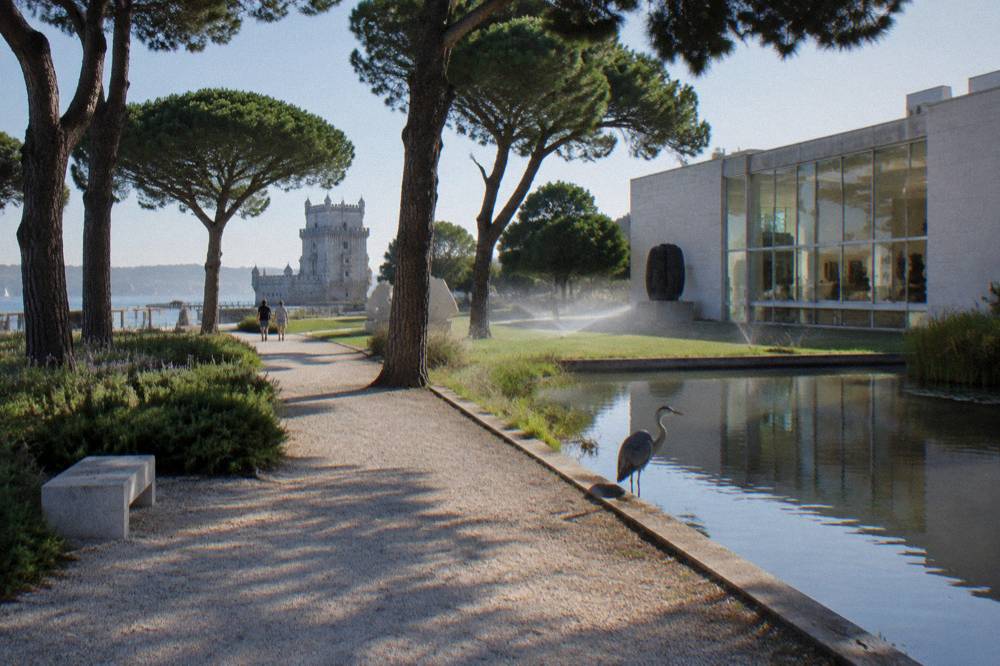
In Belém, the free public layer is generous even where the museums are not. The Centro Cultural de Belém describes its gardens, esplanade and foyers as open public spaces, and the MAAT's riverside promenade and gardens outside the building are public and free, even though the museum inside charges and its roof is an event venue rather than a public walkway. The Jerónimos exterior and its gardens, the Praça do Império and the riverside itself are all free to see, while the cloister inside charges its EUR 18. The guide to the Baixa and Rossio covers the free squares on the other end of the same axis.
Which Free Places In Lisbon Work On A Rainy Day?
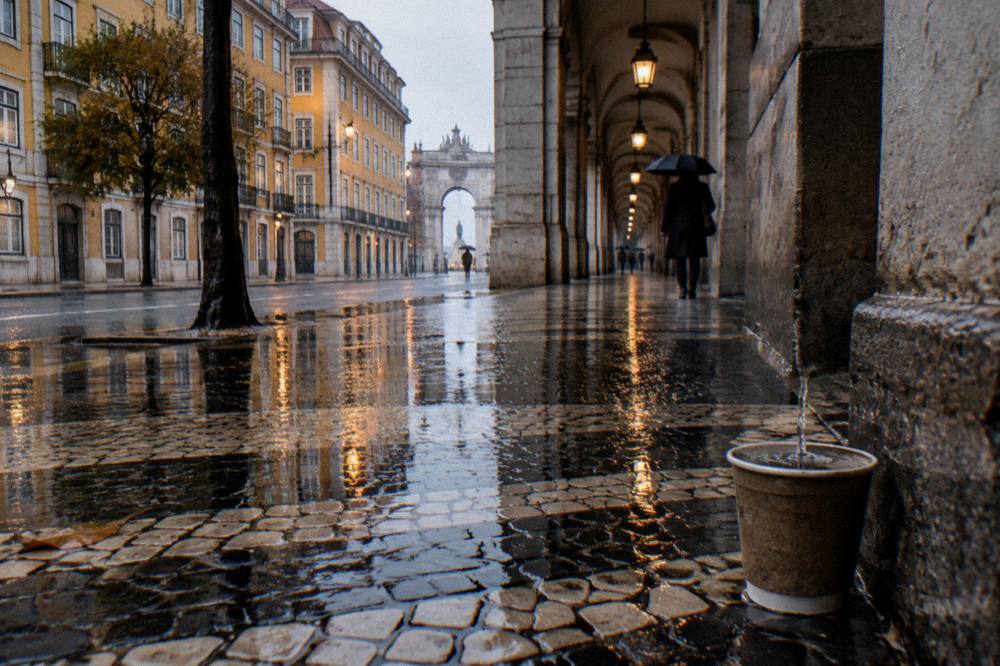
The best free rainy-day options in Lisbon are the Museu do Dinheiro, the free guided visit to the Rua dos Correeiros archaeological site, and the Gulbenkian museum on a Sunday afternoon, all indoors and all free under the conditions already given. The Museu do Oriente's Friday evening window works the same way. December is the wettest-adjacent stretch of the year, with a mean rainfall of 108.5 mm and about 10 days of 1 mm or more.
Rain in Lisbon is concentrated in a short season, but it is heavy when it arrives: the wettest months by the 1991 to 2020 climate normals are November at 133.9 mm, October at 110.6 mm and December at 108.5 mm. A museum-first plan is the right response, and the free ones hold up well because the two strongest indoor options, the money museum and the Correeiros site, sit a few streets apart in the Baixa, connected by covered arcades for part of the way.
The Correeiros site is the rain-proof gem. The visit is guided, indoors and underground, shows the Roman layers and the Pombaline cage construction under the rebuilt Baixa, and is free with booking through the foundation that operates it. It runs every day except Sundays and national holidays, so a rained-out Monday that closes the money museum can still become an archaeology day, since the site runs on Mondays.
For a fuller indoor plan, including the paid fallbacks and what stays open when the December closures bite, the post on free things to do in Lisbon when it rains extends this list. One caution carried over from the closures section: do not build a rainy-day plan around the tile museum or the Ancient Art museum, because both are closed for works with no reopening date published.
| Rainy-day free option | Where | The catch |
|---|---|---|
| Museu do Dinheiro | Largo de São Julião, Baixa | Closed Mondays and Tuesdays |
| Rua dos Correeiros archaeological site | Rua dos Correeiros 9, Baixa | Booking required; not on Sundays or national holidays |
| Gulbenkian museum | Avenida de Berna | Sundays from 14:00 only |
| Museu do Oriente | Alcântara | Fridays 18:00-20:00 only |
| MUHNAC | Príncipe Real area | Sunday mornings 10:00-13:00 only |
Which Free Walking Tours Pair With A Museum Visit?
The strongest pairing is a morning free walking tour followed by a free-entry window in the afternoon: the SANDEMANs Original Walk meets at Praça do Comércio for two hours in English or Spanish, rated 9.4 out of 10 across 14,048 freetour.com reviews, and it finishes in time for the Gulbenkian's Sunday 14:00 window or the money museum on any open day. Every walk on this site is free, pay what you want.
The logic is geographic as much as temporal. The walks that meet in the Baixa and Chiado put you within a short tram or walk of the money museum, so the same day can carry both. The SANDEMANs Original Walk, listed on freetour.com, is the most-reviewed walk in that meeting area, and its two-hour length leaves the afternoon clear. The Unmissable Essentials By Take walk on GuruWalk, rated 4.87 out of 5 across 6,312 GuruWalk reviews, runs 2 hours 45 minutes in English, Spanish, French and Italian from Praça dos Restauradores, and covers the same essential ground for visitors who want more languages.
The Essential History, Free Tastings walk by Tours Of My Life is the most-reviewed walk on the whole roster, 4.96 out of 5 across 25,140 GuruWalk reviews over three hours in English and Spanish from Praça Luís de Camões, and its tasting stops make it a walk that behaves a little like a food museum. The Original Local, 3 Hours walk, listed on freetour.com and rated 9.6 out of 10 across 6,630 freetour.com reviews, meets at the same square and suits a slower, deeper first day. Both are reserved through the guide's own page on their platform.
For Belém, the pairing writes itself: the Age of Discoveries walks meet in the Jardim Afonso de Albuquerque, and the district's free layer, the riverside, the gardens and the monument exteriors, is what the walk covers while the paid interiors wait for another day or a paid ticket. In the Baixa, the 1755 Earthquake walk pairs directly with the Correeiros site, since the walk gives you the rebuilt city above ground and the free guided visit shows you the layers beneath it. Whichever walk you consider, read its own page on GuruWalk or freetour.com for the meeting point and the day's schedule.
| Walk | Platform | Figures | Duration | Meets at |
|---|---|---|---|---|
| Essential History, Free Tastings | GuruWalk | 4.96 out of 5 across 25,140 GuruWalk reviews | 3 hours | Praça Luís de Camões |
| SANDEMANs Original Walk | freetour.com | 9.4 out of 10 across 14,048 freetour.com reviews | 2 hours | Praça do Comércio |
| Unmissable Essentials By Take | GuruWalk | 4.87 out of 5 across 6,312 GuruWalk reviews | 2 hours 45 minutes | Praça dos Restauradores |
If a guided day still feels like too much structure, the city's own squares and viewpoints carry the same history with no schedule at all, and a shorter walk such as the Local's Eyes Walk, 1 hour 30 minutes from Rossio Square, rated 4.93 out of 5 across 350 GuruWalk reviews, leaves the rest of the day for a museum window. The Alfama walks below do the same for the east side of the city.
Common Questions About Free Museums In Lisbon
Which Museums Are Free In Lisbon?
The Museu do Dinheiro is free on every day it opens, Wednesday to Sunday. The Gulbenkian museum is free on Sunday afternoons from 14:00, the Museu do Oriente on Friday evenings from 18:00 to 20:00, MUHNAC on Sunday mornings from 10:00 to 13:00, and the Museu de Marinha on the first Sunday of the month until 14:00. The Gulbenkian garden is free daily.
What Days Are Museums Free In Lisbon?
Sunday carries the most free-entry windows: the Gulbenkian museum from 14:00, the University of Lisbon venues from 10:00 to 13:00, and the Estufa Fria greenhouse until 14:00. The Museu do Oriente's window is Friday from 18:00 to 20:00, and the Museu de Marinha and the MAAT open free on first Sundays, the MAAT's window for residents in Portugal only.
Are The National Museums Free For Visitors Or Only For Residents?
Only for residents. The national monuments run by Museus e Monumentos de Portugal, including the Jerónimos cloister at EUR 18, Belém Tower at EUR 15 and the National Pantheon at EUR 10, are paid for visitors every day. Their Acesso 52 scheme gives 52 free days a year to residents in Portugal with a Citizen Card, and children under 13 enter free.
Which Lisbon Museums Are Closed For Works Right Now?
The National Museum of the Azulejo, the tile museum, and the National Museum of Ancient Art are both closed for renovation works, and neither operator page publishes a reopening date. Any guide listing them as visitable is out of date.
Is The Gulbenkian Museum Free?
On Sunday afternoons, yes: the museum opens free from 14:00, and under-18s are free. The page prints no residency condition, though it does not state whether temporary exhibitions are included. The Gulbenkian garden is free daily from sunrise to sunset with no conditions.
What Free Things To Do In Lisbon Work On A Rainy Day?
The Museu do Dinheiro, the free guided visit to the Rua dos Correeiros archaeological site in the Baixa, and the Gulbenkian's Sunday window are the strongest indoor free options. The Correeiros site runs every day except Sundays and national holidays and requires booking, so it works on the Mondays and Tuesdays the money museum closes.