Baixa Lisbon And Rossio Square: What Costs Nothing Downtown
The Baixa is the grid of streets rebuilt after the 1755 earthquake, and almost everything worth seeing in it, the squares, the streets, the arch and the viewpoints from the surrounding hills, costs nothing to walk through.
Short answer
The Baixa grid, Rossio Square, the Praça do Comércio and the passage through the Rua Augusta Arch are free to walk. The Santa Justa Lift is out of service with its viewpoint closed. The Sé prayer space is free while the tourist visit is EUR 7, and the Museu do Dinheiro is free Wednesday to Sunday.
The Baixa is the one part of Lisbon that was drawn on a drafting table. After the earthquake of 1 November 1755 flattened the city's low riverside quarter, the rebuild laid out streets in a grid, with Rua Augusta running straight from the river to Rossio and the side streets crossing it at right angles. Walking that grid today costs nothing, and it is the single best free experience in central Lisbon: the squares, the arch, the patterned pavement and the hill views at each end are all open public space.
This guide walks the Baixa and Rossio Square from the free side. It separates the places that cost nothing from the ticketed interiors they stand beside, explains what the 1755 earthquake left behind in the street plan, and lists the free walking tours whose meeting points sit inside this neighbourhood. Where a status is conditional, the condition travels with the claim.
What Is Free To Do In The Baixa?
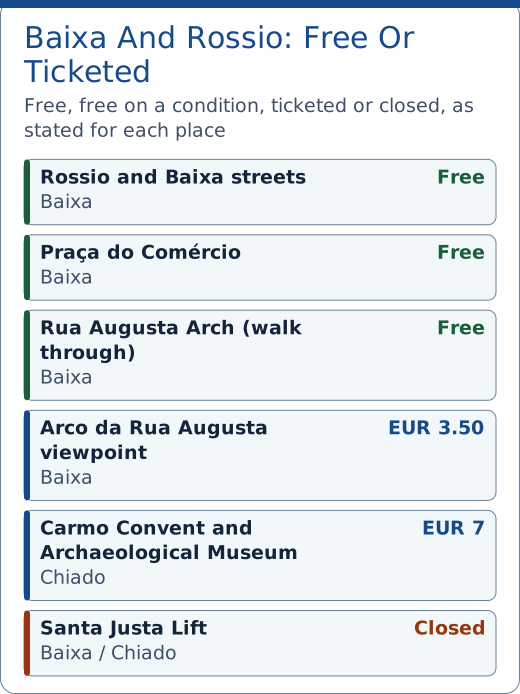
The Baixa grid is the free attraction: Rua Augusta, the parallel shopping streets, Rossio and the Praça do Comércio are open public space you can walk end to end without a ticket. The passage under the Rua Augusta Arch is free, the Museu do Dinheiro is free Wednesday to Sunday, and the NARC site is free with booked guided visits. Paid interiors, the arch viewpoint and the Carmo ruins, sit beside them. A free walk covers this ground: SANDEMANs Original Walk.
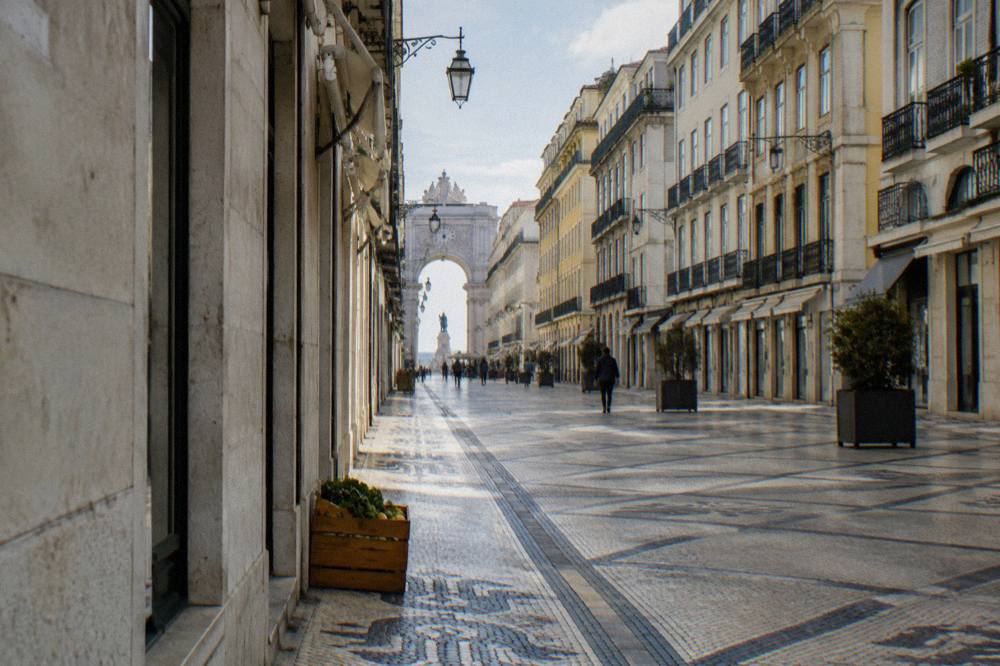
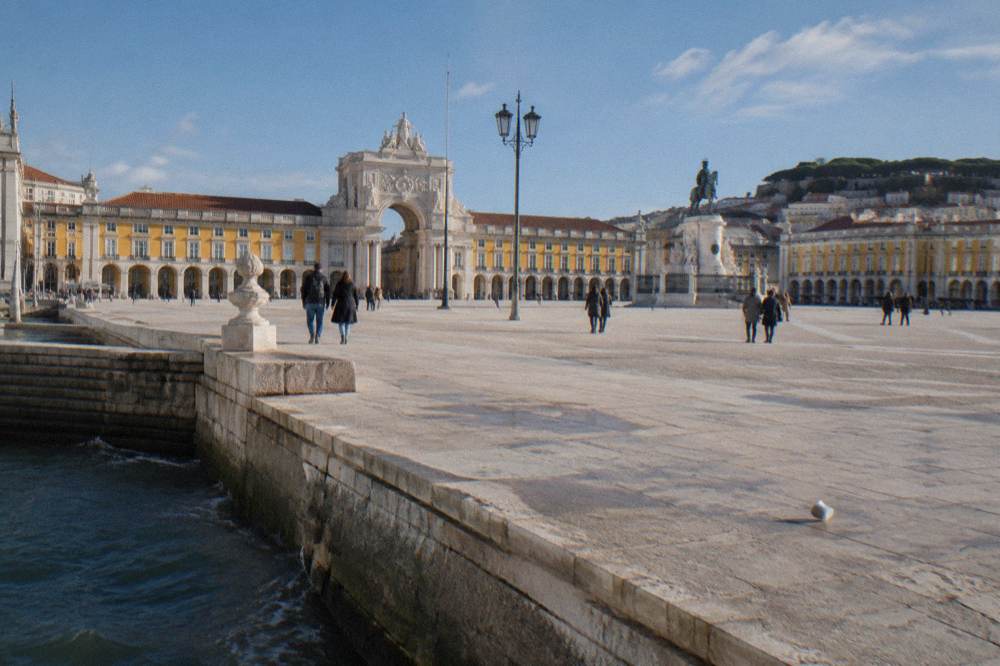
Start at the river. The Praça do Comércio is a free public square on the site of the royal palace destroyed in 1755, rebuilt from 1756, and its arcades and riverfront terrace are open to anyone. From there, Rua Augusta runs north through the grid to the Rua Augusta Arch. Walking through the arch is free; the viewing platform on top, which opened to the public on 9 August 2013, is paid and is free with the Lisboa Card, per Visit Lisboa's page on the arch. The adult platform price is not published on that page, so check before you climb.
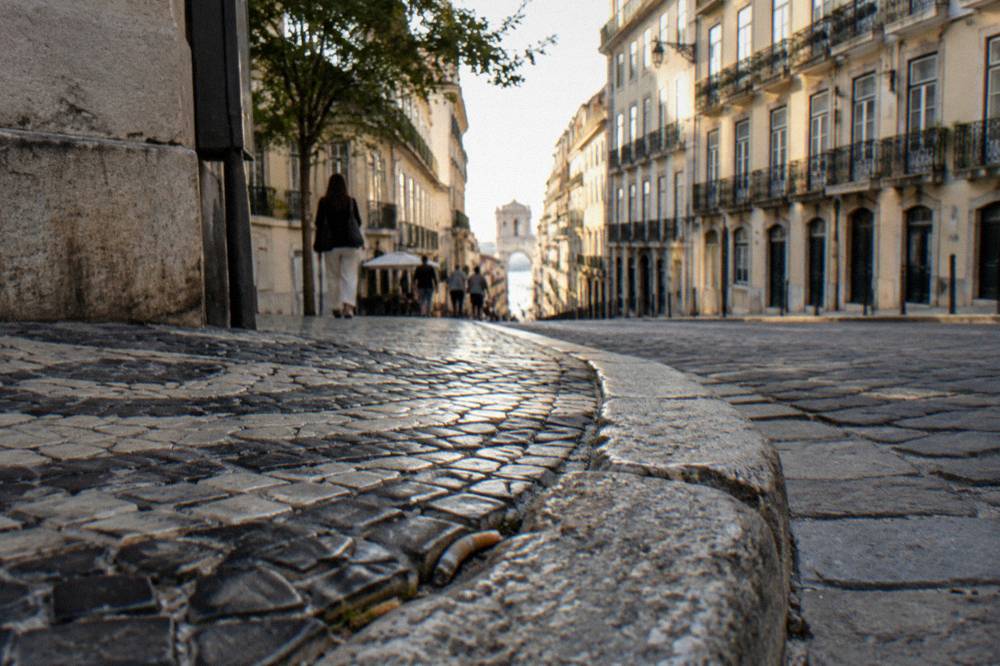
The grid streets either side of Rua Augusta, Rua dos Correeiros, Rua da Prata, Rua dos Fanqueiros, are the Pombaline plan made visible: uniform facades, uniform heights, shopfronts at street level. None of it is ticketed. The pavement underfoot is calcada portuguesa, white limestone and black basalt cubes laid by hand, and it polishes slippery on slopes, so walk it in shoes with grip, especially after rain. The first decorative example of this paving dates to 1842, inside the Castelo de São Jorge, which is a paid site, but the pavement of the Baixa itself is simply the street you are standing on.
Two free interiors sit inside the grid. The Museu do Dinheiro, in the former church of São Julião at Largo de São Julião, is free to enter, open Wednesday to Sunday 10:00 to 18:00 with last admission at 17:30, closed Mondays, Tuesdays and the listed holidays. And the Nucleo Arqueológico da Rua dos Correeiros, at number 9, is free, with all visits guided in Portuguese or English and booking required through its foundation; visits run every day except Sundays and national holidays. The site shows Roman and Pombaline layers, including the timber gaiola pombalina cage construction, underground. Booking is the only condition.
For the climb out of the grid toward the castle, Lisbon describes municipal public elevators on the Baixa-Castelo route, on Rua dos Fanqueiros and Rua da Madalena and at Chão do Loureiro by the market, which average 60,000 entries and exits a month, per the city's accessibility page for the castle hill. These street lifts are described as free public elevators in the city's own publications; current hours are not published on a live official page, so check on the day.
Here is the free-and-paid picture of the Baixa in one table:
| Place | Status | Condition |
|---|---|---|
| Praça do Comércio | Free | Open public square |
| Rua Augusta and the grid streets | Free | Open public streets |
| Passage through the Rua Augusta Arch | Free | Open passage |
| Rua Augusta Arch viewpoint | Paid | Free with Lisboa Card; adult price not published |
| Museu do Dinheiro | Free | Wed-Sun 10:00-18:00, last admission 17:30 |
| NARC, Rua dos Correeiros 9 | Free | Guided visits only, booking required, closed Sundays |
| Carmo Convent ruins, Largo do Carmo | Paid | EUR 7 adults, no free day listed |
| São Jorge Castle | Paid | EUR 17; the Alfama streets and castle hill walk are free |
The pattern to hold onto is the two-facts rule of this neighbourhood: the hill, square or street is free, and the tower, viewpoint or museum interior standing on it is paid. The castle hill walk costs nothing while the castle inside is EUR 17. The arch passage costs nothing while the platform above is paid. Every row of that table follows it.
What Is Free To See On Rossio Square?
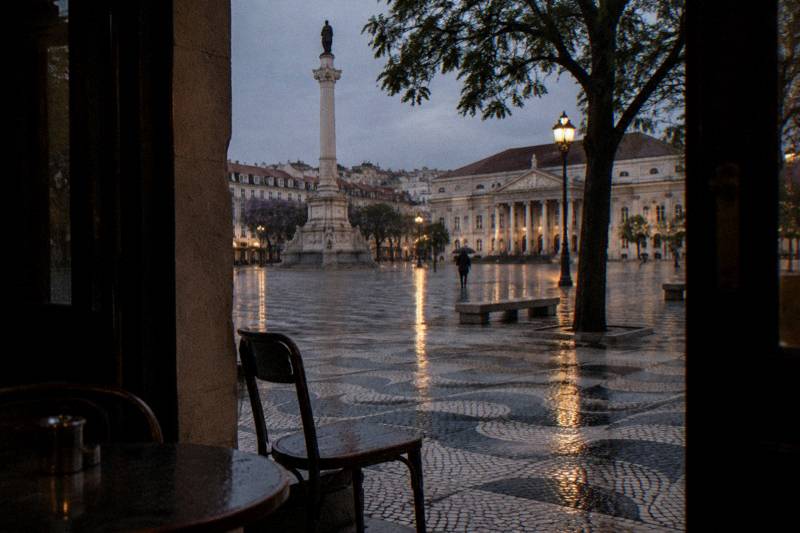
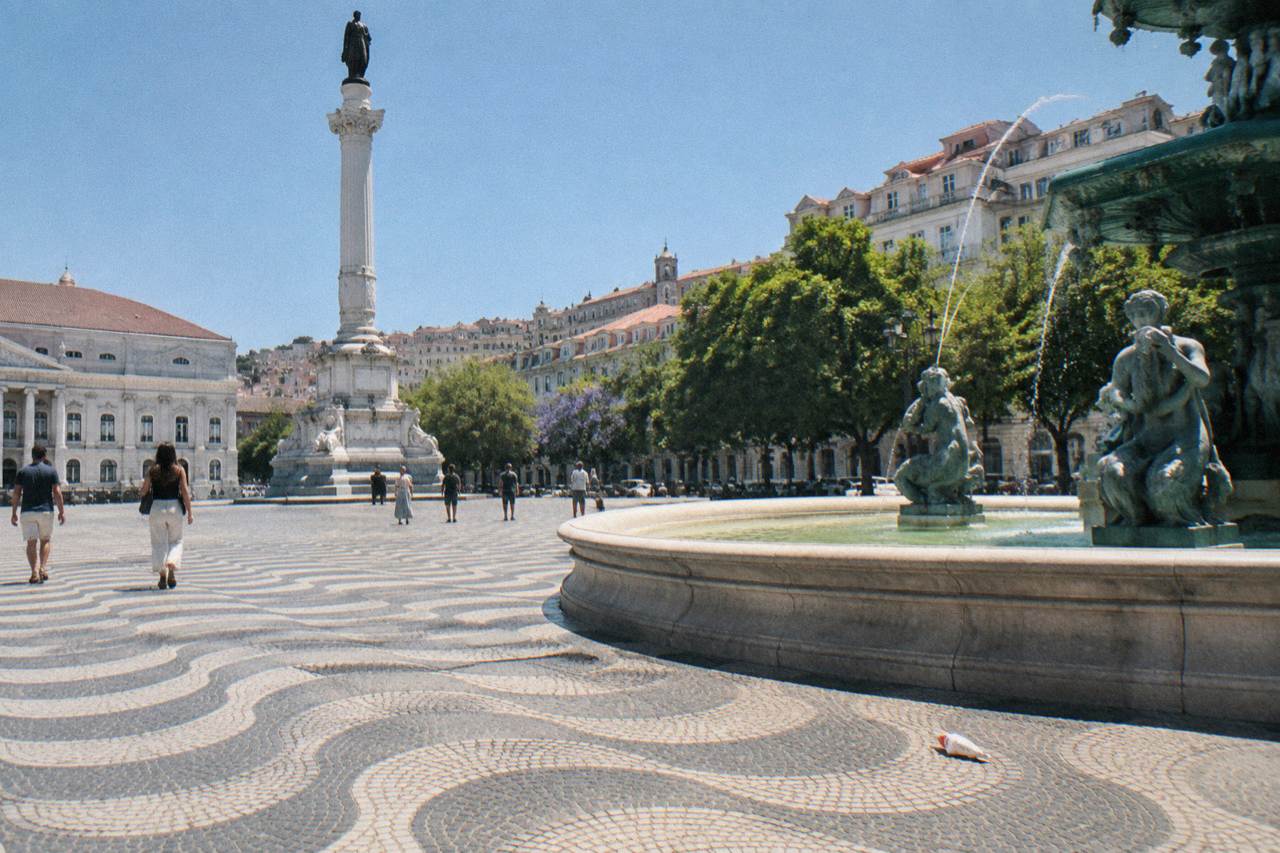
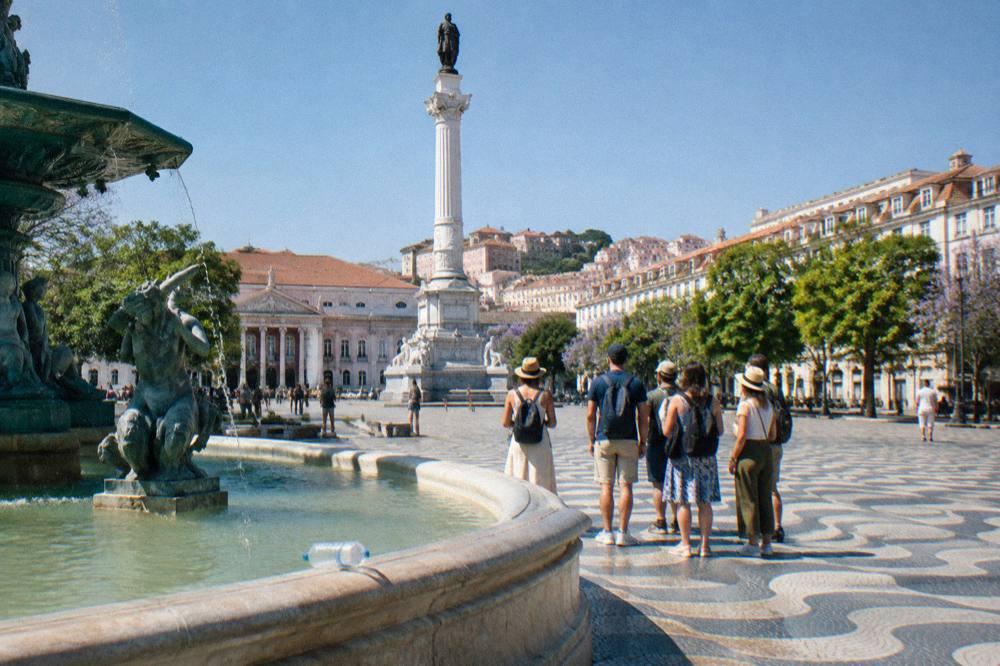
Rossio Square, formally Praça Dom Pedro IV, is an open public square at the north end of the Baixa grid, free to cross, sit in and photograph at any hour. It is also the meeting point for a cluster of free walking tours, and the streets around it, Restauradores, the Chiado slope and the Largo do Carmo, are public space. No part of the square itself is ticketed.
Rossio is where the Baixa's grid gives out into older, less regular streets, and the square works as the hinge between the two. It is a place to sit as much as to see: benches, wave-patterned calcada, cafe terraces at the edges. Because several free walking tours meet here, it is also the most practical orientation point in central Lisbon if you want the neighbourhood explained by a guide who walks it for a living.
The tours that meet at Rossio Square and nearby squares are free, pay what you want: you book a place, walk, and pay the guide what you think the walk was worth at the end. Three of the most reviewed options give a feel for the range. The PhD Student Walk, a 3 hours 30 minutes English walk rated 5 out of 5 across 775 GuruWalk reviews, meets at Rossio and covers the downtown. The Essential History walk by Tours Of My Life, rated 4.96 out of 5 across 25,140 GuruWalk reviews, runs 3 hours in English and Spanish from Praça Luís de Camões, at the Chiado end of the grid. SANDEMANs Original Walk, listed on freetour.com, rated 9.4 out of 10 across 14,048 freetour.com reviews, is a 2 hour English and Spanish walk meeting at the Praça do Comércio.
Each of these is booked on its own platform, GuruWalk or freetour.com, and every one is free to reserve with payment at the guide's discretion at the end. The full roster on this site covers 63 free walking tours across both platforms, and the Baixa meeting squares host a large share of them. Which one suits you depends on language, duration and how much of the downtown you want in one go; the table further down lists the walks by meeting point.
Is The Santa Justa Lift Free To Look At?
Yes, looking at the Santa Justa lift from the street costs nothing, and that is currently the only way to see it: Carris marks the lift temporarily closed and its viewpoint closed, with no reopening date published. The iron structure stands over the Baixa as a street landmark, free to photograph, but you cannot ride it, and the funiculars at Bica, Lavra and Glória are out of service too.
The Santa Justa lift is the most photographed piece of industrial heritage in the Baixa, a neo-Gothic iron tower connecting the Baixa's Rua de Santa Justa with the Largo do Carmo above. As a thing to look at from below, from the corner of Rua de Santa Justa or from Rua do Ouro, it costs nothing. As a ride, it does not currently exist: Carris, the operator, marks the lift and its viewpoint closed. There is no published reopening date, so do not plan a visit around riding it.
The same applies to the funiculars. The Glória, Lavra and Bica funiculars are all marked out of service by Carris, a state that followed the September 2025 Glória accident and the inspections that came after it. Substitute bus routes 51E, 22B and 19B cover the corridors. One funicular did reopen: the Graça funicular, running from Mouraria up to Graça since 30 April 2026, daily 07:00 to 21:00, with an onboard fare of EUR 4.30 for two trips, so it is a paid ride, not a free one, and it is on the far side of the hill from the Baixa.
The practical answer for the Baixa's hills is your own feet plus the free public elevators described earlier. The climb from the grid to the Largo do Carmo is short and stepped; the climb to the castle is longer but is a free walk through the Alfama streets, which is exactly what the castle's own paid status does not cover. For more on how walkable the city is with these closures in mind, see Is Lisbon Walkable?.
Which Baixa Streets Show The Pombaline Grid?
The Pombaline grid is the street plan rebuilt after 1 November 1755, and it is visible free in every street of the Baixa: Rua Augusta as the spine, Rua da Prata and Rua dos Correeiros as the parallels, Rossio and the Praça do Comércio as the end squares. The earthquake's magnitude is estimated between 7.7 and 8.7, and the rebuild used the gaiola pombalina timber frame, visible underground at the free NARC site.
The earthquake struck on the morning of All Saints Day, 1 November 1755, at around 9:30 to 9:40. Modern magnitude estimates range from about 7.7 to 8.7, depending on the study. Tsunami waves reached about 6 metres at Lisbon, and the fires that followed burned for about six days. Death estimates vary widely, from about 30,000 to 60,000 in the city. The Marquês de Pombal directed a rebuild that replaced the wrecked riverside quarter with a rational grid, using the gaiola pombalina, a timber-framed, earthquake-resistant construction method, and that grid is what you walk now. The Baixa Pombalina sits on UNESCO's Tentative List. Other pages covering the same trip are gathered on Free Things To Do In Lisbon.
Read the grid from the river north. The Praça do Comércio was rebuilt from 1756 on the site of the destroyed royal palace. Rua Augusta runs straight from the square through the arch. The parallel streets, Rua da Prata and Rua dos Correeiros, carry the same uniform facades. Rossio closes the grid at the north. Every one of these is free public street, and the plan itself is the sight: this is one of Europe's earliest examples of seismic-resistant urban planning, and it costs nothing to walk its full length.
| 1755 earthquake fact | Figure | Note |
|---|---|---|
| Date and time | 1 November 1755, around 9:30-9:40 | All Saints Day morning |
| Magnitude estimates | About 7.7 to 8.7 | Estimates differ between studies |
| Tsunami waves at Lisbon | About 6 metres | Followed the shaking |
| Fires | Burned about six days | Destroyed what the shaking left |
| Death toll in Lisbon | Tens of thousands, estimates 30,000 to 60,000 | Contemporary counts differ |
| Rebuild | Pombaline grid, gaiola pombalina timber frame | Baixa Pombalina on UNESCO's Tentative List |
If you want the grid explained rather than just walked, the free walking tours that cover it are the natural fit. The PhD Student Walk, a 3 hours 30 minutes English walk rated 5 out of 5 across 775 GuruWalk reviews, meets at Rossio Square and spends its whole route on the downtown's history and street plan.
The 1755 story also has its own dedicated free walk. Baixa Chiado, 1755 Earthquake, by Hi Lisbon Walking Tours, rated 4.79 out of 5 across 583 GuruWalk reviews, is a 2 hours 30 minutes English walk meeting at the Praça do Comércio, the square the quake rebuilt. For the full free-side treatment of the disaster, including the paid Carmo ruins and the free NARC visit, see the companion guide to the Lisbon 1755 earthquake sites.
Both walks are free, pay what you want, booked on GuruWalk, and both meet inside the grid itself, so the walk to the meeting point is part of the sightseeing.
Which Free Churches And Squares Surround Rossio?
Around Rossio the honest picture is mixed: the squares and streets are free public space, the Sé de Lisboa's prayer space is free while its tourist visit is EUR 7, and the São Roque church lists no ticket on its official page, though no official page states in words that it is free. The Carmo Convent ruins above are paid, EUR 7, with no free day listed.
Walk west from Rossio into the Chiado and the squares keep coming: the Largo do Carmo, the Praça Luís de Camões at the top of the grid, and the streets between them, all open public space. The Carmo Convent ruins at the Largo do Carmo are the area's most striking earthquake relic, the church left roofless by 1755, but they are a paid archaeological museum, EUR 7 for adults with reduced rates for students, visitors over 65, Lisboa Card holders and Portuguese residents, and children 0 to 14 free with an adult. No free day is listed. The square it stands on is free; the ruin inside is not.
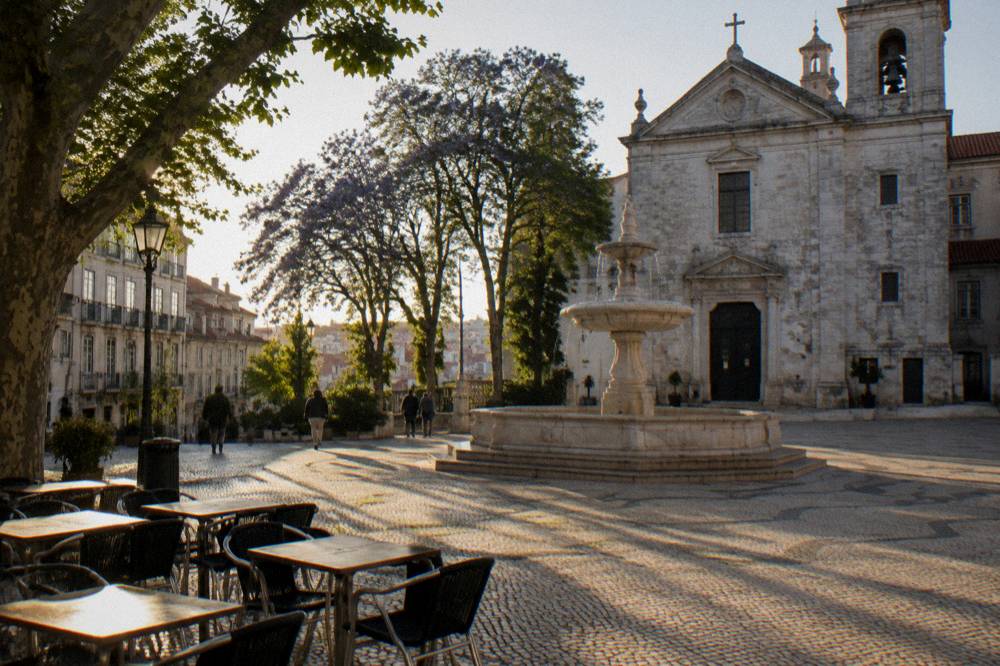
On churches, precision matters. The Sé de Lisboa, the cathedral a short walk east of the Baixa grid, reserves a separate space for prayer that is free for those who come to pray, while the tourist visit to the naves, ambulatory, High Choir and Treasury is ticketed at EUR 7, with visits limited during worship. Never assume the whole cathedral is free. São Roque, on the Chiado side, lists its museum as ticketed at EUR 8 with a residents-only Sunday window, and its church hours on the official page, but no sentence on that page states that the church is free to enter: the honest line is that no church ticket is listed. For the full church-by-church picture, see Which Lisbon Churches Are Free To Enter?.
The Bairro Alto side of this ridge also has its own free walk. Downtown And Bairro Alto, 3 Hours, by Live History, rated 4.78 out of 5 across 214 GuruWalk reviews, is an English and Spanish walk meeting at Rossio Square that pairs the downtown with the nightlife quarter above it.
Like every walk in this guide it is free, pay what you want, reserved on GuruWalk, and its meeting point at Rossio puts the whole Baixa grid within a five minute walk of the start.
Where Do Free Walking Tours Meet In The Baixa?
Free walking tours meet at four main points in and around the Baixa: the Praça do Comércio, Rossio Square, the Praça dos Restauradores and the Praça Luís de Camões. Every one is free, pay what you want, booked in advance on GuruWalk or freetour.com, with no upfront price and payment to the guide at the end. Meeting at a public square costs nothing, and the walk to it usually passes the sights anyway.
The meeting points are not arbitrary: each sits at a hinge of the grid, so you can use a tour's start as your own free orientation walk. The Praça do Comércio hosts the largest cluster, including SANDEMANs Original Walk on freetour.com, rated 9.4 out of 10 across 14,048 freetour.com reviews, and Unmissable Alfama by Hi Lisbon Walking Tours, rated 4.78 out of 5 across 1,706 GuruWalk reviews. Rossio Square hosts the PhD Student Walk and the Live History walks. Restauradores and Praça Luís de Camões host the rest.
| Walk | Platform | Rating and reviews | Meets at |
|---|---|---|---|
| PhD Student Walk, 3 Hours 30 | GuruWalk | 5 out of 5 across 775 reviews | Rossio Square |
| Baixa Chiado, 1755 Earthquake | GuruWalk | 4.79 out of 5 across 583 reviews | Praça do Comércio |
| Downtown And Bairro Alto, 3 Hours | GuruWalk | 4.78 out of 5 across 214 reviews | Rossio Square |
| SANDEMANs Original Walk | freetour.com | 9.4 out of 10 across 14,048 reviews | Praça do Comércio |
| Unmissable Alfama | GuruWalk | 4.78 out of 5 across 1,706 reviews | Praça do Comércio |
| Unmissable Essentials By Take | GuruWalk | 4.87 out of 5 across 6,312 reviews | Praça dos Restauradores |
| Black History Walk | GuruWalk | 4.97 out of 5 across 287 reviews | Praça do Comércio |
A note on what "free" means here, because it is the most common question about these tours. Booking is free on both platforms, and at the end of the walk each person pays the guide what they consider the walk was worth; there is no fixed price and no obligation to a set amount. The PhD Student Walk, 3 Hours 30 is the walk to pick for the Baixa specifically, for its duration and its Rossio meeting point, and it follows exactly that model. Cancellation is free from your account or the confirmation email.
If you would rather walk alone, the grid makes self-guiding straightforward: the free walking tours guide covers the roster citywide, and a self-guided route from the Praça do Comércio up Rua Augusta to Rossio, then west to the Largo do Carmo, passes almost everything in this article in under an hour of walking. For the square at the river end in full detail, see Praça do Comércio And The Rua Augusta Arch.
Whatever you choose, the Baixa rewards the slow version: this is a neighbourhood where the plan itself is the attraction, and the plan is free. Three more free walks, all covering the downtown and its edges from different angles, to close the list:
Common Questions About The Baixa
Is the Baixa in Lisbon free to visit?
The streets, squares and grid of the Baixa are free public space: Rua Augusta, Rossio, the Praça do Comércio and the passage through the Rua Augusta Arch cost nothing. Paid items sit inside or on top of that free frame: the arch viewpoint, the Carmo ruins at EUR 7 and the São Jorge Castle at EUR 17.
Can you ride the Santa Justa Lift?
No. Carris marks the Santa Justa lift and its viewpoint closed, with no reopening date published, and the Glória, Lavra and Bica funiculars are out of service as well. The free public elevators on the Baixa-Castelo route are the working alternative for the climb.
What is the Pombaline grid?
It is the street plan of the rebuilt Baixa, laid out after the 1755 earthquake under the Marquês de Pombal: a rational grid of uniform streets with Rua Augusta as the spine, built with the earthquake-resistant gaiola pombalina timber frame. The Baixa Pombalina is on UNESCO's Tentative List.
Which museums in the Baixa are free?
The Museu do Dinheiro, on Largo de São Julião, is free, open Wednesday to Sunday 10:00 to 18:00 with last admission at 17:30. The NARC archaeological site on Rua dos Correeiros is also free, with all visits guided and booking required.
Where do free walking tours meet in the Baixa?
At four public squares: the Praça do Comércio, Rossio Square, the Praça dos Restauradores and the Praça Luís de Camões. All are free, pay what you want walks booked on GuruWalk or freetour.com, with payment to the guide at the end.
Is the Sé de Lisboa free to enter?
The Sé's prayer space is free for those who come to pray, but the tourist visit to the naves, ambulatory, High Choir and Treasury is ticketed at EUR 7, with visits limited during worship. The honest line is that only the prayer space is free.