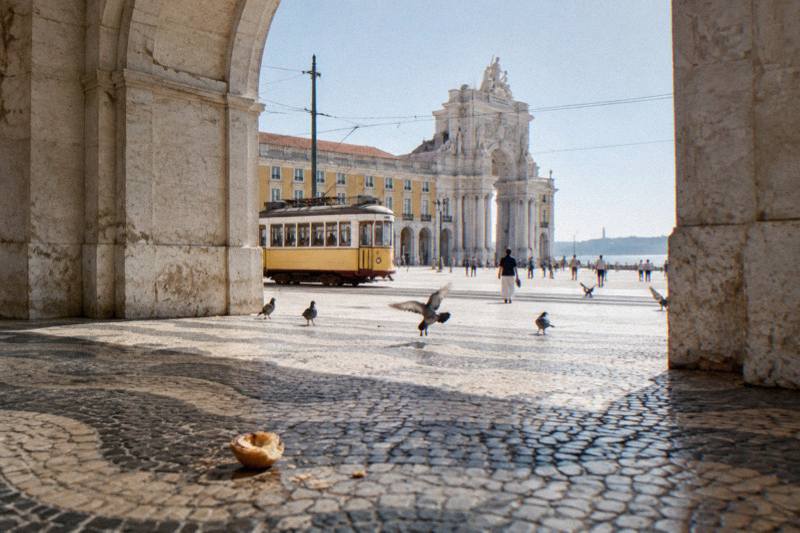
Is Lisbon Expensive?
Is Lisbon expensive? A cost-by-cost answer for visitors: tourist tax, transport fares, paid monuments, cheap meals and the free walks that replace a paid tour.
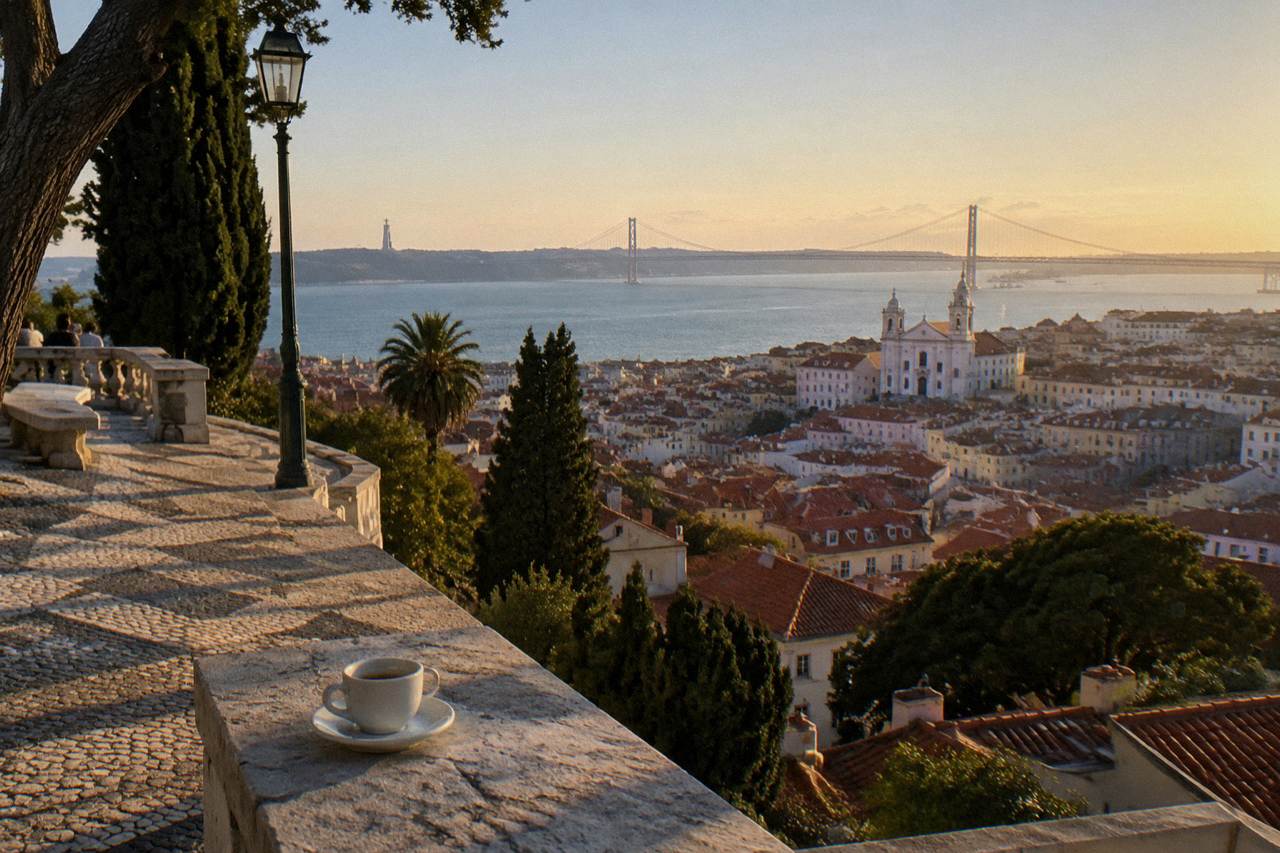
Lisbon charges a tourist tax of EUR 4 per night for every guest aged 13 or over, capped at seven nights per stay. A single bus or metro ride costs EUR 1.90, tram 28 costs EUR 3.30 bought on board, and the headline monuments run from EUR 10 at the Pantheon to EUR 18 for the Jerónimos Monastery cloister. Against that, the viewpoints, the squares, the riverside, the public gardens and 63 free walking tours across GuruWalk and freetour.com cost nothing at all.
The honest answer is that Lisbon is no longer the bargain it was a decade ago, but it is still cheaper than Paris, Amsterdam or Copenhagen for a visitor who plans around the free side of the city. The city's fixed costs are modest and knowable in advance. The variable costs, meals and monuments, are where a budget either holds or breaks, and both have cheap and expensive versions sitting side by side.
This page walks through each cost in turn, with the real figures, and shows where the free alternatives sit.
Is Lisbon Expensive For A Visitor?
Compared with the rest of Western Europe, Lisbon sits in the middle: a nightly tourist tax of EUR 4, public transport at EUR 1.90 a single ride, and headline monuments between EUR 10 and EUR 18, but with a broad free layer of viewpoints, squares, gardens and free walking tours that keeps a careful visitor's daily spend low.
The fixed costs arrive before you see a single sight. The municipal tourist tax is EUR 4 per night per guest aged 13 and over, up to a maximum of seven nights per person per stay, a rate raised from EUR 2 in September 2024. For a three-night stay that is EUR 12 per person, collected through your accommodation. It is small, but it is real, and it should be in the arithmetic.
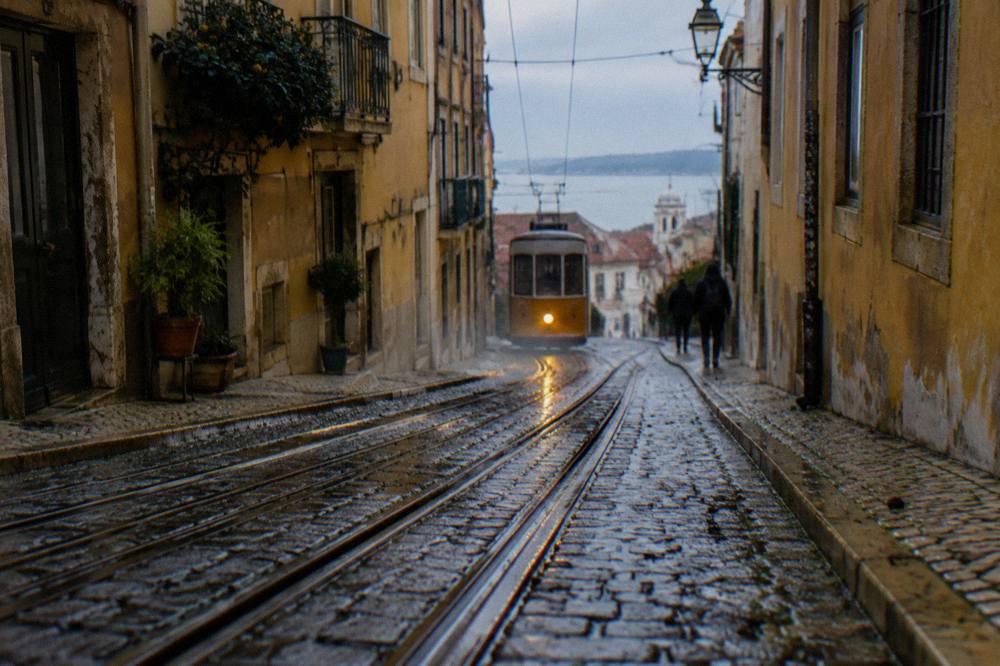
Transport is the other fixed cost, and it is cheap. A single ticket on the Carris and Metro network costs EUR 1.90 and covers one hour of travel. A 24-hour Carris/Metro pass costs EUR 7.25, and Zapping pay-as-you-go works out at EUR 1.72 per journey on a rechargeable card. The famous tram 28 costs EUR 3.30 if you buy on board, so a Navegante card or a day pass is the smarter way to ride it. The current fares are published on the Carris 2026 price table.
The monument layer is where Lisbon can feel expensive if you treat it like a checklist. São Jorge Castle is EUR 17. The Jerónimos Monastery cloister is EUR 18 and Belém Tower is EUR 15, both run by Museus e Monumentos de Portugal. The Carmo Convent ruins are EUR 7, the Sé de Lisboa tourist visit is EUR 7, the National Pantheon is EUR 10 and the Padrão dos Descobrimentos viewpoint is EUR 10. MAAT charges non-residents EUR 16. Do all of those in three days and you have spent more per person than a week of meals.
The counterweight is the free layer, and it is not a thin one. The miradouros, the squares, the riverside promenades, the public gardens and the Museu do Dinheiro cost nothing, and the city's free walking tour scene spans 63 walks listed across GuruWalk and freetour.com. A visitor who spends mornings on paid monuments and afternoons on the free layer spends far less than one who only buys tickets.
If you are weighing a pass against individual tickets, the official Lisboa Card costs EUR 31 for 24 hours and EUR 51 for 48 hours for an adult, sold through the official Visit Lisboa shop, and it only pays back if you are stacking several paid sights in a short window. The arithmetic is laid out in the full Lisboa Card verdict.
What Does Lisbon Cost A Day Without Paid Sights?
A day built on the free layer costs roughly EUR 10 to EUR 35 per person: EUR 4 in tourist tax, EUR 1.90 to EUR 7.25 on transport depending on how much you ride, EUR 5 to EUR 15 on simple food, and nothing at the viewpoints, squares, gardens and free walking tours that fill the day.
Call it EUR 10 at the spartan end and EUR 35 once you sit down for a proper lunch. The tourist tax is fixed at EUR 4 per night for guests aged 13 and over, up to seven nights. Transport can be one EUR 1.90 single if you base yourself centrally and walk, or the EUR 7.25 24-hour pass if you plan to ride trams and metro all day. Everything else is food, and Lisbon's cheap eating is genuinely cheap rather than a compromise.
The free layer does the heavy lifting. A morning viewpoint circuit in Graça or Alfama costs nothing. An afternoon walking the Belém riverside costs nothing. The Gulbenkian garden is free every day, and the Museu do Dinheiro, in the former church of São Julião in Baixa, is free Wednesday to Sunday. Add one of the free walking tours, pay what you want, and the sightseeing budget for the day can round to zero.
The mistake that makes Lisbon feel expensive is treating the paid monuments as the default and the free layer as filler. It works the other way. The castle hill and the Alfama streets are free to walk while São Jorge Castle is EUR 17; the Praça do Comércio and the passage through the Rua Augusta Arch are free while the arch viewpoint is paid; the Belém riverside is free while the tower and the cloister are ticketed. Every hill, square and riverside in this city has a paid interior sitting on free ground.
How Much Do Free Things Save?
A visitor who spends three days on the free layer instead of the paid monuments saves roughly EUR 50 to EUR 90 per person in sightseeing alone, since the viewpoints, squares, gardens, riverside and Museu do Dinheiro cost nothing against EUR 10 to EUR 18 tickets at the castle, the cloister, the tower, the Pantheon and the Padrão viewpoint.
Put the two columns side by side and the saving is concrete. Here is what the paid headline sights cost against their free counterparts on the same ground.
| Paid sight | Price | Free counterpart on the same ground |
|---|---|---|
| São Jorge Castle | EUR 17 | The Castelo hill and the Alfama streets, free to walk |
| Jerónimos Monastery cloister | EUR 18 | The Belém riverside and the Praça do Império gardens, free |
| Belém Tower | EUR 15 | The tower exterior and the riverside promenade, free |
| National Pantheon | EUR 10 | The viewpoints around the Pantheon, free |
| Padrão dos Descobrimentos | EUR 10 viewpoint | The access terrace and the Compass Rose, free |
| Carmo Convent ruins | EUR 7 | The Baixa grid and Praça do Comércio, free |
| MAAT | EUR 16 non-residents | The riverside promenade and gardens outside, free |
Add the walking tours and the saving grows. A conventional paid guided city tour in a Western European capital typically runs tens of euros per person. Lisbon's equivalent is the free, pay-what-you-want walk: you reserve a place on GuruWalk or freetour.com, walk, and pay the guide what you think the walk was worth at the end. There are 63 of them on this site's roster. Even a generous payment at the end of a free walk usually lands well below a fixed-price guided tour, and a short one can cost very little indeed.
The museum layer has a few genuine free windows too. The Museu do Dinheiro is free outright. The Gulbenkian garden is free daily, and the University of Lisbon museums and botanical gardens open free on Sunday mornings from 10:00 to 13:00 with no residency condition printed. What you must not assume is a general free Sunday: the national monuments run a residents-only scheme, and the municipal museums' Sunday window belongs to Lisbon residents, not visitors. The detail is in the museum days explained.
Which Costs Are Fixed Like Transport And The Tourist Tax?
The fixed visitor costs are the EUR 4 per night tourist tax for guests aged 13 and over capped at seven nights, EUR 1.90 single transport fares or the EUR 7.25 24-hour Carris/Metro pass, EUR 3.30 for tram 28 bought on board, and EUR 31 for a 24-hour adult Lisboa Card if you choose one.
These are the numbers you can put in a spreadsheet before you fly. The tourist tax rose from EUR 2 to EUR 4 per night on 1 September 2024, applies to every guest aged 13 or over, and stops after seven nights per person per stay. The rise was announced on the Lisbon municipal news page, and it is collected through accommodation, not at a booth.
Transport fares for 2026 are published and stable. The single ticket is EUR 1.90 for one hour across the Carris and Metro network. The 24-hour Carris/Metro ticket is EUR 7.25. Zapping is EUR 1.72 per journey. Tram 28 costs EUR 3.30 on board, which is the single most avoidable overpayment in the city, since the same ride on a topped-up card costs less than half that. The rechargeable occasional Navegante card itself costs EUR 0.50. The rest of the planning pages sit on Free Things To Do In Lisbon.
One transport caveat matters in 2026: the Santa Justa Lift and the Gloria, Bica and Lavra funiculars are out of service, so no pass or card can rescue a plan that depends on them. The Graça funicular reopened on 30 April 2026 and charges EUR 4.30 for two trips, but it is a paid convenience, not a free ride. The hills are walkable, and the free public lifts on the Baixa-Castelo route exist, though their current hours are not published, so check on the day.
The Lisboa Card is optional, not fixed. At EUR 31 for 24 hours and EUR 51 for 48 hours for an adult, it includes unlimited transport and free entry to a long list of museums and cultural venues. It only pays back if you are stacking paid sights quickly; a visitor on the free layer does not need it at all. Prices come from the official Visit Lisboa shop.
Which Meals Are Cheap?
Lisbon's cheap eating is real and central: the bifana, the grilled sardine lunch, the tascas of Baixa and Alfama and the market food halls keep a food day in the EUR 10 to EUR 25 range per person, while sit-down restaurants with a view push a meal to EUR 30 or more, so the spread between cheap and expensive eating is wide.
The cheap end of Lisbon eating is not hidden. The bifana, a pork sandwich, is the classic low-cost meal and it is sold all over the centre. Grilled sardine lunches and the daily plates at the older tascas around Baixa, Chiado and Alfama keep a full meal in the low teens even in tourist-heavy streets. Bakeries sell the pastel de nata for a euro or so, and the famous Pastéis de Belém shop on Rua de Belém, open daily from 08:00, charges normal pastry prices rather than monument prices.
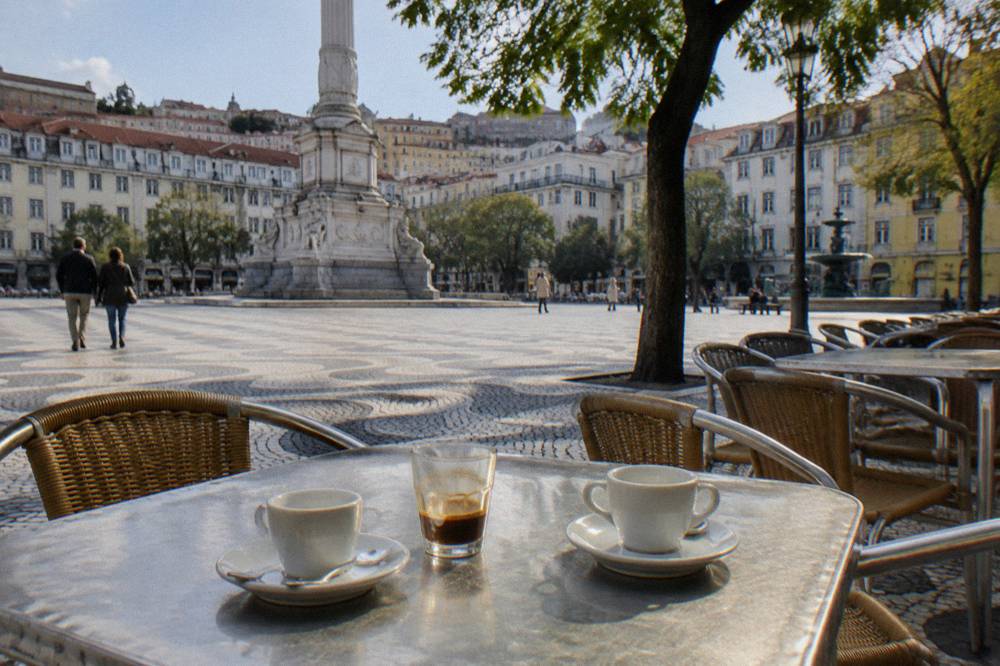
The expensive end is equally easy to find, because terrace restaurants with a view price the view. The rule of thumb is simple: the food gets more expensive as the table gets closer to the river or higher up the hillside. Walk one street back from the Praça do Comércio or the miradouros and prices drop noticeably.
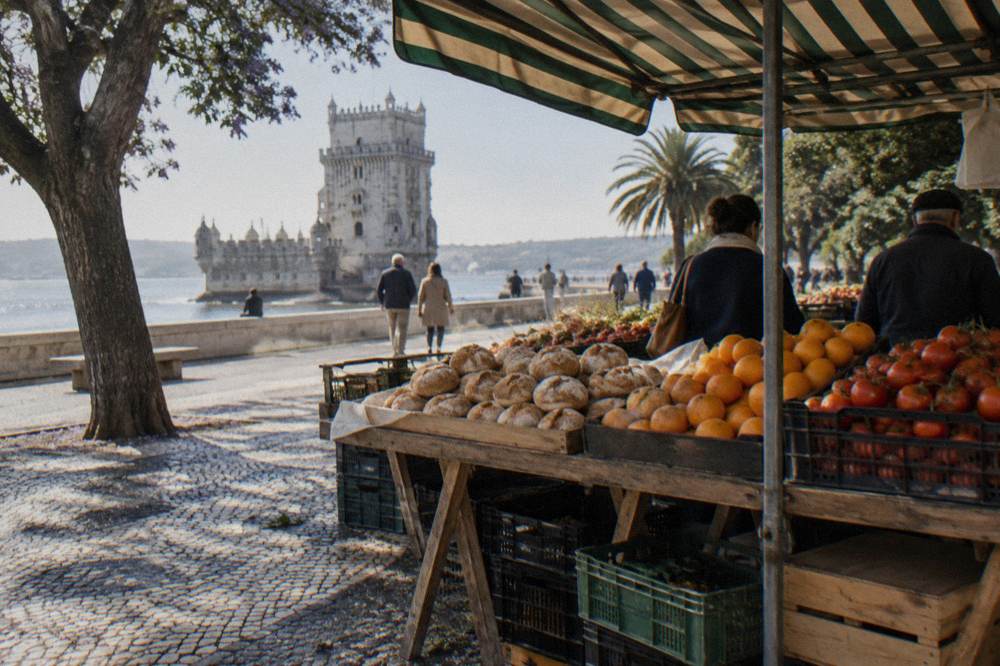
Two habits keep the food budget honest. First, lunch rather than dinner: the midday menu at many places is cheaper than the evening equivalent. Second, tap water: Lisbon's tap water is safe to drink, and public fountains exist around the city, so you do not need to buy bottles all day.
Food halls split the difference. The Time Out Market at Cais do Sodré puts a dozen kitchen names under one roof, and you pay per dish rather than per menu, so a visit can be cheap or expensive depending on how many dishes you collect. Walking in costs nothing.
Which Free Walks Replace A Paid Tour?
Lisbon's 63 free, pay-what-you-want walking tours across GuruWalk and freetour.com replace a fixed-price guided tour entirely: you reserve a place, walk with an independent local guide, and pay what you want at the end, with walks covering the essential city, Alfama, Baixa and Belém in English, Spanish and other languages.
The flagship is Essential History, Free Tastings, run by Tours Of My Life on GuruWalk: 3 hours, in English and Spanish, meeting at Praça Luís de Camões, rated 4.96 out of 5 across 25,140 GuruWalk reviews. It is the most-reviewed walk on the roster, and it is free, pay what you want. For a first-day orientation it does what a paid introductory tour does anywhere else in Europe, without a fixed ticket.
The freetour.com side of the roster has its own anchors. SANDEMANs Original Walk runs 2 hours in English and Spanish from the Praça do Comércio, rated 9.4 out of 10 across 14,048 freetour.com reviews. Original Local, 3 Hours, run by Original Lisbon Tours, is rated 9.6 out of 10 across 6,630 freetour.com reviews and meets at Praça Luís de Camões. Both are free, pay what you want, reserved on the operator's freetour.com listing.
Neighbourhood walks go deeper than the essentials. Unmissable Alfama, run by Hi Lisbon Walking Tours on GuruWalk, is 2 hours 30 in English from the Praça do Comércio, rated 4.78 out of 5 across 1,706 GuruWalk reviews. Old Neighborhoods And Stories, by the same Tours Of My Life operator, covers the old quarters in English, Spanish and French, rated 4.92 out of 5 across 353 GuruWalk reviews. Local Perspective, 2 Hours 15, rated 4.86 out of 5 across 301 GuruWalk reviews, meets at Praça Luís de Camões. All are free, pay what you want.
The one thing to plan around is language. Most of the English-capable walks are easy to find, but the roster also carries walks that run only in Spanish, Italian or German, and a walk listed in Spanish runs in Spanish. Check the language on the walk's own GuruWalk or freetour.com page before you reserve. How the pay-what-you-want model works in practice, and what people actually hand over at the end, is covered in the tipping question answered.
Common Questions On This Topic
Is Lisbon Expensive?
No, not by Western European standards, but it is no longer cheap-cheap. The tourist tax is EUR 4 a night, transport is EUR 1.90 a ride, and headline monuments run EUR 10 to EUR 18. A visitor who builds days around the viewpoints, squares, gardens and free walking tours can keep daily spending in the EUR 10 to EUR 35 range.
How Much Money Do I Need for 3 Days in Lisbon?
Roughly EUR 90 to EUR 200 per person excluding accommodation and flights: EUR 12 in tourist tax, EUR 6 to EUR 22 on transport, EUR 30 to EUR 75 on food, and whatever you choose to pay on free walks, plus any monument tickets at EUR 10 to EUR 18 each. Stacking every headline monument adds about EUR 80 per person; the free layer adds nothing.
Is The Tourist Tax Charged Per Person Or Per Room?
Per person, per night. Every guest aged 13 or over pays EUR 4 per night, up to a maximum of seven nights per person per stay, collected through the accommodation. Children under 13 are not charged.
Are Lisbon Museums Free On Sundays?
Not for visitors. The national monuments run a residents-only scheme of 52 free days a year, and the municipal museums' Sunday morning window belongs to Lisbon residents. A few genuine free windows exist with no residency condition printed, such as the Gulbenkian from 14:00 on Sundays and the University of Lisbon museums on Sunday mornings, and the Museu do Dinheiro is free outright.
Do You Need To Pay For Viewpoints In Lisbon?
No. The miradouros are open public spaces and cost nothing. What is paid is the interior or terrace sitting on top of free ground: São Jorge Castle at EUR 17, the arch viewpoint, the Padrão viewpoint at EUR 10 and the Pantheon terrace inside at EUR 10.
Are Free Walking Tours Actually Free?
They are free, pay what you want: booking a place costs nothing, and you pay the guide what you think the walk was worth at the end. Lisbon's roster spans 63 such walks across GuruWalk and freetour.com, in several languages, from 1 hour 30 to 4 hours.
The short version: Lisbon is a mid-priced city with an unusually large free layer, and the difference between an expensive trip and a cheap one is mostly which layer you build your days on.