What Are The Top 5 Free Things To Do In Lisbon?
The five best free things to do in Lisbon: the Alfama streets, the miradouro circuit, Praça do Comércio, the Ribeira das Naus riverside and a free walking tour, with the paid line drawn beside each one.
What Are The Top 5 Free Sights And Activities In Lisbon?
The top 5 free things to do in Lisbon are: walk the Alfama streets, tour the free miradouros, stand in Praça do Comércio and pass under the Rua Augusta Arch, wander the Ribeira das Naus riverside, and join a free pay what you want walking tour. All five cost nothing at the door, and each has a paid counterpart worth knowing about before you go.
That list is not a compromise. Lisbon's paid attractions, the castle, the tower, the monastery cloisters, sit beside free ground that is arguably the better half of the pair. The Alfama streets cost nothing while São Jorge Castle charges EUR 17. The Praça do Comércio and the walk through the Rua Augusta Arch cost nothing while the arch's upper viewpoint is paid. The Belém riverside costs nothing while the tower interior charges EUR 15. Knowing where that line falls is the difference between a cheap trip and a free one.
The five picks on Free Things To Do In Lisbon share one more quality: none of them needs a ticket, a time slot or a booking window. You can do all five in a single long day if your legs are willing, or spread them across a week without ever opening your wallet for an entrance fee. The only item on the list with any reservation at all is the walking tour, and even there the reservation is free, made on GuruWalk or freetour.com, with payment left to what you decide at the end.
The full roster this site covers runs to 63 free walking tours across GuruWalk and freetour.com, every one free, pay what you want, so the fifth pick is less a single activity than a whole category you can enter at zero cost. The four picks before it are places. Here is how they stack up, and why the order runs the way it does.
Why Is The Alfama Walk Number One?
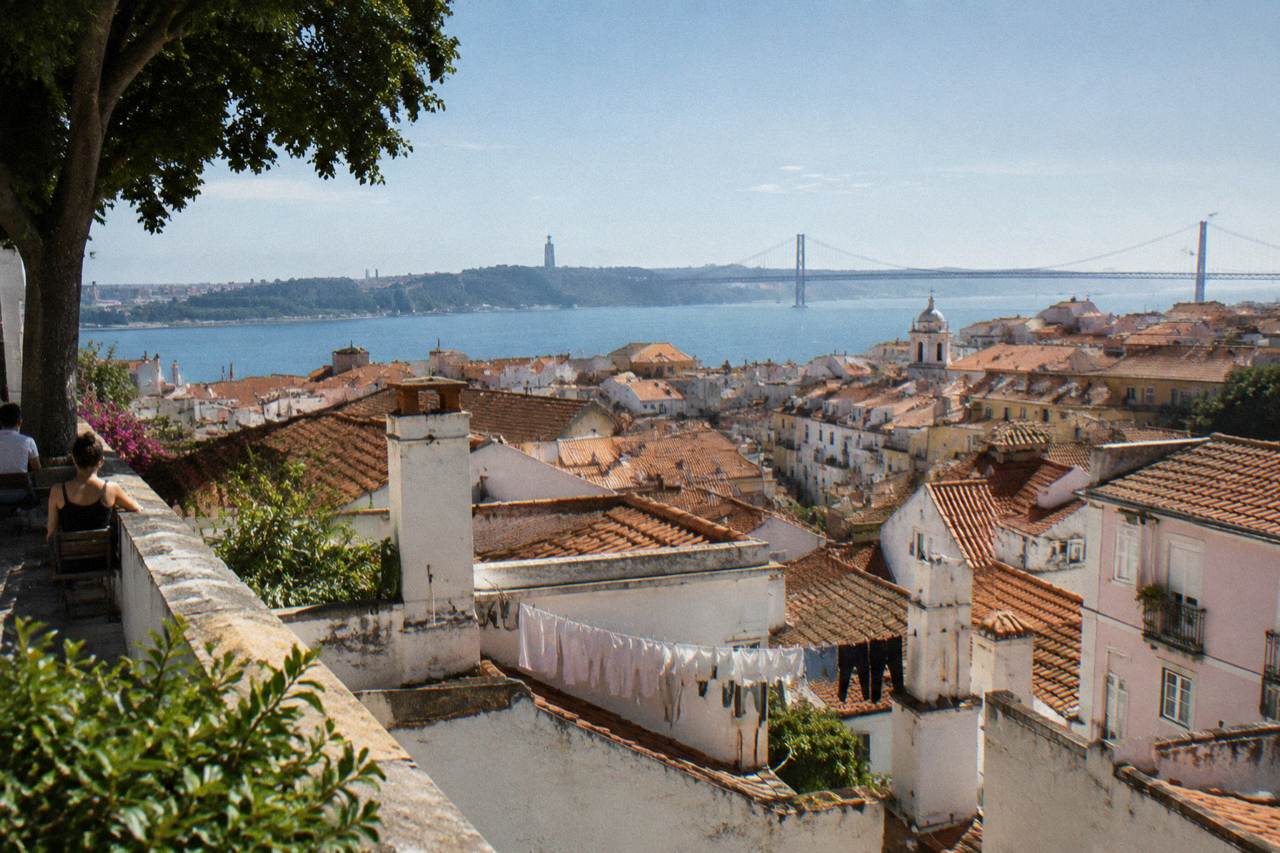
The Alfama walk ranks first because the neighbourhood itself is the attraction, and every street, stairway and viewpoint inside it is free public ground. The only paid item on the hill is São Jorge Castle at EUR 17, and the streets below it, the lanes, the steps and the lookouts, cost nothing at all. That ratio is unbeatable anywhere else in the city.
Alfama survived the 1755 earthquake that flattened the Baixa, so it keeps a medieval street pattern that no ticket could buy back. The lanes run uphill from the river in a tangle that defeats straight lines, and walking them is the whole point. You pay nothing for any of it. The castle at the top is the exception: it charges EUR 17 for visitors, and it is the only thing on the hill that does. The two facts travel together, because plenty of visitors assume the hill and the castle are one and the same price, and they are not.
The neighbourhood also carries the city's fado tradition. Visit Lisboa's fado route describes the square beside the church of São Miguel in Alfama, where simple eateries host fado vadio, the amateur, spontaneous form of the song, sung on named nights. The cost of that evening is whatever you eat and drink; the singing itself is not ticketed. Fado was inscribed on the UNESCO Representative List of the Intangible Cultural Heritage of Humanity in 2011, which tells you how much cultural weight sits inside these free streets.
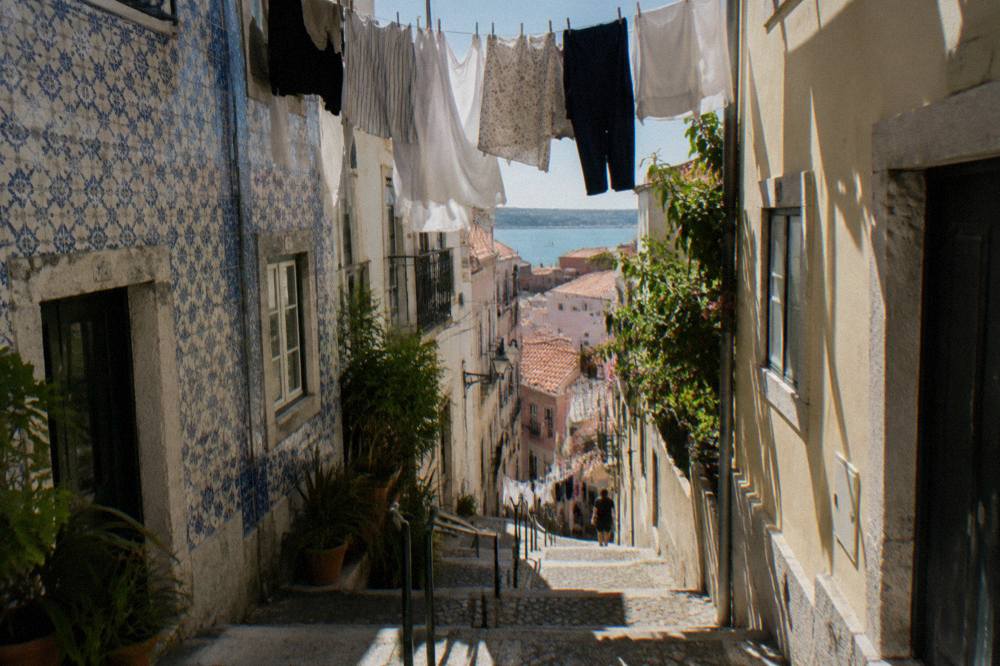
If you want the neighbourhood explained rather than merely wandered, a guided walk is the free way to do it. The Alfama neighbourhood guide on this site covers the ground in depth. Among the cardable options, Unmissable Alfama, run by Hi Lisbon Walking Tours on GuruWalk, is rated 4.78 out of 5 across 1,706 GuruWalk reviews, lasts 2 hours 30 minutes, runs in English and meets at Praça do Comércio. Take's Alfama Old Town, also on GuruWalk, is rated 4.85 out of 5 across 1,402 GuruWalk reviews, lasts 2 hours 30 minutes, runs in English, Spanish, French and Italian and meets at Rua dos Bacalhoeiros 12. Neither costs anything to reserve.
One caution belongs here. Tram 28 passes through this part of the city and it is a paid ride, EUR 3.30 on board, not a free sightseeing line. The free version of the tram experience is watching it climb from the street, which costs exactly nothing.
Which Free Miradouro Is Worth The Climb?
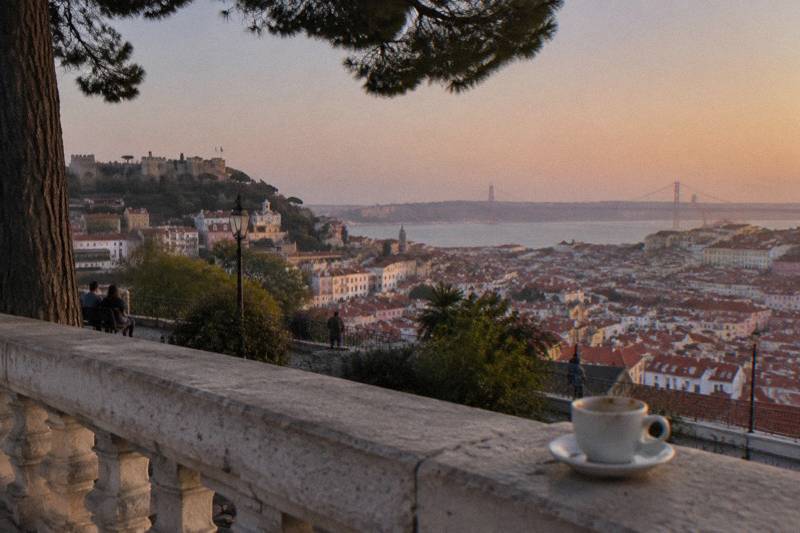
The Miradouro da Graça is the free viewpoint worth the climb, and lisboa.pt lists it open 24 hours. It is a free public terrace on the Graça hill, no ticket, no fence, no fee. The city's other main viewpoints, Santa Luzia, Portas do Sol, São Pedro de Alcântara and Santa Catarina, are equally free and open public spaces.
Lisbon's viewpoints are the city's real gallery, and entry to every one of them costs nothing. Visit Lisboa's own pages describe them as public spaces and print no admission line for any of them, which is the honest basis for calling them free. The Graça terrace, officially named for the poet Sophia de Mello Breyner Andresen, is listed open around the clock on lisboa.pt, which makes it the one that rewards a late climb or an early one.
The table below sets out the main free viewpoints and what each one offers, using only what the official pages state.
| Viewpoint | Neighbourhood | What the official pages say | Entry |
|---|---|---|---|
| Miradouro da Graça | Graça | Garden terrace, listed open 24 hours on lisboa.pt | Free |
| Miradouro de Santa Luzia | Alfama | Garden, pond, azulejo panels and a kiosk | Free |
| Miradouro das Portas do Sol | Alfama | Public viewpoint with a kiosk | Free |
| Miradouro de São Pedro de Alcântara | Bairro Alto | Garden, azulejo map of the skyline, kiosk | Free |
| Miradouro de Santa Catarina | Alto de Santa Catarina | Terrace with the Adamastor statue, Tagus and bridge views | Free |
| Miradouro da Senhora do Monte | Graça | Panoramic public viewpoint | Free |
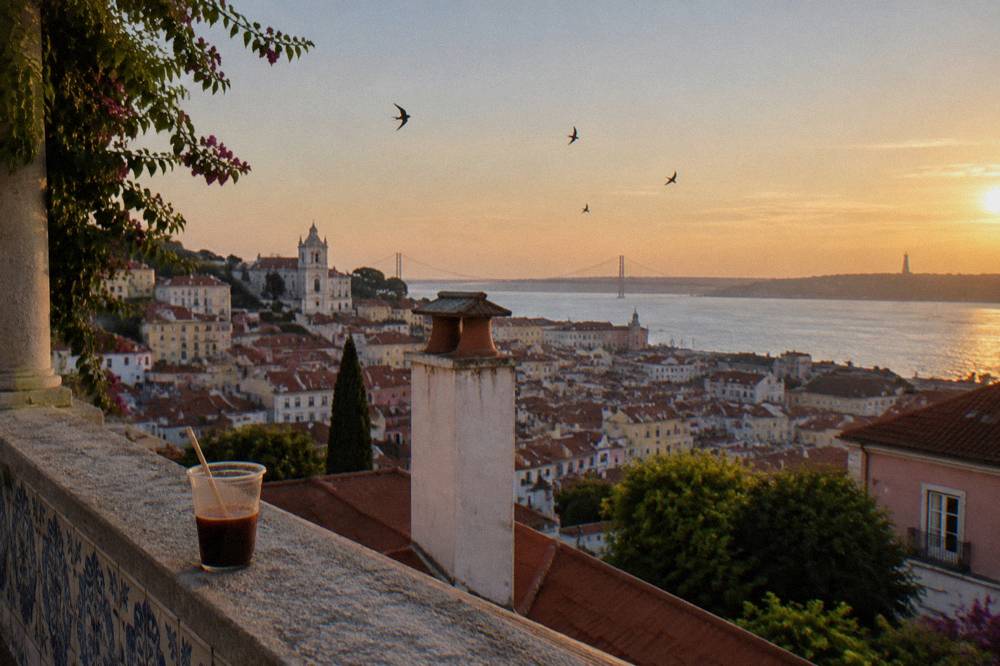
Visit Lisboa describes the Santa Catarina terrace as a place where the view takes in the Tagus estuary, the bridge and the rooftops, with sunset, music and company, and its text mentions beer in the evening and into the night. The terrace carries the Adamastor statue, a figure Camões created as the Cape of Torment. None of this is behind a rope or a turnstile. The full rundown, including the quieter viewpoints most visitors never reach, is in the Lisbon miradouros guide.
Which Free Square Should You Not Skip?
The free square not to skip is the Praça do Comércio, together with the passage through the Rua Augusta Arch, both free to enter and walk. The arch's upper viewing platform is the paid counterpart, free only with a Lisboa Card and otherwise ticketed, with no adult price published on the official page. The square itself never charges.
The Praça do Comércio is the largest and most finished of Lisbon's set pieces. It was rebuilt from 1756 on the site of the Paço da Ribeira royal palace destroyed in the 1755 earthquake, and the square you stand in is therefore a direct product of the disaster that reshaped the city. Walking it costs nothing, and the Museu de Lisboa's own history of the square traces that rebuilding. The Baixa grid around it, the parallel streets of the rebuilt downtown, is equally free to walk, and it is the clearest earthquake legacy visible in the city.
The Rua Augusta Arch stands on the square's north side. Visit Lisboa says the viewing platform on top opened to the public on 9 August 2013 and is free with a Lisboa Card, which means it is paid otherwise, and the page prints no adult price. Walking through the arch, by contrast, is free, and the passage links the square to Rua Augusta itself. The arch, in Visit Lisboa's words, symbolises the rebirth of a new Lisbon after the tragedy of the earthquake, fire and tsunami in 1755. The two facts sit side by side: the passage costs nothing, the platform above it does not.
The pattern repeats across the city, and it is worth having the pairs in one place before you plan a day.
| Free | Paid counterpart |
|---|---|
| Alfama streets and the Castelo hill | São Jorge Castle, EUR 17 |
| Praça do Comércio and the arch passage | Arch viewing platform, price not published |
| Belém riverside and gardens | Belém Tower EUR 15, Jerónimos cloister EUR 18 |
| Gulbenkian garden, free daily | Gulbenkian museum outside its free Sunday window |
| Sé prayer space | Sé tourist visit, EUR 7 |
One more square-side fact belongs here, because it corrects a common assumption. The national monuments, including the Jerónimos cloister and Belém Tower, are ticketed for visitors every day, and the 52 free days a year under the Acesso 52 scheme belong to residents in Portugal only. There is no free Sunday for tourists at those monuments. The free side of Lisbon is the ground itself, and the Praça do Comércio is its best single room.
Which Free Riverside Stretch Is Best?
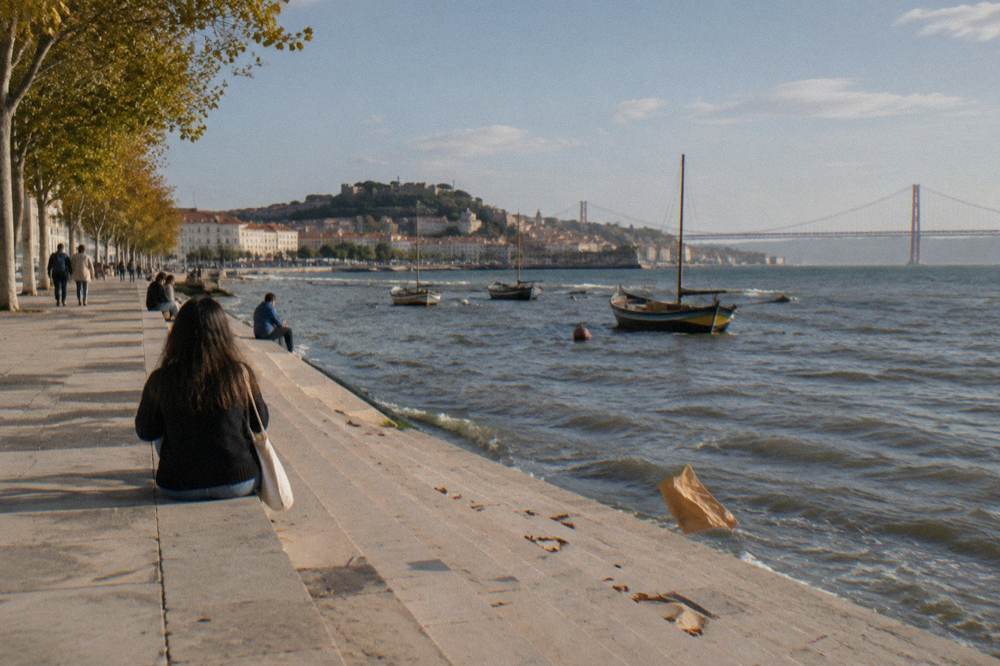
The best free riverside stretch is the Ribeira das Naus, the promenade with broad steps running from the Cais das Colunas in the Praça do Comércio to Cais do Sodré, which Visit Lisboa calls the place for the best sunset in the city. It is a public promenade with a kiosk and outdoor seating, and bathing is forbidden. Entry costs nothing.
The steps of the Ribeira das Naus work as the city's public seating. People settle on the broad stone stairway with a drink and watch the river traffic, and nothing about it is ticketed. Visit Lisboa's page for the promenade, at Avenida Ribeira das Naus, describes a river beach with the kiosk and seating and the sunset claim, and prints no admission line because there is none to print. It is the closest thing Lisbon has to a free beach, minus the swimming, which the page rules out.
Further west, the Cais do Sodré end of the stretch connects to the Rua Nova do Carvalho, the street painted pink in December 2011 as part of an urban regeneration project by the architect José Adrião. The pink street is free to walk, day or night, and the riverside route delivers you to it without a turnstile anywhere along the way. The Pink Street and Cais do Sodré guide covers that end of the waterfront in detail.
Belém owns the other great free riverside stretch. The waterfront there is public and free to walk, and the gardens along it, including the Jardim Vasco da Gama and the Jardim da Praça do Império, are public gardens. The Padrão dos Descobrimentos adds a free exterior: the access terrace and the Compass Rose in the paving are free to see, while the monument's viewpoint and exhibition are ticketed, with the viewpoint at EUR 10. The tower and the monastery cloister are the paid anchors of the district, at EUR 15 and EUR 18, and both stand on free ground you can enjoy without them. The Belém guide draws that line street by street.
Which stretch wins depends on what you want from the water. The Ribeira das Naus is the central, everyday version, a working promenade with the city's best documented sunset claim attached to it. Belém is the monumental version, with the river on one side and the Age of Discovery on the other. Both are free for their entire length, and both can be walked in an hour or so at a slow pace.
Which Free Walking Tour Is The Best Start?
The best free start is Essential History, Free Tastings, run by Tours Of My Life on GuruWalk, rated 4.96 out of 5 across 25,140 GuruWalk reviews, lasting 3 hours, running in English and Spanish and meeting at Praça Luís de Camões. It costs nothing to reserve, and it is the most reviewed walk on the roster.
A free walking tour earns the fifth slot because it is the one free thing that comes with a guide. The walks on this site's roster are all free, pay what you want, reserved in advance on GuruWalk or freetour.com, and the payment is whatever each walker decides the walk was worth at the end. The full count is 63 free walking tours across the two platforms. Essential History, Free Tastings, which you can also read about on its own Essential History free tour page, is the most reviewed of them, and its review pool dwarfs the rest: 25,140 reviews on GuruWalk against a 4.96 out of 5 rating.
The listing, run by Tours Of My Life, who state on the GuruWalk page that they are officially licensed by Turismo de Portugal, lasts 3 hours, runs in English and Spanish, and meets at Praça Luís de Camões in the Chiado. The tastings in the title are included at no charge. The tour operator's own listing wording tells guests they determine what the tour was worth at the end.
The strongest same-family alternative runs on freetour.com. SANDEMANs Original Walk, listed on freetour.com and run by SANDEMANs Tours Lisbon, is rated 9.4 out of 10 across 14,048 freetour.com reviews, lasts 2 hours, runs in English and Spanish and meets at the Praça do Comércio. The freetour.com scale is out of 10, not out of 5, so the two ratings are never directly comparable, but both figures come from large, healthy review pools. Original Local, 3 Hours, also on freetour.com and run by Original Lisbon Tours, is rated 9.6 out of 10 across 6,630 freetour.com reviews, lasts 3 hours, runs in English and meets at Praça Luís de Camões. Unmissable Essentials By Take, on GuruWalk, is rated 4.87 out of 5 across 6,312 GuruWalk reviews, lasts 2 hours 45 minutes, runs in English, Spanish, French and Italian and meets at Praça dos Restauradores.
Which one you start with is mostly a question of language, length and meeting point, since none of them charges anything to book. The free walking tours in Lisbon guide compares the full cardable set, including the specialist walks that cover the Alfama, Belém and the viewpoints. For a first day in the city, the most reviewed walk on the roster is the safest free bet there is.
Three more walks are worth naming as the next step. Old Neighborhoods And Stories, run by Tours Of My Life on GuruWalk, is rated 4.92 out of 5 across 353 GuruWalk reviews, lasts 2 hours 45 minutes, runs in English, Spanish and French and meets at Praça Luís de Camões. Local Perspective, 2 Hours 15, on GuruWalk, is rated 4.86 out of 5 across 301 GuruWalk reviews, lasts 2 hours 15 minutes, runs in English and meets at the same square. Alfama And Mouraria, 3 Hours, run by Live History on GuruWalk, is rated 4.71 out of 5 across 722 GuruWalk reviews, lasts 3 hours, runs in English and Spanish and meets at Rossio Square. All three are free, pay what you want.
Common Questions On This Topic
What Are The Top 5 Free Things To Do In Lisbon?
The top five are the Alfama streets, the free miradouro circuit, the Praça do Comércio with the Rua Augusta Arch passage, the Ribeira das Naus riverside and a free pay what you want walking tour. All five cost nothing at the door, and each has a paid counterpart, from the EUR 17 castle to the ticketed arch platform, worth knowing in advance.
Are Lisbon's viewpoints free?
Yes, the main miradouros, including Graça, Santa Luzia, Portas do Sol, São Pedro de Alcântara and Santa Catarina, are open public spaces with no admission. The Graça viewpoint is listed open 24 hours on lisboa.pt. No official page prints an admission line for any of them.
Is São Jorge Castle free?
No. São Jorge Castle charges EUR 17 for visitors. The hill it stands on and the Alfama streets below it are free public ground, so the castle is the only paid item in that part of the city.
Are free walking tours really free?
Yes. Every walk on this site's roster of 63 is free, pay what you want, reserved in advance on GuruWalk or freetour.com. Booking costs nothing and each walker pays the guide what they consider the walk was worth at the end. No money figure applies to the walk itself.
Is tram 28 free?
No. Tram 28 is a paid ride, EUR 3.30 on board or EUR 1.72 with Zapping. Watching it climb the Alfama streets from the pavement is the free version, and it costs nothing.
What is free in Belém?
The riverside, the public gardens, the Padrão dos Descobrimentos terrace and the Compass Rose are all free. Belém Tower at EUR 15 and the Jerónimos cloister at EUR 18 are paid for visitors every day, and the 52 free days a year under Acesso 52 are for residents in Portugal only.