What Are Some Hidden Gems In Lisbon That Cost Nothing?
Quiet viewpoints, tiled street corners, a free money museum and amateur fado nights: the Lisbon sights that cost nothing and sit outside the standard first-day route.
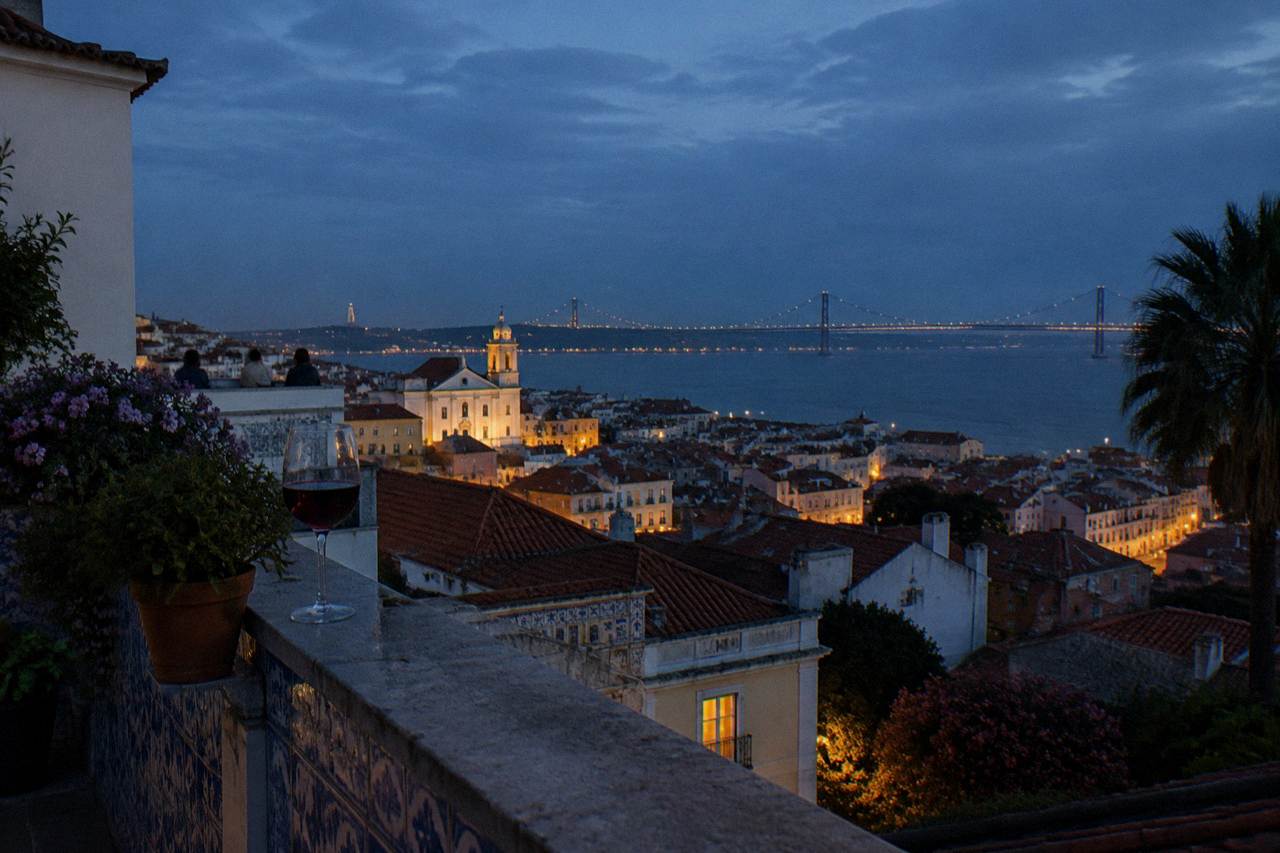
Lisbon's paid sights get the queues: the Jerónimos cloister at EUR 18, Belém Tower at EUR 15, São Jorge Castle at EUR 17. The city's other layer costs nothing at all, and much of it sits a street or two off the standard route. That layer is what this page maps out, with every free status stated plainly and every condition attached in the same breath.
What Are Some Hidden Gems In Lisbon That Cost Nothing?
The list runs from the Museu do Dinheiro, which charges no admission, to the Núcleo Arqueológico da Rua dos Correeiros, a free guided visit you book in advance, plus the Gulbenkian garden, open daily and free, hilltop viewpoints such as Monte Agudo and the Torel garden, azulejo panels on public streets, and amateur fado nights in small tascas where drinks are the only cost. Each carries its own condition where one exists. None of them needs a ticket, a pass or a reservation except where this page says so.
The pattern behind the list matters more than any single entry. Lisbon's free side lives in public space: gardens, squares, riverside steps, tiled façades and the streets of the old hill neighbourhoods. The paid side is concentrated in monuments and museums, several of which replaced their old visitor schemes with residents-only arrangements. The Jerónimos cloister, Belém Tower and the National Pantheon now give free entry on 52 days a year to residents in Portugal only, so a visitor pays every day. That is exactly why the free layer rewards a bit of digging, and why this site, Free Things To Do In Lisbon, keeps the two lists strictly apart.
One example of the digging: the Núcleo Arqueológico da Rua dos Correeiros, at Rua dos Correeiros 9 in the Baixa, is marked "entrada gratuita" on the Fundação Millennium bcp's own pages. Every visit is guided, in Portuguese or English, runs every day except Sundays and national holidays, and must be booked through the foundation. Under the modern streets, the site shows Roman and Pombaline layers, including the timber-framed "gaiola pombalina" construction built after the 1755 earthquake. It is one of the city's most direct encounters with its own buried history, and the price is zero. The foundation's visit page carries the booking route.
Another is the Museu do Dinheiro, the Banco de Portugal's money museum in the former church of São Julião, off the Praça do Comércio. Admission is free, it opens Wednesday to Sunday, 10:00 to 18:00, and it sits inside a Baixa block most walkers pass without a glance. The Gulbenkian garden completes the set: free daily, sunrise to sunset, per the foundation's own opening-hours page.
A free walk is also a way into this layer, and Lisbon has 63 free walking tours listed across GuruWalk and freetour.com, every one free and pay what you want. Essential History, Free Tastings by Tours Of My Life runs three hours in English and Spanish from Praça Luís de Camões and is rated 4.96 out of 5 across 25,140 GuruWalk reviews, the largest review pool on the city's roster. Its GuruWalk page carries the meeting point and the free, pay what you want terms.
Which Quiet Miradouros Do Visitors Miss?
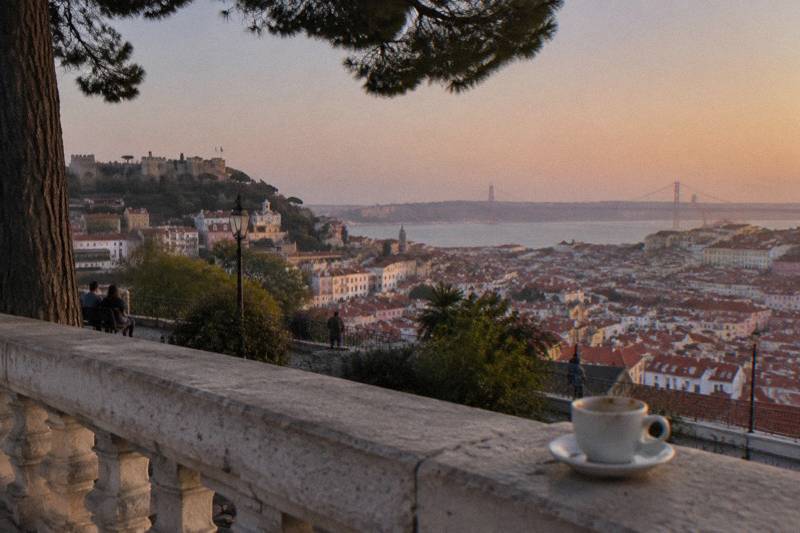
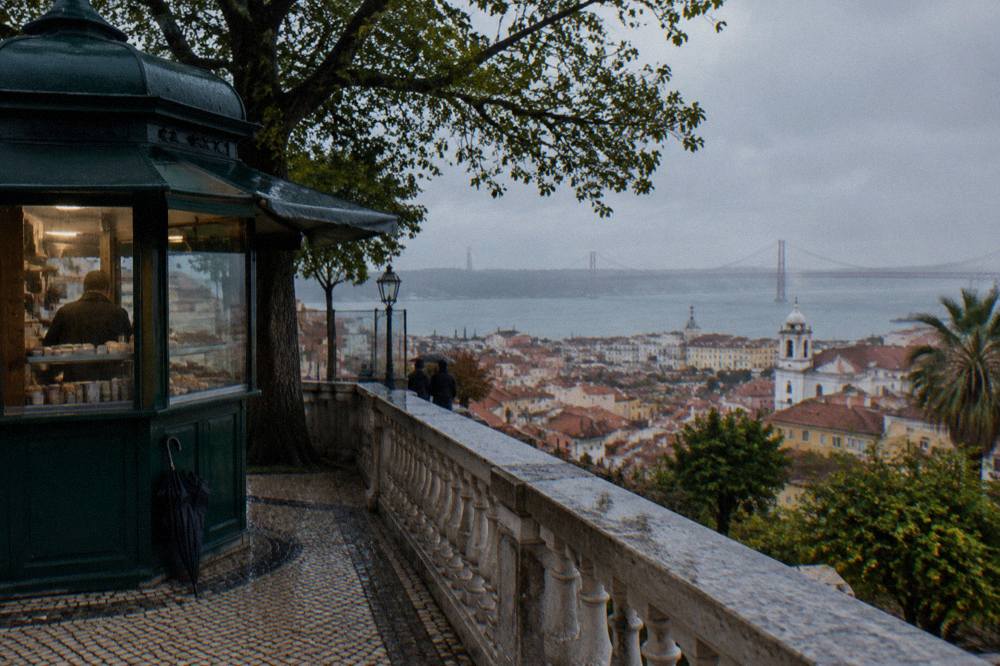
The verified quieter viewpoints are Monte Agudo, with its pergola and kiosk between Graça and Anjos, the Torel garden on Rua Júlio de Andrade, Miradouro da Senhora do Monte on Rua da Senhora do Monte, and Miradouro da Graça, which lisboa.pt lists as open 24 hours. All are free public spaces, and each is described on Visit Lisboa's own pages. None of them sells a ticket, because none of them is a ticketed attraction; they are gardens and terraces held in public ownership.
The miradouro layer is the clearest case of "free but not obvious". The famous terraces draw the crowds and the buskers; the ones on this list share the same skyline and often a kiosk of their own. Monte Agudo's pergola appears on Visit Lisboa's place page; the Torel garden, on Rua Júlio de Andrade, is likewise listed as a free garden viewpoint. Senhora do Monte sits in Graça and is described by Visit Lisboa as a panoramic public viewpoint. Graça's official name is Miradouro Sophia de Mello Breyner Andresen, and lisboa.pt lists it open around the clock.
| Viewpoint | Where it is | What the official page says | Cost |
|---|---|---|---|
| Miradouro de Monte Agudo | Rua Heliodoro Salgado, between Graça and Anjos | Pergola and kiosk, listed on Visit Lisboa | Free public space |
| Miradouro do Torel | Rua Júlio de Andrade | Free garden viewpoint per Visit Lisboa | Free public space |
| Miradouro da Senhora do Monte | Rua da Senhora do Monte, Graça | Panoramic public viewpoint per Visit Lisboa | Free public space |
| Miradouro da Graça | Calçada da Graça | Listed open 24 hours on lisboa.pt | Free public space |
One caution belongs here, because the hill itself is not the whole story. The Graça funicular, running from Mouraria up to Graça, reopened on 30 April 2026 after its safety certification and charges EUR 4.30 on board for two trips, so it is a paid ride, not a free lift. The Santa Justa lift and the Glória, Bica and Lavra funiculars remain out of service with no reopening date. The walk up is free; the mechanical shortcuts, where they run, are not. More on the city's viewpoints is in the Lisbon miradouros guide.
Which Street Corners Show Azulejos For Free?
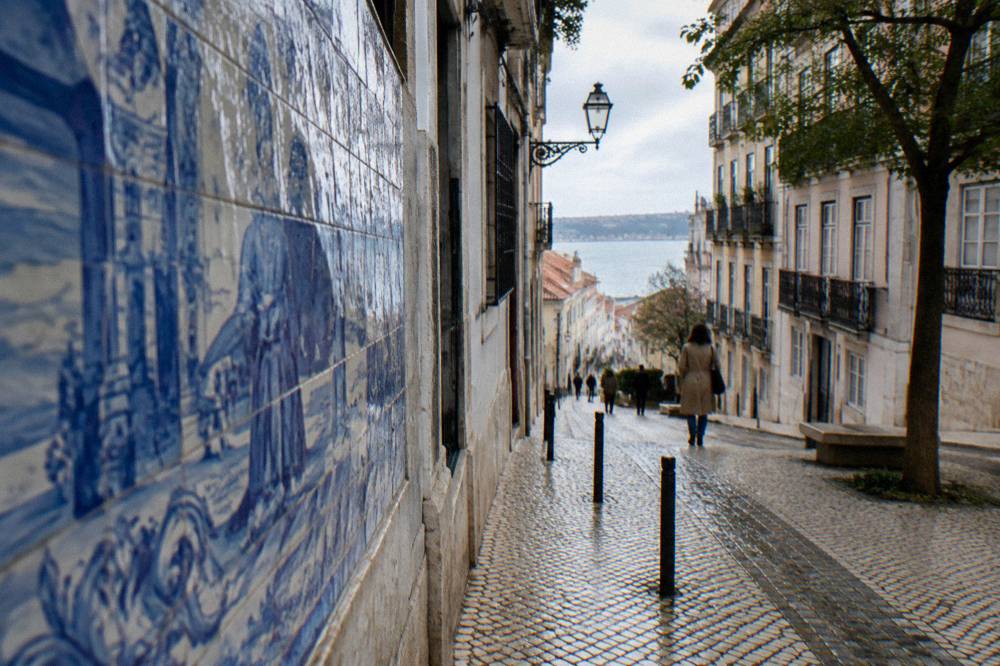
The free azulejo record covers the tiled panels at Miradouro de Santa Luzia in Alfama, the azulejo map of the skyline at Miradouro de São Pedro de Alcântara in Bairro Alto, and the city's paving itself, the calçada portuguesa of white limestone and black basalt laid by hand, whose first decorative example dates to 1842 inside Castelo de São Jorge. All of this sits in public space and costs nothing to look at. The Tile Museum, the obvious named attraction for azulejos, is closed for works with no official reopening date, so the street is currently the place to see them.
Santa Luzia is the strongest single stop. The viewpoint at Largo das Portas do Sol e de Santa Luzia combines a garden, a pond, azulejo panels and a kiosk, and Visit Lisboa's page describes it as a free public viewpoint. São Pedro de Alcântara, up in Bairro Alto, holds a garden, a kiosk and an azulejo map laid out as a guide to the skyline across the valley. Both are free because they are public spaces, not because anyone waives a fee.
The paving deserves its own sentence. The calçada portuguesa underfoot is white limestone and black basalt, cut into cubes and laid by hand; the Arquivo Municipal traces the first decorative example to 1842, inside the castle. It becomes polished and slippery with use, especially on slopes, which is a practical note for anyone walking the hills in the wet. The pattern is everywhere once you start reading it, and reading it costs nothing.
Which Free Churches Are Rarely Crowded?
The honest church record is narrow: Lisbon Cathedral's prayer space is free while the tourist visit is ticketed at EUR 7, São Roque's church has no ticket listed on its official page though no page states in words that it is free, and fado vadio, amateur fado, is sung in small eateries around the square beside the church of São Miguel in Alfama, where drinks are the cost. Nothing wider than that is confirmed, and this page will not stretch it. The Sé's own ticket page sets the terms: visits are limited during worship, and the space reserved for prayer is free for those who come to pray.
That last distinction trips up a lot of copy. The Sé de Lisboa is not "free to enter" as a sight: the naves, deambulatory, high choir and treasury are the ticketed visit, at EUR 7 for an adult, while the prayer space is separate and free. São Roque is similar but thinner: the official information page gives the church's hours and notes that visits are conditioned by ceremonies, and lists no church ticket, but no official sentence calls the church free. The honest wording is "no ticket listed", and that is all.
The fado angle is the real hidden-gem material. Fado was inscribed on the UNESCO Representative List of the Intangible Cultural Heritage of Humanity in 2011, and its amateur form, fado vadio, still runs in small tascas rather than ticketed venues. Visit Lisboa's fado route describes the square beside the church of São Miguel in Alfama, where simple eateries host spontaneous singing. One named venue is sourced precisely: Tasca do Chico in Bairro Alto, at Rua do Diário de Notícias 39, which the Museu do Fado's roteiro lists with fado on Monday and Wednesday nights, with a variable cast. The door policy on cover or minimum consumption is not stated anywhere official, so confirm at the door; drinks are the cost you can count on. The free fado guide carries the fuller picture, and the Museu do Fado roteiro page is the primary source for the venue.
Which Free Backstreet Walks Reward Early Risers?
The free morning layer is the streets themselves: the Alfama and Mouraria hills, the Baixa grid and the riverside at Ribeira das Naus, all public and all free to walk, helped by the municipal public lifts on the Baixa-Castelo route, whose free status rests on a 2013 city publication, so check on the day. The paid shortcuts are the exceptions: tram 28 charges EUR 3.30 on board, and the Graça funicular charges EUR 4.30 for two trips since its April 2026 reopening.
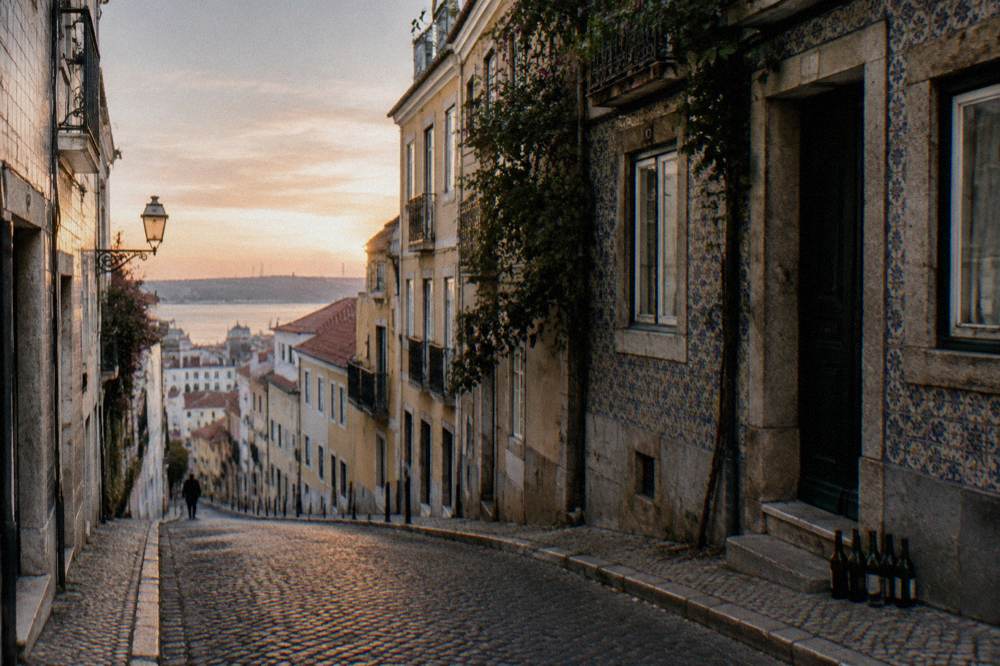
Morning is when the old quarters read most clearly, before the day's foot traffic fills the lanes. The Mouraria route up from Martim Moniz uses public escalators rather than lifts, per the city's own accessibility pages, and Rua da Madalena has new paving laid to improve grip on the slope. The Baixa-Castelo lifts, described by lisboa.pt as municipal public elevators averaging 60,000 entries and exits a month, sit at Rua dos Fanqueiros and Rua da Madalena and at Chão do Loureiro by the market; the free status and the daily 9:00 to 21:00 hours come from a 2013 city magazine, and no current official page restates them, so treat the hours as check-on-the-day.
The riverside completes the morning walk. Ribeira das Naus is the promenade of broad steps linking the Cais das Colunas at the Praça do Comércio to Cais do Sodré, with a kiosk and outdoor seating, and bathing is forbidden along it. Visit Lisboa calls it the place for "the best sunset in the city", which makes it equally good at dawn in the other direction, and it costs nothing.
A guided walk is one way to get this layer explained rather than merely walked. Original Local, 3 Hours by Original Lisbon Tours is listed on freetour.com, meets at Praça Luís de Camões, runs three hours in English and is rated 9.6 out of 10 across 6,630 freetour.com reviews. Its freetour.com listing carries the meeting point and the free, pay what you want terms.
Which Free Walks Go Off The Beaten Path?
The off-route record includes the Galeria de Arte Urbana's legal graffiti panels at Calçada da Glória, created in 2008 as the city's first authorised exhibition wall, Bordalo II's Big Trash Animals on Avenida 24 de Julho, and the GAU's "Rostos do Muro Azul" on Rua das Murtas in Alvalade, all in public space and all free to view. On the guided side, GuruWalk carries walks that work this ground: Small Group, Secret Spots, Tastings, rated 4.99 out of 5 across 399 GuruWalk reviews, and Alternative Side Walking Tour, rated 4.69 out of 5 across 144 GuruWalk reviews, both in English.
The street-art layer is the clearest "hidden gem" case in the city, because it is authorial, outdoors and costs nothing. The Galeria de Arte Urbana is the Câmara Municipal de Lisboa's own unit for graffiti and street art in authorised contexts, set up in 2008 after a clean-up operation in Bairro Alto, and its first exhibition space was the panels at Calçada da Glória. Visit Lisboa's urban art route adds verified coordinates for Bordalo II's Big Trash Animals on Avenida 24 de Julho and the GAU's collaborative "Rostos do Muro Azul" on Rua das Murtas in Alvalade. Viewing authorised public street art is free; that is what public space means. The Lisbon street art guide maps the sourced pieces.
The guided options are worth naming precisely, because "off the beaten path" is where invented routes most often creep in. Small Group, Secret Spots, Tastings is a GuruWalk walk by Antonio, two hours 45 in English, meeting at Praça Luís de Camões. Alternative Side Walking Tour, by Take, is two hours 30 in English from Martim Moniz Square. One more walk in this family crosses the river: Cacilhas, Other Side, Street Art, a GuruWalk walk rated 4.95 out of 5 across 21 reviews, meeting at Cais do Sodré Station, but its own listing states it needs a Navegante card with at least EUR 3.20 of Zapping credit or a EUR 4.50 round-trip ferry ticket, so the walk is free and pay what you want while the crossing is not. That is the kind of condition this page exists to state plainly.
For a first walk that still covers the centre, three more options from the roster stand on their own review pools: Old Neighborhoods And Stories by Tours Of My Life, rated 4.92 out of 5 across 353 GuruWalk reviews; Local Perspective, 2 Hours 15, rated 4.86 out of 5 across 301 GuruWalk reviews; and Alfama Secrets by Hi Lisbon Walking Tours, rated 4.78 out of 5 across 1,706 GuruWalk reviews. All are free, pay what you want, on their own GuruWalk listings.
Common Questions On This Topic
What Are Some Hidden Gems In Lisbon That Cost Nothing?
The verified free list includes the Museu do Dinheiro with free admission, the free guided Núcleo Arqueológico da Rua dos Correeiros (booked in advance), the Gulbenkian garden open daily, the Monte Agudo, Torel, Senhora do Monte and Graça viewpoints, azulejo panels at Santa Luzia and São Pedro de Alcântara, fado vadio nights in Alfama tascas, and the city's authorised street art, all in public space or free on their own official terms.
Is the Graça funicular a free way up the hill?
No. The Graça funicular reopened on 30 April 2026 and charges EUR 4.30 on board for two trips. The walk up is free; the funicular is a paid ride. The Glória, Bica and Lavra funiculars and the Santa Justa lift remain out of service.
Is Lisbon Cathedral free to enter?
Not as a sight. The tourist visit to the naves, deambulatory, high choir and treasury is ticketed at EUR 7 for an adult, while the space reserved for prayer is free for those who come to pray, and visits are limited during worship.
Can you see fado for free in Lisbon?
Fado vadio, the amateur form, is sung in small eateries around the square beside the church of São Miguel in Alfama, and at Tasca do Chico in Bairro Alto on Monday and Wednesday nights per the Museu do Fado roteiro. The singing carries no ticket, but drinks are the cost, and no official page states a cover policy, so confirm at the door.
Where can you see azulejos without paying?
On the street: the tiled panels at Miradouro de Santa Luzia, the azulejo skyline map at Miradouro de São Pedro de Alcântara, and the calçada portuguesa paving citywide, whose first decorative example dates to 1842. The Tile Museum is closed for works with no official reopening date.
Are the free walking tours really free?
Every walk on the city's roster of 63, across GuruWalk and freetour.com, is free and pay what you want: booking is free and each person pays the guide what they consider the walk was worth at the end. A few listings carry stated extra conditions, such as the Cacilhas walk's ferry fare, and this page states those where they apply.