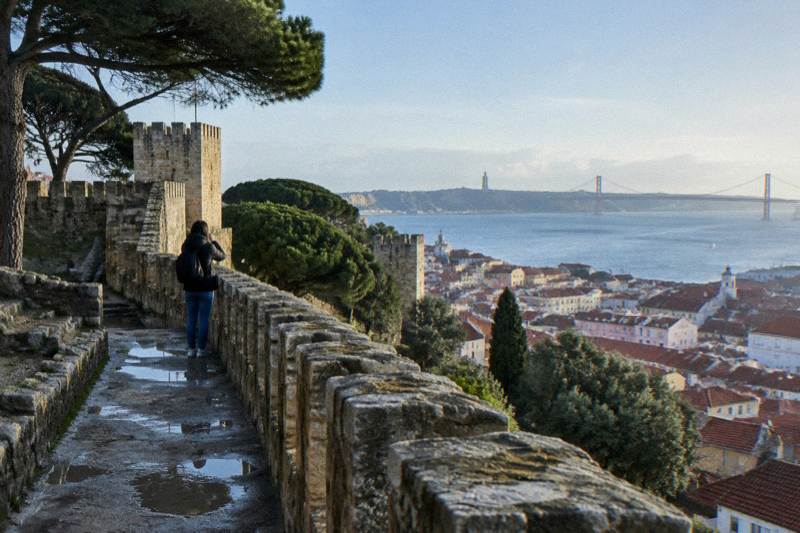
Is A Lisbon Walking Tour Worth It?
A straight answer on whether a Lisbon walking tour earns its place in your trip, with durations, languages, rain options and the self-guided alternative.
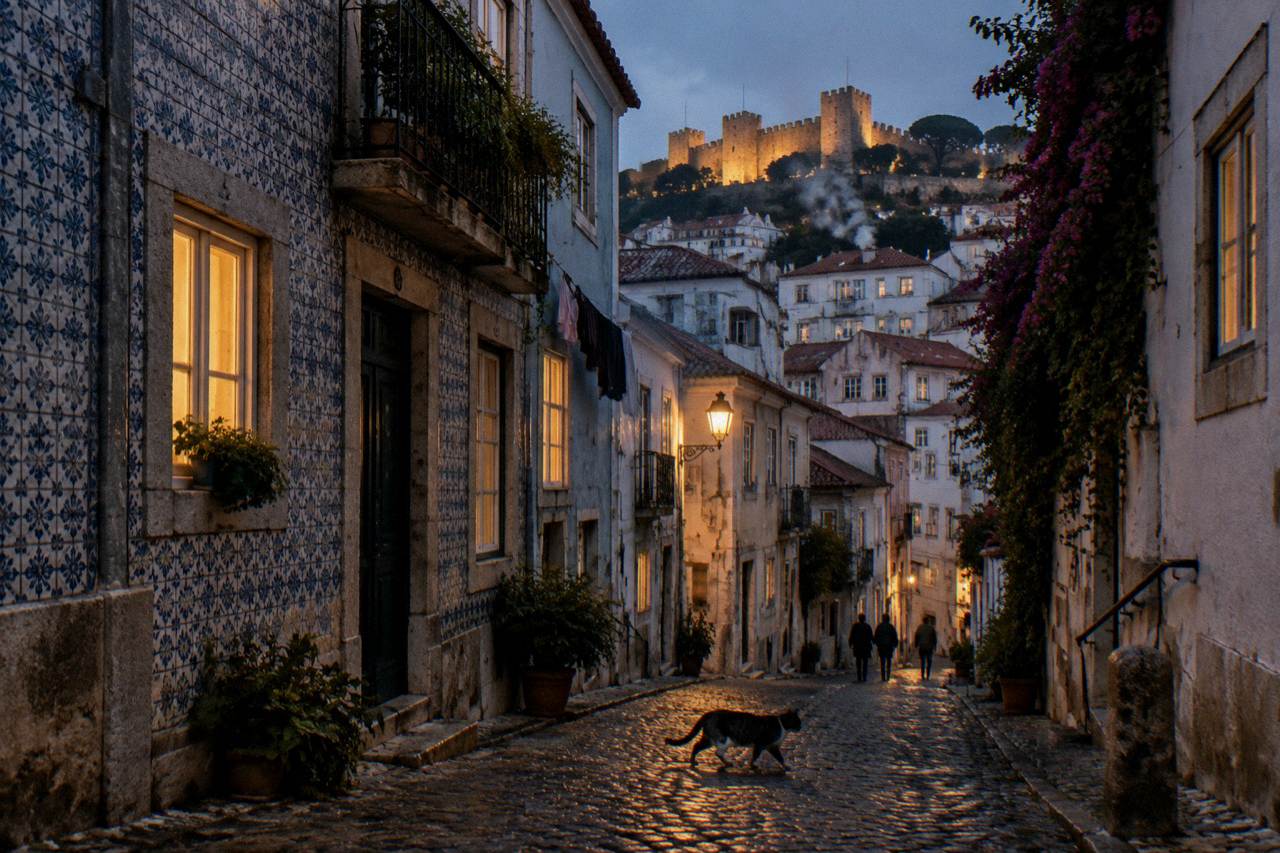
Yes, in almost every case, because the cost is zero up front. Every walking tour on this site's roster is free, pay what you want: you reserve a place, walk, and decide the value at the end. The roster counts 63 free walking tours across GuruWalk and freetour.com, from two-hour essentials to three-and-a-half-hour deep dives, in English, Spanish, French, Italian, German and Polish. The real question is which walk, and when.
That framing matters more in Lisbon than in most cities. The city's headline monuments are largely paid: São Jorge Castle is ticketed, the Jerónimos Monastery cloister costs EUR 18, Belém Tower EUR 15, the Sé de Lisboa tourist visit EUR 7. The streets between them cost nothing. A walking tour is the one product in the city where the price is genuinely decided by you, after you have seen what you got.
There is a second reason the question deserves a careful answer rather than a shrug. Lisbon is a city of hills, dead-end alleys and layered history, and the difference between a good route and a bad one is measured in steep detours. A walk led by someone who knows the ground saves the one thing a map cannot give you: the order in which a district makes sense.
The walks worth naming here are the featured ones, and each is run by an independent guide. Essential History, Free Tastings by Tours Of My Life, rated 4.96 out of 5 across 25,140 GuruWalk reviews, runs 3 hours in English and Spanish and meets at Praça Luís de Camões. Unmissable Essentials By Take, rated 4.87 out of 5 across 6,312 GuruWalk reviews, runs 2 hours 45 minutes in four languages from Praça dos Restauradores. SANDEMANs Original Walk, listed on freetour.com, is rated 9.4 out of 10 across 14,048 freetour.com reviews and meets at Praça do Comércio.
The Essential History, Free Tastings walk is the most reviewed on the whole roster, and its figures are worth reading plainly: 4.96 out of 5 across 25,140 GuruWalk reviews, 3 hours, English and Spanish, meeting at Praça Luís de Camões. It is free, pay what you want, reserved on the guide's GuruWalk page.
For a first comparison, three walks cover the essential ground in different formats and lengths:
Is A Lisbon Walking Tour Worth It?
Worth it for the orientation alone, and the payment model removes the risk. You pay nothing to book, nothing to walk, and you decide the amount at the end. With 63 free walking tours across GuruWalk and freetour.com, in six languages and durations from 1 hour 30 to 4 hours, the failure mode is a wasted afternoon, not a wasted budget. The walks that suit most itineraries are the 2-to-3-hour essentials in English.
Start with what the money question actually is. On a paid tour, worth is a comparison between price and experience. On a pay-what-you-want walk, worth is a comparison between the walk and your time. Booking is free, and cancellation is free from your account or the confirmation email, as GuruWalk's own booking page states. That asymmetry is why the honest answer leans yes: the downside is bounded by a couple of hours, and the upside is a city that otherwise takes days to decode.
The counterargument deserves airtime too. If you read well, plan carefully and enjoy the detective work of a district, a self-guided route can deliver most of the same landmarks at the same price of zero. Lisbon's free ground is generous: the miradouros are open public viewpoints, the squares and riverside cost nothing, the Alfama streets are free to wander while the castle on top of them is ticketed. The article on self-guided walking in Lisbon covers that route in full.
What tips most visitors toward a guided walk is the first-day problem. Lisbon's centre is not one grid but several: the Baixa's rebuild after the 1755 earthquake, the medieval tangle of Alfama, the Chiado and Bairro Alto pair across the top. A walk that starts at Praça do Comércio or Praça Luís de Camões gives you the skeleton of the city in one morning, and every later day benefits from it.
There is also the plain arithmetic of the alternatives. Tram 28 costs EUR 3.30 per on-board ride, per the Carris 2026 price table. The Santa Justa Lift and the Gloria, Bica and Lavra funiculars are out of service, so the paid hill-climb options are fewer than guidebooks imply. A free walk is, among other things, a hill route someone else has already solved.
What Do You Learn On A Walk That A Map Cannot Show?
The order and the logic of the city: why the Baixa is a grid, why Alfama is not, and what the 1755 earthquake rebuilt. A map shows streets, not causes. Lisbon's centre is a readable story once the layers are named: the earthquake, fire and tsunami of 1 November 1755, the Pombaline rebuild, the fado culture that UNESCO inscribed on its heritage list in 2011. A walk connects those layers to the ground under your feet.
The 1755 earthquake is the clearest example of what a walk adds. The disaster struck on the morning of All Saints Day, 1 November 1755; tsunami waves reached about six metres at Lisbon and fires burned for roughly six days; death estimates range from about 30,000 to 60,000. The Baixa you walk through now is the reconstruction, built with the timber-framed gaiola pombalina technique, and it is on UNESCO's tentative list as Baixa Pombalina. A map prints the street names. A walk tells you why they are straight.
Fado works the same way. The music was inscribed by UNESCO in 2011 as an urban popular song of Portugal, and fado vadio, the amateur, spontaneous form, is sung in small eateries around the square beside the church of São Miguel in Alfama. Knowing that before you walk the district changes what you are looking at; the guide's free fado guide covers the nights and the tascas in detail.
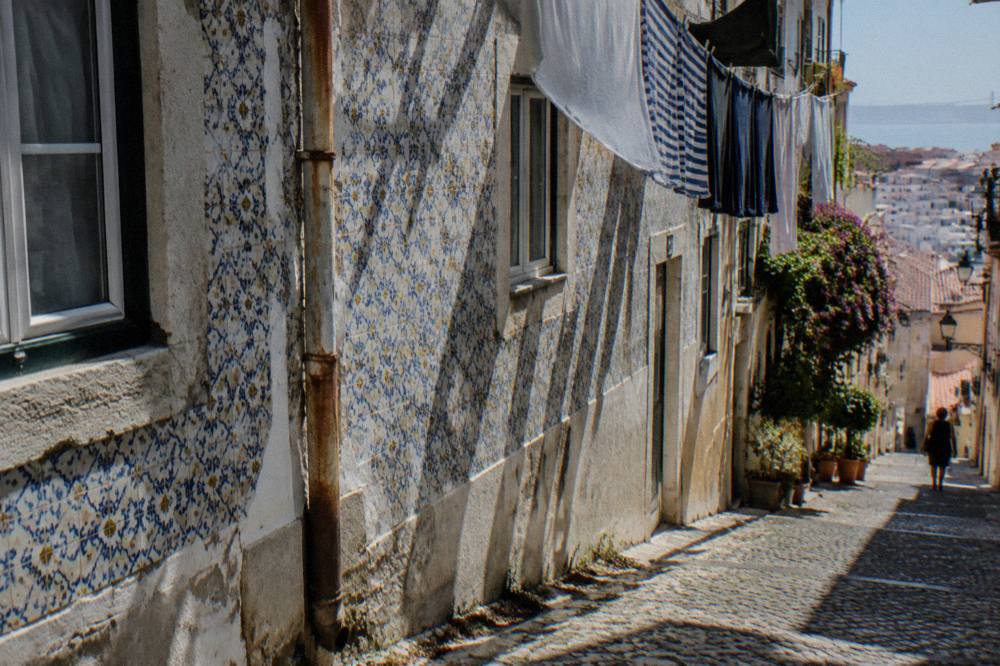
None of this is secret knowledge, to be fair. Everything above is published and free to read. What a walk adds is placement: the fact arrives while you stand on the spot it describes. That is the honest case for a guided walk over a guidebook, and it is the reason this site, which exists to catalogue what costs nothing in Lisbon, still recommends the walks.
The featured walks make the point in their formats. SANDEMANs Original Walk, listed on freetour.com, runs 2 hours in English and Spanish from Praça do Comércio and is rated 9.4 out of 10 across 14,048 freetour.com reviews. Original Local, 3 Hours, also on freetour.com, is rated 9.6 out of 10 across 6,630 freetour.com reviews and meets at Praça Luís de Camões. Both are free, pay what you want.
When Is A Self-Guided Walk Enough?
When you already know the city's shape, or when your day needs full flexibility on timing and pace. A self-guided route costs nothing, moves at your speed, and can stop anywhere. The trade is context: you bring your own. If you have walked Lisbon before, or you are happy reading as you go, the free ground is all still there: the miradouros, the squares, the riverside, the Alfama streets.
The self-guided case is genuinely strong here, and this site does not pretend otherwise. The viewpoints are open public spaces: Miradouro da Graça is listed open 24 hours on lisboa.pt, Santa Catarina draws people into the evening, and the Ribeira das Naus riverfront, which Visit Lisboa calls the place for the best sunset in the city, is a free public promenade with steps and a kiosk. A route linking them costs nothing but shoe leather.
Where a self-guided walk falls short is the first-visit decode. Alfama's value is not a single landmark but the pattern of its streets, and a map does not tell you which pattern you are in. The free walking tours roster lists the guided options district by district, with meeting points, languages and durations for each, if you want to compare before deciding.
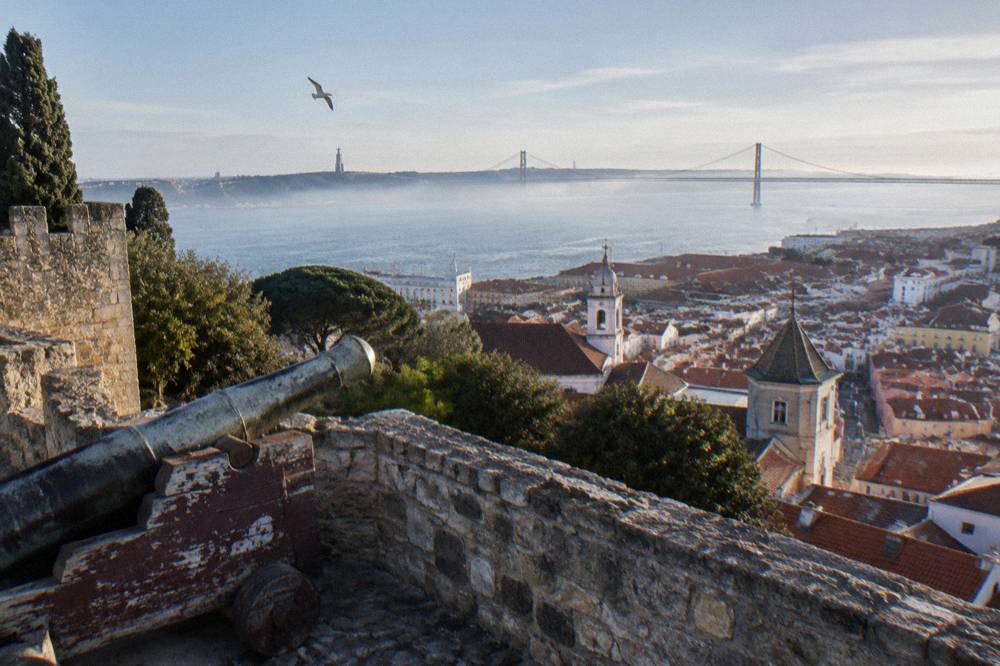
A hybrid works well and costs the same as either extreme alone: take one guided essentials walk on day one, then walk your own routes for the rest of the stay. The Essential History, Free Tastings walk fits that slot, 3 hours, English and Spanish, meeting at Praça Luís de Camões, rated 4.96 out of 5 across 25,140 GuruWalk reviews. After it, the self-guided days get easier, because you know what you are looking at.
The one situation where a self-guided walk is clearly the better call is a very short stay with fixed commitments. A guided walk has a start time and a meeting point; your own route starts when you leave the hotel. If your window is an early morning or a late afternoon, walk it yourself and save the guided walk for a trip with more room.
How Long Does A Free Walk Take?
Between 1 hour 30 and 4 hours, with most featured walks landing at 2 hours 30 to 3 hours. The shortest featured walk is Local's Eyes Walk, 1 Hour 30, meeting at Rossio Square. The longest featured walks run 3 hours 30, the PhD Student Walk from Rossio Square. Plan a walk as a half-day block, with the meeting point's travel time on top.
Durations are printed on every listing, so there is no guesswork once you have picked a walk. The table below shows the spread across the featured walks, with each walk's own figures, platform and rating scale stated as its listing reports them. The rest of the planning pages sit on Free Things To Do In Lisbon.
| Walk | Platform | Duration | Languages | Figures |
|---|---|---|---|---|
| Essential History, Free Tastings | GuruWalk | 3 hours | English, Spanish | 4.96 out of 5 across 25,140 GuruWalk reviews |
| SANDEMANs Original Walk | freetour.com | 2 hours | English, Spanish | 9.4 out of 10 across 14,048 freetour.com reviews |
| Unmissable Essentials By Take | GuruWalk | 2 hours 45 minutes | English, Spanish, French, Italian | 4.87 out of 5 across 6,312 GuruWalk reviews |
| Original Local, 3 Hours | freetour.com | 3 hours | English | 9.6 out of 10 across 6,630 freetour.com reviews |
| Local's Eyes Walk, 1 Hour 30 | GuruWalk | 1 hour 30 minutes | English | 4.93 out of 5 across 350 GuruWalk reviews |
| PhD Student Walk, 3 Hours 30 | GuruWalk | 3 hours 30 minutes | English | 5 out of 5 across 775 GuruWalk reviews |
| Top 8 Miradouros Walk | GuruWalk | 3 hours | English | 5 out of 5 across 1,277 GuruWalk reviews |
Two practical notes sit beside those numbers. First, the printed duration is the walking time; getting to the meeting point is extra, and several of the busiest meeting points, Praça do Comércio, Praça Luís de Camões, Rossio Square, sit on the metro network. Second, the longer walks are not automatically better. A 3 hours 30 walk is a commitment on a hot afternoon on calcada portuguesa, the hand-laid limestone-and-basalt pavement that becomes polished and slippery on slopes.
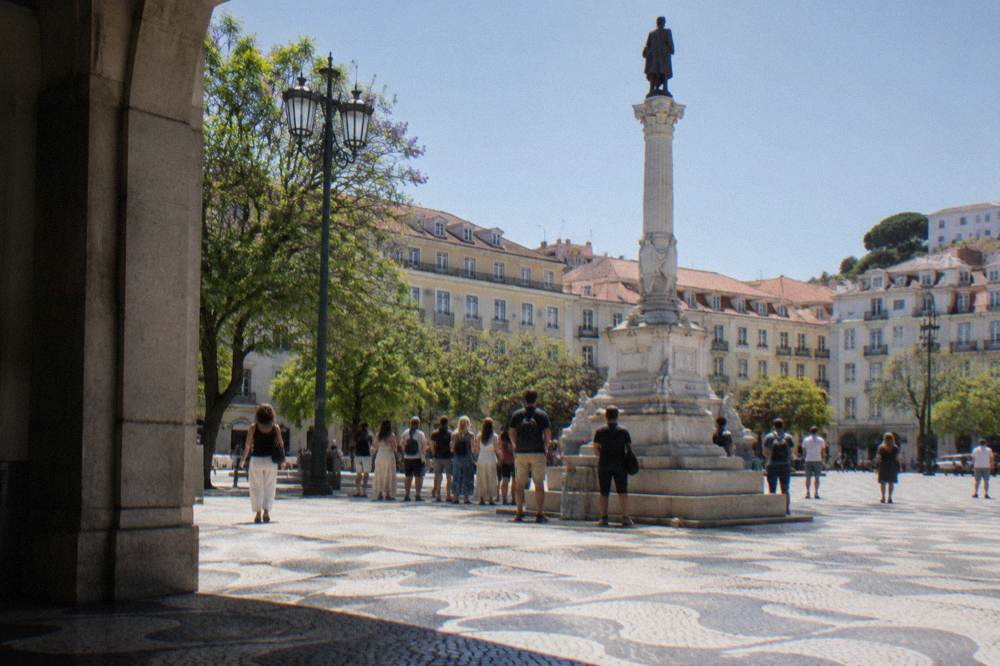
If you are choosing between one long walk and two shorter ones, the two-walk plan has an advantage in this city: Lisbon's districts are distinct enough that a single walk rarely does justice to more than one of them. The Alfama walks and the Belém walks cover different ground in different corners, and the featured roster spans both.
Which Day And Time Is Best?
There is no published schedule to game, so the honest answer is: pick the day that fits your itinerary and reserve on the walk's own page. Departure times are set by each listing, not by a city-wide timetable, and this site does not print them. What you can plan is the shape of your day: a walk that ends near a viewpoint sets up a free sunset, and the miradouros cost nothing.
The one structural fact worth knowing is the payment model again, because it changes the booking decision. Reserving a place costs nothing, and cancelling costs nothing from your account or the confirmation email. That means you can book a walk for a day that might turn out busy, and release it if the day collapses, without losing anything but the guide's slot.
Season matters in ways the listings do not state. December in Lisbon averages a mean temperature of 12.4 C with 108.5 mm of rainfall, per the IPMA 1991-2020 climate normals for the Lisbon Geofísico station. Separately, sunset sits around 17:15 in December against after 20:00 in summer. A 3-hour walk that starts late in a December afternoon finishes in the dark; in June it finishes in daylight. That is arithmetic, not a schedule, and it applies to any walk you pick.
Language is the other filter that beats day-and-time optimisation. The featured English walks are the cardable ones on this site, but the roster also carries Spanish, Italian, German and Polish walks, each stated on its own listing. If your group would rather walk in Spanish, the Spanish-language walks are listed on their GuruWalk or freetour.com pages with their own meeting points and durations.
Which Free Walks Run In The Rain?
All the walks are outdoor walks, so rain is a listing-by-listing question, not a city rule; check the walk's own page before you go. No listing on the roster declares a weather cancellation policy, so the advice is: reserve, and read the listing's own terms. What Lisbon does offer in the rain is a strong set of free indoor stops to pair with a shorter walk.
The free indoor list is short but real. The Museu do Dinheiro, in the former church of São Julião, is free, Wednesday to Sunday, 10:00 to 18:00. MUHNAC, the natural history and science museum, is free on Sunday mornings from 10:00 to 13:00 with no residency condition printed. The Gulbenkian garden is free daily, sunrise to sunset, and the museum opens free on Sundays from 14:00, per the foundation's own hours page.
| Rain option | Condition | Cost |
|---|---|---|
| Museu do Dinheiro | Wednesday to Sunday, 10:00 to 18:00, last admission 17:30 | Free |
| MUHNAC | Sunday mornings, 10:00 to 13:00, no residency text printed | Free, otherwise ticketed |
| Gulbenkian garden | Daily, sunrise to sunset | Free |
| Gulbenkian museum | Sundays from 14:00, no residency text printed | Free, otherwise ticketed |
| Museu do Oriente | Fridays 18:00 to 20:00, no residency text | Free, otherwise ticketed |
| Ribeira das Naus steps | Outdoor, but covered conversation is at the kiosk | Free |
The rain pairing that works is a short walk plus one indoor stop. Local's Eyes Walk, 1 Hour 30, English, meeting at Rossio Square, rated 4.93 out of 5 across 350 GuruWalk reviews, is the shortest featured walk; it leaves the rest of a wet day for the Museu do Dinheiro or a long lunch. The full wet-weather plan, including what stays free and what closes, is in the rainy day guide to Lisbon.
One warning belongs here because rain makes it worse: the calcada portuguesa pavement, white limestone and black basalt cubes laid by hand, becomes polished and slippery with use, especially on slopes. Wet Alfama is slow Alfama. That is a reason to prefer a shorter walk in rain, not a reason to skip the district.
If the rain question is really a "should I bother" question, the answer from the roster is that the walks exist year-round as listings and the free model means a washed-out walk costs you nothing but time. Book, check the listing, and go with the weather you get.
For a final comparison, three more featured walks, each a different district and format:
Common Questions On This Topic
Is A Lisbon Walking Tour Worth It?
Yes, in almost every case. Every walk on this site's roster is free, pay what you want, so the cost is your time, and 63 free walking tours run across GuruWalk and freetour.com in six languages. If the walk is poor you pay little or nothing; if it is good you decide the value at the end.
What Do You Learn On A Walk That A Map Cannot Show?
The causes behind the street plan: why the Baixa is a grid rebuilt after the 1755 earthquake, fire and tsunami, why Alfama kept its medieval tangle, and how fado, inscribed by UNESCO in 2011, grew in its eateries. A map prints streets; a walk explains them on the spot.
When Is A Self-Guided Walk Enough?
When you already know the city's shape or need full flexibility on timing. The free ground is all still there: the miradouros are open public viewpoints, the squares and riverside cost nothing, and the Alfama streets are free to wander. A guided walk earns its slot mainly on a first visit.
How Long Does A Free Walk Take?
Between 1 hour 30 and 4 hours. The shortest featured walk is Local's Eyes Walk, 1 Hour 30; the longest featured walks run 3 hours 30. Most featured walks land at 2 hours 30 to 3 hours, so plan a walk as a half-day block including travel to the meeting point.
Which Day And Time Is Best?
There is no city-wide schedule to game; each listing sets its own times, so reserve on the walk's own GuruWalk or freetour.com page. Booking and cancellation are free, so you can hold a slot and release it if your day changes. In December, sunset sits around 17:15, so late starts finish in the dark.
Which Free Walks Run In The Rain?
All the walks are outdoor walks, and no listing on the roster declares a weather policy, so check the walk's own page. Pair a short walk with a free indoor stop: the Museu do Dinheiro is free Wednesday to Sunday, MUHNAC is free Sunday mornings, and the Gulbenkian garden and Sunday museum window are free.