Can I Take A Self-Guided Walk In Lisbon?
Yes, you can walk Lisbon on your own: which free routes work, how steep the hills really are, what the cobbles demand of your shoes, and when a free walking tour adds something a map cannot.
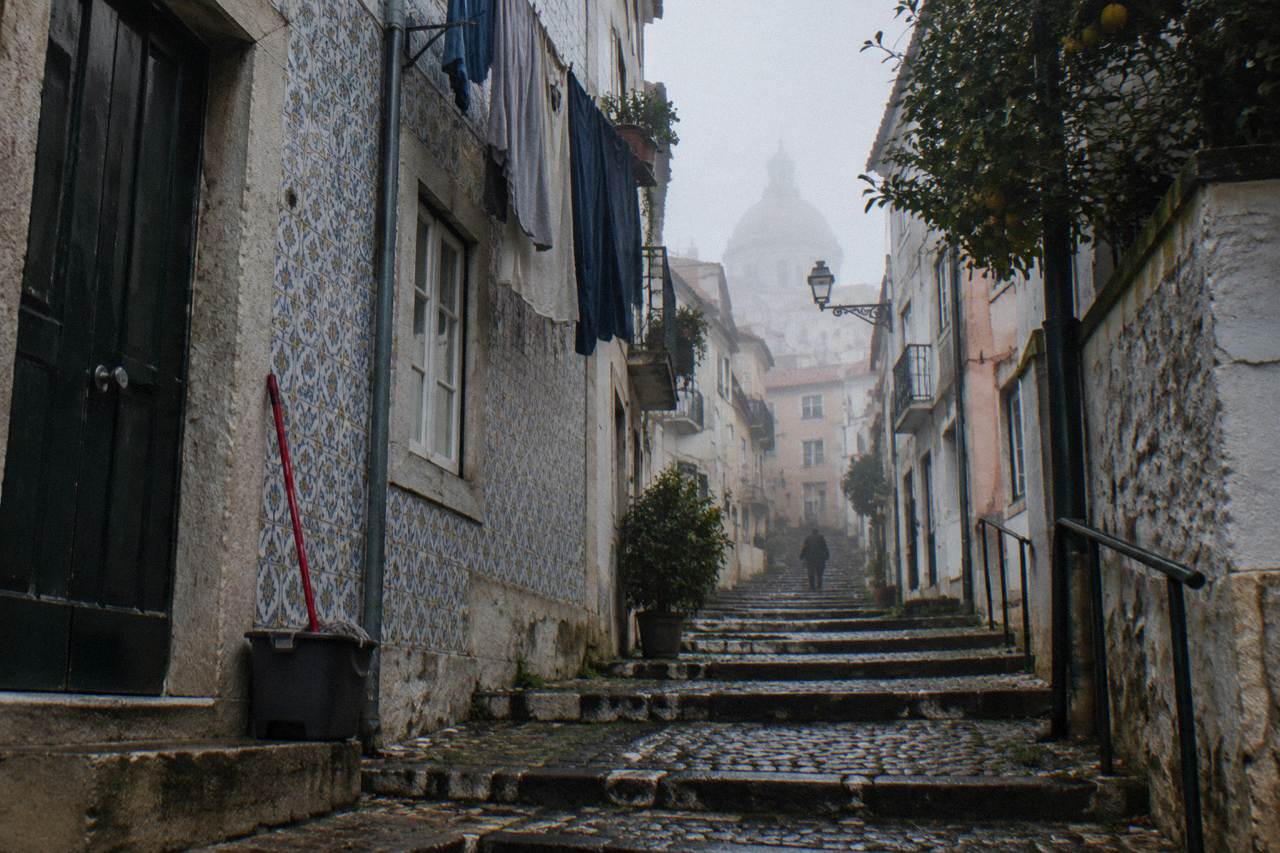
Yes, you can walk Lisbon entirely on your own, and the free parts stack up quickly: the Baixa grid, the Praça do Comércio, the miradouros and the lanes of Alfama are public space that costs nothing. The catch is terrain, not access. The hills are real, the cobbles are polished and slippery on slopes, and most of the lifts that once saved your legs are out of service.
Lisbon is compact, its central districts sit within walking distance of one another, and that is what makes the self-guided format work so well here. The lift closures matter more than most guidebooks admit. The Santa Justa lift and the Glória, Bica and Lavra funiculars are all marked out of service by Carris, the city transport operator, so a self-guided walk in Lisbon today is exactly that: on foot, up and down, with no mechanical shortcut on the central hills. The one exception is the Graça funicular, which reopened on 30 April 2026 and charges EUR 4.30 onboard for two trips, so even the working option is a paid ride rather than a free one.
None of this is a reason to stay off the streets. It is a reason to plan. This site exists because Free Things To Do In Lisbon is a genuinely long list, and walking it yourself is the backbone of that list. The sections below give you the routes, the hills, the shoes and the honest answer to when a free guided walk beats a map.
Which Route Works Best From The Baixa To Alfama?
The classic route runs from the Baixa grid up into Alfama: start on the flat streets of the Baixa, cross the Praça do Comércio, pass through the Rua Augusta Arch, then climb east into the Alfama lanes. The grid, the square and the arch passage cost nothing; the arch viewpoint on top is paid, and the Sé charges EUR 7 for the tourist visit while keeping a separate space free for prayer.
The Baixa is the easiest walking ground in the city because it was rebuilt on a grid after the 1755 earthquake, and that history is visible in the street pattern itself. From the river you walk north through the grid toward Rossio, and the slope is gentle enough that most people barely notice it. The Rua Augusta Arch stands at the heart of this stretch, and Visit Lisboa notes that its viewing platform only opened to the public in 2013; walking through the arch is free, going up is not.
The climb begins once you turn east toward the cathedral. The Sé sits on the shoulder of the Castelo hill, and the tourist visit is ticketed, but the hill itself and the Alfama streets around it are free to walk, which is the two-facts rule of Lisbon in miniature: the hill costs nothing, the castle on top of it, São Jorge Castle, charges EUR 17. If you want to see the 1755 story underground instead, the Núcleo Arqueológico da Rua dos Correeiros on the Baixa is free, but every visit is guided and must be booked in advance through the foundation that runs it. A free walk covers this ground: Take's Alfama Old Town.
A practical shape for the route: begin at the Praça do Comércio, walk the grid to Rossio, turn toward the Sé, then let the Alfama lanes carry you uphill to the Miradouro das Portas do Sol and the Miradouro de Santa Luzia, both free public viewpoints. From there you can drop back down to the river or continue toward Graça. Give it a half day at a wandering pace.
| Stretch | Ground | Free status |
|---|---|---|
| Praça do Comércio and the Baixa grid | Flat, rebuilt grid | Free public space |
| Rua Augusta Arch passage | Flat | Free to walk through; viewpoint paid |
| Sé de Lisboa | Hill shoulder | Prayer space free; tourist visit EUR 7 |
| Alfama lanes and Castelo hill | Steep, cobbled | Free to walk |
| São Jorge Castle | Hilltop | Ticketed, EUR 17 |
| Miradouros das Portas do Sol and de Santa Luzia | Hilltop terraces | Free public viewpoints |
If you would rather have the 1755 story told where it happened, the free walking tours cover this same ground with a guide: the Baixa Chiado, 1755 Earthquake walk by Hi Lisbon Walking Tours meets at the Praça do Comércio, runs 2 hours 30 minutes in English, and is rated 4.79 out of 5 across 583 GuruWalk reviews. It is free, pay what you want, reserved on the walk's GuruWalk page.
Which Route Links The Miradouros?
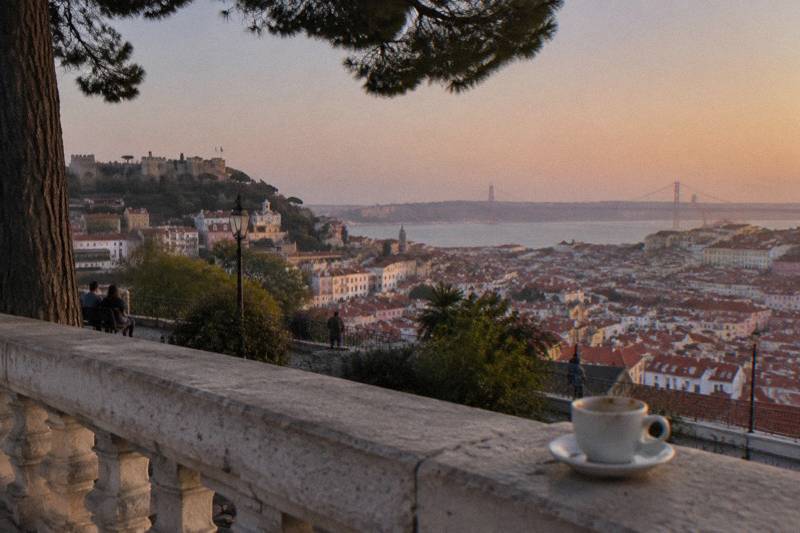
The viewpoint route links one free public terrace to the next: São Pedro de Alcântara in Bairro Alto, Santa Catarina, then across the valley to Santa Luzia, Portas do Sol, Graça and Senhora do Monte, and no viewpoint on the line charges entry. Spending is optional, coffee at the kiosks. Effort is not, because the route crosses the valley on foot and the Glória funicular that served the first climb is out of service.
Each of these is an open public space rather than a ticketed attraction, and the Graça viewpoint is listed as open 24 hours on the city's own pages, the only terrace on this route with a printed round-the-clock schedule. The Adamastor statue watches over the Santa Catarina end of the line, and the kiosks dotted along it are where the walking pauses happen.
The usual shape is to start at the Miradouro de São Pedro de Alcântara in Bairro Alto, which has a garden, an azulejo map of the skyline and a kiosk, then walk to the Santa Catarina terrace, where Visit Lisboa describes evenings with music, company and a beer as the sun drops over the Tagus estuary and the bridge. From there you cross the valley, which means descending and climbing again, and come up through the Alfama or Mouraria side toward Graça. The Senhora do Monte viewpoint sits highest of the centre viewpoints and is a plain public terrace with the widest panorama of the set.
Two cautions belong on this route. First, the Glória funicular that used to serve the São Pedro de Alcântara climb is out of service, so the ascent from the Restauradores side is on foot, and the same applies to the Bica and Lavra funiculars elsewhere in the city. Second, sunset times swing hard across the year in Lisbon, from around 17:15 in December to after 20:00 in summer, so pick your starting viewpoint to match the season rather than walking the route in the same order year-round.
| Viewpoint | Area | What the record states |
|---|---|---|
| Miradouro de São Pedro de Alcântara | Bairro Alto | Garden, azulejo skyline map, kiosk; free public space |
| Miradouro de Santa Catarina | Santa Catarina | Terrace with the Adamastor statue; free public space |
| Miradouro de Santa Luzia | Alfama | Garden, pond, azulejo panels, kiosk; free public space |
| Miradouro das Portas do Sol | Alfama | Public viewpoint with kiosk |
| Miradouro da Graça | Graça | Listed open 24 hours; free |
| Miradouro da Senhora do Monte | Graça | Public terrace, panoramic view |
The Top 8 Miradouros Walk by guide Ricardo covers the city's viewpoints with a local, runs 3 hours in English, and is rated 5 out of 5 across 1,277 GuruWalk reviews; it meets at the Praça Luís de Camões and is free, pay what you want on GuruWalk. For a shorter alternative in the same family, the With A Native walk meets at the Miradouro de São Pedro de Alcântara itself, runs 2 hours 15 minutes, and is rated 4.93 out of 5 across 235 GuruWalk reviews.
How Steep Are The Hills?
Steep enough to plan around, not steep enough to stop you. Lisbon sits mostly below 100 metres of altitude, rising to a maximum of 230 metres at the Monsanto ridge, and the hills that matter to a walker are the Castelo, Graça and Senhora do Monte heights. The Baixa is flat, the riverfront is flat, and the climbs are short and concentrated: the effort is real but it comes in bursts, not as one long slog.
The honest way to describe the gradients is by district. The Baixa to the Praça do Comércio is flat walking. The Chiado and Bairro Alto involve moderate climbs, with the São Pedro de Alcântara viewpoint as the reward. Alfama is the steepest walking ground in the centre, a tangle of lanes that rise from the river to the castle hill, and it fights you in both directions. Graça sits higher still, and the walk up from Mouraria or Alfama is the longest sustained climb in the centre.
The city has built answers into the hillside, but most of them are not working right now. The Santa Justa lift and the Glória, Bica and Lavra funiculars are all out of service per Carris, with substitute bus lines running on some of those corridors. The Graça funicular reopened on 30 April 2026 and runs daily from 07:00 to 21:00, but at EUR 4.30 for two trips it is a paid convenience, not a free one. There are also municipal public elevators on the Baixa-Castelo route, described by the city as free public lifts, though their current hours are not published on a current official page, so check on the day.
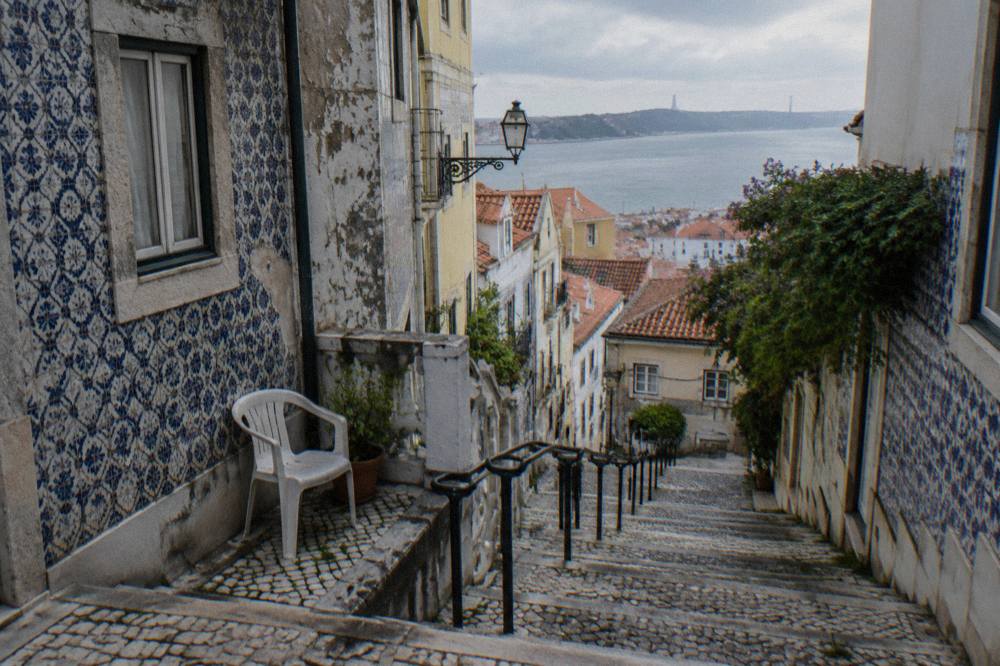
The practical advice is simple. Walk uphill in the morning while it is cool, save the descents for the afternoon, and treat the miradouro kiosks as your rest stops rather than pushing through. Anyone with knee or mobility issues should know that Carris states its buses are low-floor with ramps, but makes no equivalent statement for tram 28, and the tram is a paid ride at EUR 3.30 onboard in any case.
Which Shoes Suit The Cobbles?
Flat shoes with real grip, and nothing you cannot walk down a polished slope in. Lisbon's calçada portuguesa is white limestone and black basalt laid by hand in small cubes, and the city's own archive notes that the pavement becomes polished and slippery with use, especially on slopes. Add rain, which falls on about ten December days a year, and the wrong shoes turn a free walk into a slow, careful one.
The surfaces you will meet break down into three types. The Baixa grid is mostly flat stone and the easiest ground in the city. Alfama and Graça mix cobbles, worn steps and smooth worn stone, and this is where grip matters most. The riverfront, from the Praça do Comércio along the Ribeira das Naus toward Cais do Sodré, is modern flat paving, and it is the place to give your feet a break mid-route.
What works: trainers or trail shoes with soft rubber soles, anything with tread that still has edges on it. What does not: smooth leather soles, hard plastic, and heels of any height, because the polished basalt on an Alfama slope offers about as much friction as a wet tile. Sandals with flat, grippy soles are fine in summer; slick fashion sandals are not.
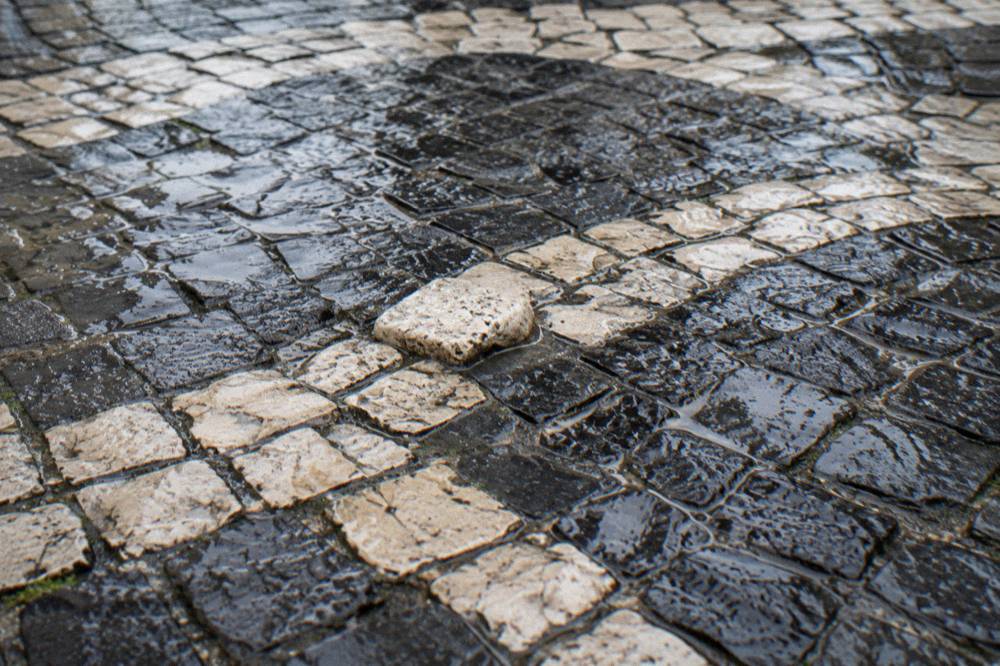
One more ground note: the city has repaved Rua da Madalena with new surfacing specifically to improve grip on the Baixa-Castelo hill, which tells you the slipperiness is a recognised municipal problem, not a traveller myth. Plan the shoes accordingly and the hills stop being a hazard and become just a workout.
What Does A Guide Add To A Self-Guided Route?
Context, answers and a route you do not have to invent, at a price you set yourself. A self-guided walk shows you the streets; a free, pay what you want walking tour shows you the streets plus the stories behind them, in real time, from someone who can answer a question on the spot. On this site's roster of 63 free walking tours across GuruWalk and freetour.com, the English-capable options cover every central district.
The strongest argument for at least one guided walk is efficiency on a first visit. Essential History, Free Tastings by Tours Of My Life meets at the Praça Luís de Camões, runs 3 hours in English and Spanish, and is rated 4.96 out of 5 across 25,140 GuruWalk reviews, the largest review pool on the roster. It is free, pay what you want, reserved on the guide's GuruWalk page, and the tastings in its name are part of the walk itself.
For a contrast in format, SANDEMANs Original Walk is listed on freetour.com, meets at the Praça do Comércio, runs 2 hours in English and Spanish, and is rated 9.4 out of 10 across 14,048 freetour.com reviews. Note the scale difference: freetour.com walks rate out of 10, GuruWalk walks out of 5, and the two are never converted into each other.
The strongest argument for staying self-guided is freedom. You cannot linger an hour at the Miradouro da Senhora do Monte on a guided walk, or double back for the photo light at Santa Luzia, or stop when your feet say stop. The honest answer for most travellers is both: one guided walk early in the trip to get oriented, then self-guided days through the Alfama lanes and the city's viewpoints at your own pace.
There is a middle path too. The PhD Student Walk by Eduardo, rated 5 out of 5 across 775 GuruWalk reviews, meets at Rossio Square and runs 3 hours 30 minutes in English, and walks like it sit somewhere between a tour and a seminar. Whichever you choose, every walk on this site is free, pay what you want, and reserved on its own platform page, and the question of how free walking tours really work is answered in full elsewhere on this site.
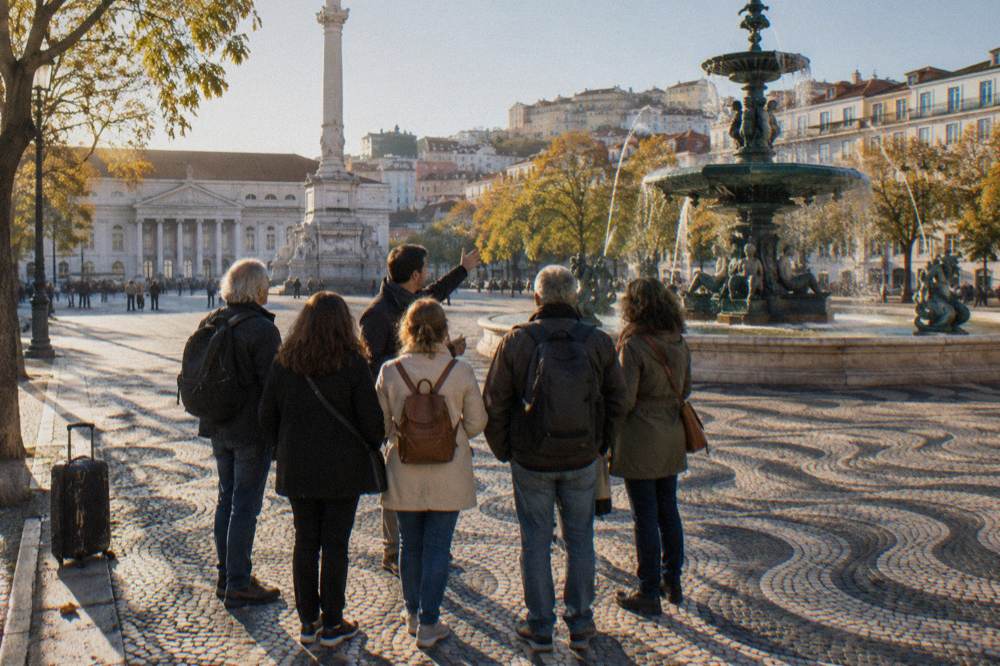
The Old Neighborhoods And Stories walk by Tours Of My Life, rated 4.92 out of 5 across 353 GuruWalk reviews, is another English option that meets at the Praça Luís de Camões, and the Local Perspective walk by Bruno, rated 4.86 out of 5 across 301 GuruWalk reviews, covers the same central ground in 2 hours 15 minutes. For Alfama specifically, the Unmissable Alfama walk by Hi Lisbon Walking Tours is rated 4.78 out of 5 across 1,706 GuruWalk reviews and meets at the Praça do Comércio.
Common Questions On This Topic
Can I Take A Self-Guided Walk In Lisbon?
Yes. Lisbon's streets, squares, miradouros and riverfront are free public space, and the central districts are close enough to link on foot in a day. Plan for the hills, wear grippy shoes, and note that the Santa Justa lift and the Glória, Bica and Lavra funiculars are out of service, so the climbs are done on foot.
Is Lisbon Walkable Without Taking Tours?
Yes, entirely. The Baixa, Chiado, Alfama, Mouraria, Graça and Bairro Alto all connect on foot, and the viewpoints along the way are free public terraces. A free, pay what you want walking tour adds stories and answers, but nothing in the centre requires a guide to reach it.
Are The Lisbon Hills Too Steep For Older Walkers?
The hills are steep in bursts but short, and the flat Baixa and riverfront give easy alternatives. The working shortcut, the Graça funicular at EUR 4.30 for two trips, is paid; the other funiculars and the Santa Justa lift are out of service. Walking uphill in the cool of the morning and resting at miradouro kiosks makes the routes manageable.
What Should I Wear To Walk Lisbon's Streets?
Flat shoes with real grip. The hand-laid basalt and limestone cobbles become polished and slippery on slopes, especially when wet, so smooth soles and heels are a poor match for Alfama and Graça. Trainers or trail shoes with tread on them are the standard advice.
Do The Free Walking Tours Cover The Same Routes As A Self-Guided Walk?
They cover the same districts: the Baixa, Alfama, Belém, Bairro Alto and the miradouros. The difference is what a guide adds in real time, stories, answers and a set meeting point, at a price you decide at the end. Every walk is free, pay what you want and reserved on its GuruWalk or freetour.com page.
Is Tram 28 A Free Way To See The Route?
No. Tram 28 is a paid Carris ride, EUR 3.30 onboard, and Carris has issued provisional service alterations through 2025 and 2026, so check the current operation before relying on it. The free version of the line is walking it, and the sights along the corridor, the Sé, Portas do Sol, Santa Luzia, Graça, are free public space.